
















The “Priceless” Mastercard Marketing Strategy & Campaigns
Instead of creating campaigns, we want to sustain momentum around moments of truth.
– Jay Mendel – Global Digital Marketing VP, Mastercard
This is how Mastercard
Mastercard marketing campaigns are not a matter of throwing ideas into a campaign brief; thus, they’re far more scientific. The marketing team starts by looking for what Mandel calls a “moment of truth,” an insight drawn from observant analysis that then translates into the creative seed for a campaign and a larger,
To execute this vision, the brand constructed the organizational structure to carry these moments from ideation through to production and distribution of the finished product. They have taken the best of every marketing discipline and put it in a centralized content marketing strategy group. Consumer and digital marketers, media professionals, and communications strategists have thrown their hat into the ring for what is no doubt an eclectic group of
Let’s have a quick look at what Mastercard has developed in recent years.
Inside Mastercard Marketing Campaigns
- Mastercard SWOT Analysis
- Mastercard Target Audience
- Mastercard Marketing Strategy: Tactics over the Years
- Standout Mastercard Marketing Campaigns
Mastercard SWOT Analysis
Before jumping into Mastercard marketing strategy and related campaign examples, here is a quick SWOT analysis of Mastercard, which highlights the differences between PayPal and Revolut:
| Internal Factors | External Factors |
|---|---|
Strengths
|
Opportunities
|
Weaknesses
|
Threats
|
Mastercard Target Audience
From a marketing viewpoint, the brand actually serves multiple audiences; not one single customer segment. So, Mastercard marketing strategy is built around consumers, businesses, financial institutions, merchants, and governments.
👉🏻 Everyday Consumers (Primary Audience)
- Millennials and Gen Z who prefer digital wallets and contactless payments.
- Affluent consumers interested in premium travel, dining, and lifestyle benefits.
- Families using credit or debit cards for everyday purchases.
- Frequent travelers seeking travel insurance, airport lounge access, and global acceptance.
👉🏻Businesses (B2B)
- Small and medium-sized businesses (SMBs),
- Large enterprises,
- Online merchants,
- Retail chains.
👉🏻Banks and Financial Institutions
- Retail banks,
- Digital banks,
- Credit unions,
- Fintech companies.
👉🏻Merchants
- Physical retailers,
- E-commerce businesses,
- Restaurants,
- Hospitality,
- Service providers.
👉🏻Governments and Public Sector
- Digital identity initiatives,
- Social benefit distribution,
- Smart city payments,
- Public transportation,
- Financial inclusion programs.
🎯Mastercard Geographic Target
- North America,
- Europe,
- Asia-Pacific,
- Latin America,
- Middle East and Africa.
🎯Mastercard Psychographic Profile
- Convenience,
- Security,
- Technology,
- Global mobility,
- Premium experiences,
- Financial flexibility.
Mastercard campaigns often emphasize experiences over possessions. For example, the long-running Priceless campaign focuses on memorable moments that money can’t buy, helping position Mastercard as an enabler of meaningful experiences instead of simply a payment card.
In summary, Mastercard’s target audience spans both B2C and B2B markets. While consumers are the most visible audience through advertising, much of Mastercard’s business growth also depends on financial institutions, merchants, businesses, and public-sector organizations that participate in its global payments ecosystem.
Mastercard Marketing Strategy: Tactics over the Years
With Mastercard’s audience spanning consumers, merchants, banks, businesses, and public institutions, its marketing has had to evolve beyond product-led promotion. Over the years, the brand has used emotional storytelling, sponsorships, experiential campaigns, digital innovation, and partnership marketing to show how its payment network fits into everyday life. This broader approach has helped Mastercard position itself as a brand connected to meaningful moments, trusted transactions, and modern commerce.
Below, we explore the key marketing tactics Mastercard has used to build relevance, strengthen trust, and engage audiences across different markets.
Being Willing to Change in Radical: Mastercard Logo Evolution
To keep up with the digital world, Mastercard is removing their name from the logo as part of a “reinvention” of the brand.
As a company following the digital updates so well that they even adapt the biometric
Here’s Mastercard’s complete logo evolution:
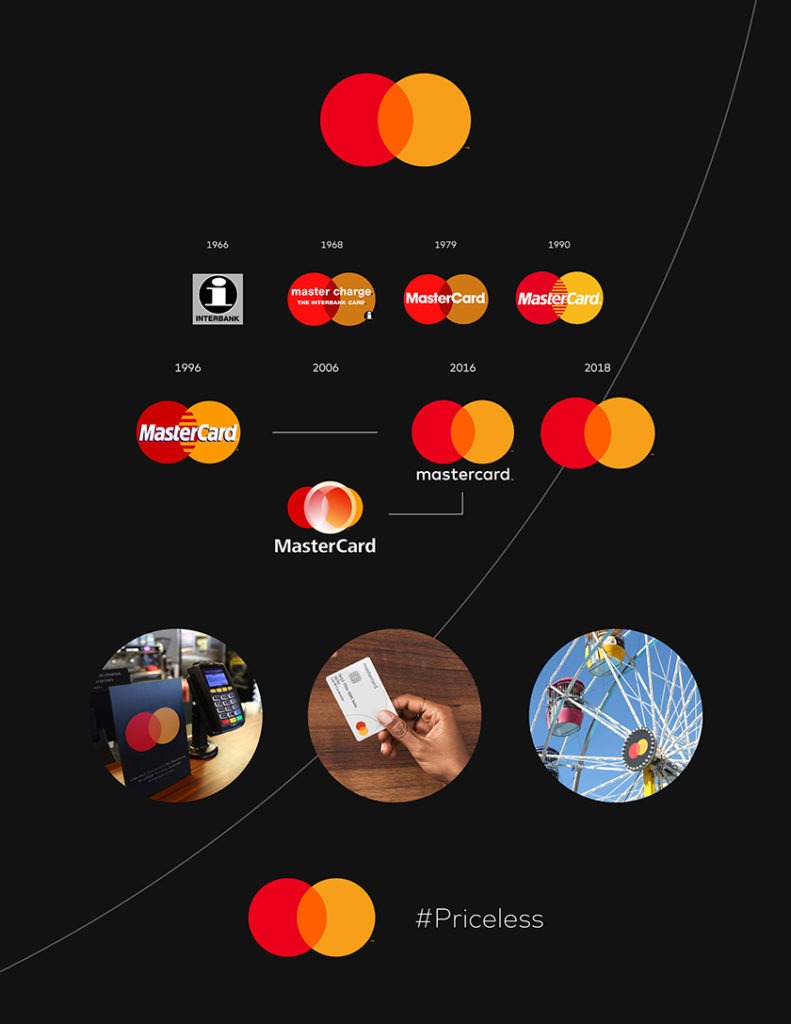
Raja Rajamannar, chief marketing and communication officer at Mastercard, said:
With more than 80% of people spontaneously recognising the Mastercard symbol without the word ‘Mastercard’, we felt ready to take this next step in our brand evolution.
Providing the Latest Technology Because of the Brand Presence
Mastercard has unveiled biometric cards that contain both Chip and Pin technology, as well as, biometric sensors. The test has launched only in South Africa at present.
After smartphones, buildings, airports, -and FBI- the next step is to let finance industries adopt fingerprint verification to increase user security. As a part of a limited trial in South Africa, Mastercard has announced launching a credit card with a fingerprint scanner.
The card has a small square which scans the fingerprint on the top-right corner. Mastercard states that the card can make scans on Apple and Android devices that allow contactless payments once a device stores the print recognition.
Being Open to New Tactics Like Sound Marketing
After the Mastercard has introduced its sonic brand identity, a comprehensive sound architecture that signifies the latest advancement for the brand.
After the brand’s introduction of the nameless, icon-only logo, they stepped into sound-centric branding alteration. Wherever consumers engage with Mastercard across the globe – be it physical, digital or voice environments – the distinct and memorable Mastercard melody will provide simple, seamless familiarity. To kickstart its audio presence, Mastercard launched a new marketing campaign in advance of the American Grammy Awards featuring nominated artist, Camila Cabello.
Reaching Luxury Segmentation via Different Approaches, Such as Culinary Industry
Priceless – an international culinary collective which brings the world’s finest dining and experiences New York City
Mastercard is preparing to revive all five senses with an ambitious installation that brings three distinctive restaurants from around the world to New York City. The iteration of the long-running “Priceless” campaign establishes what the brand calls “an international culinary collective,” recreating in immaculate detail and the experience of visiting restaurants that had offered a singular dining experience.
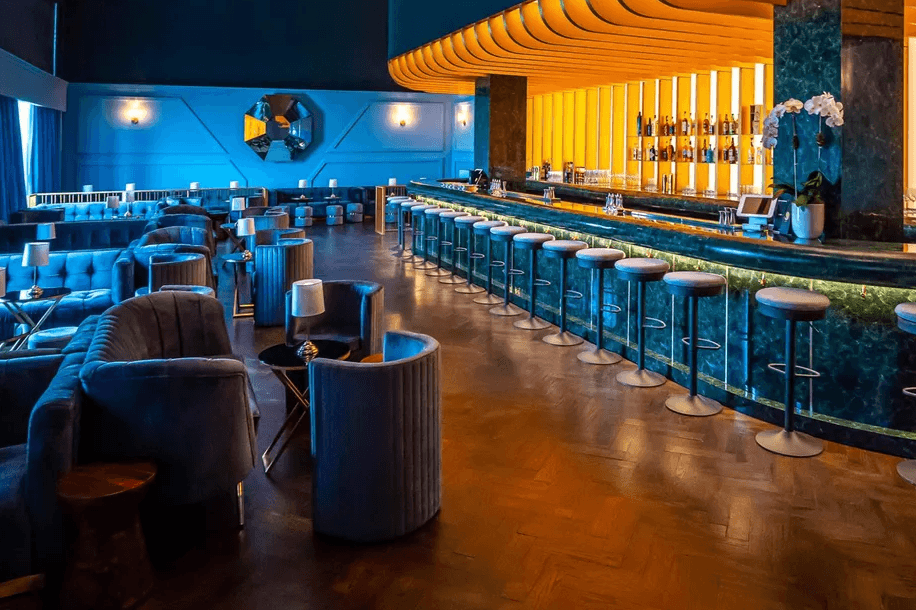
The first three culinary destinations to take up residency at PRICELESS include The Rock from Zanzibar, Tanzania, Teruzushi from Kitakyushu, Japan and Lyaness from London, United Kingdom. The PRICELESS rooftop at Spring will also host a global food experience expertly curated by Chef JJ Johnson.
Supporting Gender Diversity
Christopher and Gay Streets’ corner at New York’s Greenwich Village, passersby will see a host of new names for the latter road thanks to Mastercard.
For Pride Month, Mastercard has placed on nine street names in an effort to be more inclusive of the LGBTQIA+ community. Titled “Acceptance Street,” rainbow installation is placed as a partnership between Mastercard and New York’s Human Rights Commission, that helped sanction the signs.
Mastercard’s “True Name” project purposes to find a secure, non-invasive way to let people choose names other than their legal ones to appear on credit and debit cards, and it is currently working with the city’s Human Rights Commission to figure out the details.
Standout Mastercard Marketing Campaigns
When we think of Mastercard marketing, a few iconic campaigns immediately come to mind.
The “Priceless” platform is one of the most recognisable brand ideas in advertising. Lines such as “There are some things money can’t buy. For everything else, there’s Mastercard” helped the brand create an emotional identity that has lasted for decades. Mastercard’s long-running UEFA Champions League work is another example many football fans remember, especially its fan-surprise films and access-led experiences.
However, we wanted to look beyond the most obvious Mastercard ads and show how the brand has kept the same emotional idea alive across different generations, interests, and formats.
- The original “Priceless” campaigns made everyday emotional moments feel more valuable than the things people could buy. The newer work follows the same idea, but the format has changed.
- Mastercard does not try to speak to everyone through one interest. Football remains a major part of its marketing, which is why campaigns featuring Luis Figo and Lothar Matthäus made the list. Music is another important area, represented by the Noah Kahan activation and the first-ever Mastercard music album. Travel also plays a growing role, especially as audiences look for more personal and local experiences. We chose campaigns across these different spaces because they show how Mastercard builds relevance around the things people already care about.
- Some Mastercard campaigns create access through major events, such as football finals and music launches. Others create it through travel, local recommendations, digital experiences, or fan opportunities that are not easy to find elsewhere. We selected these examples because they show that access does not always need to mean VIP seating or a celebrity meet-and-greet. It can also mean helping people discover a city differently, connect with a favourite artist, or take part in a moment that feels personal.
As we mentioned before, Mastercard’s most memorable work is not really about paying for something. It is about helping people access moments they will remember long after the transaction is over.
Gotta Go Dancing (First Ever Music Album) (2022)
Mastercard turned sonic branding into something people could actually listen to. Its Priceless album featured 10 tracks by 10 emerging artists from different countries, each incorporating the Mastercard melody. “Gotta Go Dancing” was one of those tracks, created as part of the project with music producer Timbaland and Beatclub.
Mastercard has unveiled its first ever music album titled Priceless, featuring 10 songs by 10 artists from around the globe. Mastercard collaborated closely with Executive Producer Niclas Molinder to find artists who span a variety of cultures, languages and genres – a core element of the album’s identity. Each artist was tasked with incorporating the brand’s melody into their song, demonstrating how audio branding can be used innovatively. The full album will feature tracks from up-and-coming global artists including Michael Rice (United Kingdom), Shiraz (Lebanon), Good Harvest (Sweden), Alma Lake (Colombia/USA), Raees (Algeria), Tejas (India), Nadine Randle (United Kingdom/Sweden), Tania (Australia), Elle B. (USA) and Amaya (Slovenia).
Why it worked: The campaign worked because the brand sound was not treated like a short logo sting at the end of an advert. It became part of real music, giving Mastercard a more credible role in creator culture.
Mastercard also tied the project to access by funding one-year Beatclub memberships for hundreds of emerging creators from underserved communities.
The Great Divide: An Intimate Listening Session with Noah Kahan (2026)
This Mastercard campaign started with a fan insight.
Mastercard co-produced and premiered Noah Kahan’s “The Great Divide” music video during the 2026 Grammy Awards broadcast, then turned the launch into a fan experience through a sweepstakes, Easter-egg hunt, intimate listening session, and future Mastercard Collection access.
Why it worked: It worked because Mastercard did not stop at celebrity association. It built a path from a major broadcast moment to a smaller, more personal experience for fans. The campaign made its brand benefit clear: access to moments that music fans cannot easily get on their own.
Knowing All the Ways to Enjoy Like a Local (2025)
This travel-led work built on a useful consumer truth: visitors want more than tourist checklists. They want food, neighbourhoods, local rituals, and experiences that make a trip feel more personal. Mastercard supported that message with travel insights showing growing interest in experience-led travel, including wellness, wilderness, sport, and food-focused trips.
Why it worked: The campaign fit Mastercard naturally. Payments are part of the travel experience, and “pay like a local” gave the brand a practical role without making the messaging feel technical. Mastercard positioned itself as a way to access local life more smoothly.
The Out-Of-This-World Match with Luis Figo (2023)
This Mastercard campaign took a familiar football sponsorship route and made it impossible to ignore.
Mastercard and Luis Figo staged a football match in zero gravity during a parabolic flight, setting a Guinness World Records title for the highest-altitude football match on such a flight. The game took place at 20,230 feet.
👫 7 fans ➡️ 🚩 2 teams ➡️ ⚽ 1 football legend ➡️ 🚀 0 gravity
Why it worked: The idea worked because it translated the brand’s “Priceless” promise into a visual experience that no standard football advert could replicate.
It also involved real fans alongside Figo, giving the stunt an emotional role beyond spectacle.
World’s Biggest Football Fan & Lothar Matthäus. A Priceless Surprise. (2015)
This advertising campaign used a format Mastercard has used effectively for years: give an everyday fan access to a football moment they would never expect.
The film featured a surprise experience involving German football legend Lothar Matthäus around the 2015 UEFA Champions League Final in Berlin.
Why it worked: The campaign succeeded because the fan was the emotional focus (not only the celebrity.)
Matthäus gave the story scale, but the value came from seeing a supporter’s loyalty rewarded in a personal way. That is where Mastercard’s “Priceless” platform is strongest: turning passion into access.