















Spotify’s Marketing Strategy & 7 Effective Marketing Campaigns
“Everyone gets to celebrate who they are and their listening.” Sloan-Vincent from Spotify explains how Wrapped became a cultural phenomenon and got users’ radar over the years. The biggest music streaming platform in the sector, Spotify has been irreplaceable by its users since 2006.
Being on various operating systems and its budget-friendly subscription plans allow Spotify to reach over 456 million users. But, have you ever wondered how Spotify manages to break its user record time with its marketing strategies?
Keep reading to find out how they’re marketing to stay on top of the music streaming industry!
Inside Spotify Marketing Campaigns & Strategy
Spotify’s Marketing Strategy
Since the beginning, targeting young people such as Millennials and Gen Zers, Spotify knows how to communicate with youth in the app, ads, or anywhere else. Spotify is with its users all the time with playlists for showers, sleeping, workouts, and any other occasions.
But how does Spotify achieves to become the ultimate companion in every activity; what is Spotify’s marketing strategy and how can it infiltrate our lives so much? Spotify continues to offer tailored user experiences with its digital marketing strategies, independent artists have greater opportunities than ever before. Platforms that streamline music release on Spotify enable artists to gain instant recognition and engage with audiences worldwide.
This not only complements Spotify’s wide reach but also empowers creators by promoting personal interaction and daily creativity as a central pillar of engagement with their music.
A quick look at Spotify’s marketing strategy tells us that it focuses heavily on:
- engagement in social media,
- providing users with tailored playlists, and
- discounts through partner campaigns.
Spotify digs into the target audience’s music choices and listening habits with customer data and creates personalized playlists for each user. Thus, they give users enough reason to share it with others around them. As a result, more people download the app to see what Spotify is going to suggest to them.
Spotify’s marketing strategy focusing on personalized user experience has allowed it to stand out from competitors and build a reliable customer base. Now let’s look at the details behind this success.
Wish Your Marketing Felt as Personal as Spotify’s?
If you’ve ever wished your brand could connect with people the way Spotify does, these agencies can help you get there. They focus on understanding what your audience cares about and turning that insight into experiences that feel personal, genuine, and built around real connection.

Takt
We dug into Takt’s projects for Wonder Media and the Vancouver Opera and it’s clear they don’t just do campaigns—they create experiences that feel intentional. Their approach shows how they can make media feel meaningful.

DIJGTAL
We explored DIJGTAL’s work for Gaming City and MaximBet, where the agency created high-engagement digital experiences designed to keep users interacting and returning. reflects the same mindset that powers platforms like Spotify.
mimosa
We looked at Mimosa’s work for afterblue and ai-coustics, where the agency helped turn digital products into engaging brand experiences. Its approach is well-suited to platforms that need to make technology feel worth returning to.
User-Focused Design With a Company
When designing a service or product, one should really need to dive into user experience which is based on three universal principles:
- visual grammar
- language and typography
- narrative design
By using vivid and contrasting colors in ready-to-share social media posts, alongside interactive features such as a Spotify QR Code that enables instant access to content—and incorporating short videos or song lyrics, Spotify creates a visually engaging user experience. Also, it uses informal “you” language to communicate with the users like friends. Spotify’s marketing strategy personalization makes you the storyteller of your account. You can make blended playlists with your friends to see which songs both of you are listening to, discover songs similar to the ones you like, and collect top songs in playlists maybe with different purposes.
Culture Trend
According to the Spotify Culture Next 2022 Report, millennials and Gen Zers have been shaping the future of audio streaming and culture. The audio concept changes youth’s perspective and helps them to create and find their community or join a local one. With Spotify, they find a space to exist, be understood, and support each other or inspire.
Good Subscription Plans
Turning a potential customer into a subscriber of your service is a victory for all companies. Getting good quality service at an affordable price is a strong hook that has the power to make the user stay with Spotify for long years.
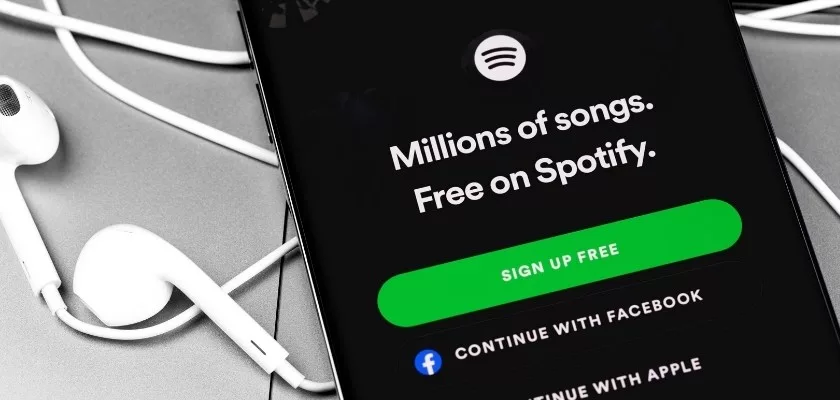
Spotify offers a variety of subscription plans, so it’s easy to find the one that’s right for you. Spotify’s Premium plan offers users ad-free music streaming, unlimited access to a library of millions of songs, and the ability to download songs for offline listening. This allows Spotify to promote its platform to users who are looking for a premium music experience. Similarly, its free plan allows users to access songs with ads.
By offering these different plans, Spotify has been able to reach a wider variety of users. This, in turn, has enabled the company to target its digital marketing campaigns more effectively.
Build Your Subscription Strategy with Spotify Campaigns & Social Media Tactics
See how your brand can turn pricing tiers, audience segments, and personalization into a campaign strategy inspired by Spotify’s marketing approach and social media tactics.
Subscription Blueprint
–
–
Spotify’s Social Media Marketing Strategy
Spotify’s enviable success in the world of digital music streaming is due, in large part, to its savvy social media marketing strategy. With ingeniously crafted posts highlighting new releases and old favorites, Spotify ensures that potential and existing customers are always aware of its offerings.
They have leveraged a variety of resources, from influencer endorsements to native advertising on multiple social media platforms, to create conversations about the brand and increase awareness. As one of the tech giants poised for rapid growth over the coming years, it is clear that Spotify has mastered how to effectively harness the power of social media.
As Spotify’s digital marketing strategy is to follow the latest trends but also create trends, in social media campaigns, Spotify uses a language that addresses the younger generations Let’s look at some examples reflecting Spotify’s smartly managed campaigns:
Hashtags
Hashtags bring users together and help them to find their soul listeners or discover new artists, songs, and bands. Spotify put forward users with #thatsongwhen in 2014. It made a platform where a user can attach the media, tell the story, and share the song. Also, as we’ve seen the big impact of annual Wrapped hashtag campaigns like #2022Wrapped all around the world, hashtag use is surely Spotify’s global marketing strategy.
The urge to share their own wrap is undeniably contagious along users. As a user-based feature, Spotify Wrapped allows people to share their musical tastes with others meaning to open up some parts of their identities.
Data-Driven Marketing
Data-driven marketing strategies are becoming increasingly popular and Spotify is one of the brands using data for their own sake. But, how?
Holding a huge amount of data from 456 million users, Spotify uses consumer data, such as listening behavior, favorite artists, and most played songs, to create targeted marketing campaigns that are tailored to the individual listener. In 2016, the company launched a data-based marketing campaign that connected Spotify users with their favorite artists, and since then it has continued to develop its personalized approach. Spotify also utilizes artificial intelligence and machine learning to make decisions and improve user experience, such as with its feature “Blend” which allows users to share personalized playlists with friends.
Spotify’s Creative Strategy
It has been successful for Spotify to increase revenue and user base by implementing creative marketing strategies. By taking advantage of data-driven insights, personalization, and word-of-mouth marketing, the company has seen extraordinary success with initiatives such as Spotify Wrapped.
Actually, Spotify’s creative strategy is built on a simple but powerful idea: turn listening behavior into culture. The brand transforms personal audio habits into stories people want to share – like the Wrapped series.
One of Spotify’s biggest advantages is scale. As of Q1 2026, Spotify reported 761 million monthly active users, 293 million Premium subscribers, and a presence across 184 markets. Its platform also gives users access to more than 100 million tracks, 7 million podcast titles, and 700,000 audiobooks in selected markets. That scale gives Spotify a huge creative canvas: millions of individual listening moments that can be turned into personal, social, and cultural content.
The clearest example is Spotify Wrapped. Wrapped works because it makes data feel emotional. It takes what users listened to across the year and turns it into a personalized identity moment: your top artist, your mood, your genre habits, your listening personality, and the soundtrack of your year. In 2025, Spotify said Wrapped captured listening from January through mid-November, making the experience feel current and personal.
Wrapped also shows how Spotify connects digital storytelling with real-world brand presence. For the 2025 Wrapped campaign, Spotify launched creative activity in more than 30 markets and planned around 50 installations and pop-ups globally, including artist integrations, interactive photo moments, and live performances for top listeners. This matters because Spotify is extending user data into outdoor, experiential, social, and artist-led moments.
What makes Spotify’s strategy stand out is its ability to make the user the center of the campaign. Many brands talk about personalization, but Spotify turns personalization into a shareable social object. The product becomes the creative. The user becomes the media channel. The campaign becomes a cultural event.
This is also why Spotify feels distinct from other audio platforms. Its brand is not built only around access to music. It is built around discovery, self-expression, and belonging. Features like personalized playlists, Wrapped, editorial recommendations, artist messages, and listening insights make users feel seen. That emotional layer is difficult to copy because it comes from years of user behavior, product design, data infrastructure, and cultural timing working together.
Spotify’s creative strategy also benefits artists and advertisers. For artists, the platform creates new ways to connect with fans through personalized experiences and campaign moments. For advertisers, Spotify offers an environment shaped by mood, moment, genre, activity, and attention. A person listening during a commute, workout, study session, or late-night wind-down is giving the platform context that can inform more relevant creative.
In simple terms, Spotify differentiates its brand by making audio personal, social, and culturally visible.
Most Loved Spotify Campaigns of All Time
When our team at Digital Agency Network sat down to curate this specific list, we didn’t just pull a handful of high-budget ads or look at standard industry trophy cabinets. In marketing, there is a massive difference between an ad that gets impressions and a campaign that becomes a permanent part of the cultural lexicon.
To find the absolute best of Spotify, we filtered the noise using a very specific framework. We looked for moments where the brand completely dissolved the wall between a cold mobile application and a user’s personal identity.
Here is the exact filtering strategy we used to choose these benchmarks:
- We specifically ignored campaigns that just bragged about features or streaming numbers. Instead, we selected work that took sterile user data and translated it into a highly relatable, often hilariously exposed human emotion. If it didn’t make the user say, “Wow, they completely get me,” it didn’t make the cut.
- We looked for campaigns that turned the consumer into the actual media channel. The choices below represent a rare tier of marketing where Spotify didn’t have to buy millions in ad placements because their own audience willingly flooded their personal social feeds with the brand’s assets.
- We deliberately picked a line-up that shows a clear creative trajectory. We wanted to demonstrate how Spotify grew from using passive, witty street billboards to engineering deeply immersive, time-bending, and highly personal in-app experiences.
- Every single campaign chosen serves as a masterclass in tone. They demonstrate how a global tech powerhouse can wield immense data authority and surveillance capacity while keeping their brand personality feeling like a funny, highly trusted best friend rather than a creepy corporate tracker.
Let’s see the standout Spotify campaigs now.
Thanks 2016, It’s Been Weird
2016 was a weird year for the world with celebrity deaths, Brexit, and so on. Spotify took advantage of this with funny billboards by using the data. This playful tone was created to attract new users.
This was, actually, the massive, global out-of-home (OOH) campaign that completely changed how the industry viewed big data. It took the collective oddities of 2016 and mapped them onto our shared musical coping mechanisms.
Why That Campaign Worked
- Data tracking can easily feel invasive, but Spotify completely bypassed consumer paranoia by making the data funny and deeply human.
- Because the billboards referenced specific neighborhoods and real cultural events, it made communities feel like they were sharing an inside joke, building immense trustworthiness through local relevance.
Setting Goals for 2018
This campaign was inspired by the most used hashtags in 2018 which are all focused on goals: #lifegoals, #adulthoodgoals, #relationshipgoals. Spotify looked at the case from another interesting perspective, used its own data, and created its own 2018 goals. For instance, “Too Good at Goodbyes” was streamed over 910,925 times in London, and Spotify aimed to “be significantly less proficient at goodbyes” within the campaign.
Why That Campaign Worked
- This campaign worked because it celebrated consumer creativity over artist star power. By mocking and praising the bizarre titles users give their playlists, Spotify turned the ordinary act of listening into an ongoing piece of interactive performance art.
- It implicitly challenged users to be funnier, weirder, and more creative with how they categorized their music in hopes of being noticed, driving up app engagement naturally.
Spotify Wrapped
Spotify creates a tradition with wraps focusing on both general and personal data. Seeing how you do during the year turns into something we all wait for with joy and curiosity. Actually, it is a rule now. You just can’t start the next year until you share Spotify Wrapped posts with friends.
It packages individual listening vulnerabilities into gorgeous, neon-hued infographics perfectly optimized for instant social media sharing.
Why That Campaign Worked
- Wrapped functions like a digital badge of identity.
- By turning data into a status symbol, Spotify completely dominates the global cultural conversation for weeks without spending a dime on ad placements. Their own users willingly act as the marketing department, leaving competitors entirely in the dust.
Music for Every Mood
Is there anything an on-point and hilarious meme can’t solve? Spotify really did the best thing with the memes. We are humans. We make mistakes. We are complicated. We just can’t figure it out. On Spotify, there are songs for every mood.
Why That Campaign Worked
- Spotify spoke the native, self-deprecating language of its core demographic.
- It solidified the brand’s expertise as a lifestyle anchor. It reminded consumers that no matter how messy, boring, or dramatic their day gets, Spotify has a highly specific mood-playlist designed to make them feel understood.
Playlist for the Future
The marketing strategy of Spotify in 2023 is a music time capsule. With each song you will put in a vase, teddy bear, lunchbox, bottle, acorn, or pocket, you create a playlist with a few songs about special moments such as “a song you need to hear live in 2023.” This new feature can turn into a permanent marketing strategy but the truth will show itself with user data in forthcoming years.
Why That Campaign Worked
- As marketers, we know delayed gratification is hard to pull off, but this created an ironclad loop of long-term brand loyalty.
- It transformed a simple playlist function into a profound psychological experience. Unlocking the bottle a year later triggers an intense wave of personal nostalgia, keeping users tethered to the platform across multiple years.
Trust In Your Sound
Launched during awards season, this storytelling-focused video campaign revealed the ‘Best New Artist’ nominees. Instead of glamorous red carpet shots, it emphasized the raw, unfiltered behind-the-scenes moments of the musical journey.
Behind every Best New Artist nominee is the grind that got them there.
Why That Campaign Worked
- This campaign asserted Spotify’s role as a true champion of the creative community.
- By honoring the actual grind of music-making, they gained massive authority among both independent creators and passionate listeners who hate corporate fluff.
- It reminded audiences that behind every hit song on their phone is a human being who had to block out the noise and believe in their own voice.
Your Favourite Artists Reveal Spotify 2025 Wrapped
For the 2025 iteration of their holiday juggernaut, Spotify added an intimate layer to the data summary. When users unlocked their Wrapped results, the app integrated personalized, direct-to-camera video messages from their top-streamed global superstars and indie favorites.
Artists sat in their personal studios or backstage areas, thanking individual fans by name or location for making them their number-one soundtrack of the year, alongside fresh data mechanics like “Listening Age.”
Why That Campaign Worked
- Giving users an exclusive, direct piece of content from an artist they love creates an emotional high that competitors simply cannot replicate.
- It transformed user dedication into a tangible, deeply moving reward.
Spotify’s Distribution Channels
Spotify works on the browser, mobile, and laptop app with the options of Windows, Linux, and Mac IOs; the availability on multi-devices increases accessibility.
Being available for your user in any operating system or device is a must. Global marketing should address all the people with different technology habits and requires following new trends with changing devices.
Wrapping up Like Spotify
Spotify’s innovative approach shows us there is another way to market and advertise that embraces fun and encourages organic growth. Speaking of unique viewpoints, we recommend taking a broader look at the entertainment industry to gain diverse perspectives. Start by exploring other media giants’ marketing strategies and campaigns to understand various approaches in this dynamic sector:
If you want to get help and consultancy from professionals to create a marketing strategy as powerful as Spotify’s, you can reach out to top marketing agencies now!
FAQ: Spotify Marketing Campaigns
What makes Spotify’s marketing strategy different from other streaming platforms?
When we look at what Spotify actually does, the answer comes down to one thing: it makes the user the center of the campaign, not the product. As we mentioned, Spotify’s whole approach is built around turning listening behavior into culture; it talks about your top artist, your mood, your listening personality. We think this is why the platform feels less like an app; it’s built around discovery, self-expression, and belonging, and that emotional layer is hard for other platforms to copy because it comes from years of user data, product design, and cultural timing all working together.
How does Spotify use personalization to increase user engagement?
Spotify digs into listening habits, favorite artists, and most-played songs, and turns all of that into playlists and features that feel handmade for each person. We see this play out through things like Blend, where friends can combine their taste into one shared playlist, or the personalized recommendations that show up on the home screen every day. What we find interesting is that this personalization gives people a genuine reason to share what they’re seeing with friends, which quietly turns every user into a small marketing channel for the brand.
Why is Spotify Wrapped considered one of the most successful marketing campaigns?
Wrapped works because it makes data feel emotional. As we mentioned earlier, it takes a full year of listening and turns it into a personal identity moment, like your top artist, your genre habits, even your “listening age.” For the 2025 edition, Spotify expanded this into more than 30 markets with around 50 installations and pop-ups worldwide, plus personalized video messages from artists thanking individual fans by name. We’d say the real genius here is that Wrapped functions like a digital badge people want to show off, so Spotify dominates the cultural conversation for weeks every December without paying for a single ad placement.
How does Spotify use data-driven marketing without alienating users?
Spotify has huge amounts of data from hundreds of millions of listeners, but it uses that data to make people laugh or feel understood. We saw this early on with “Thanks 2016, It’s Been Weird,” where billboards turned strange listening patterns into inside jokes about a chaotic year, referencing specific neighborhoods and cultural moments so the data felt local and human. As we mentioned with Wrapped, the same logic applies at scale: the data becomes a story about you, so it reads as a gift.
What role does social media play in Spotify’s marketing strategy?
Social media is where Spotify turns individual moments into shared culture. It leans on hashtag campaigns like #thatsongwhen and the yearly #Wrapped tag, influencer endorsements, and native ads, all delivered in a casual, “you” tone that speaks directly to younger audiences. We think what makes this work is that Spotify designs its posts and in-app moments to be inherently shareable, bold colors, quick videos, lyric snippets, so people don’t just consume the content, they repost it as part of their own identity online.
What can marketers learn from Spotify’s user-generated and data-powered campaigns?
A few things stand out to us. First, data becomes powerful marketing when it’s translated into something emotional and personal, not just presented as a number or a chart. Second, giving people something worth sharing turns them into your distribution channel, Wrapped succeeds because users spread it themselves, not because Spotify buys massive ad placements. And third, tone matters as much as the data itself: Spotify stays funny, warm, and self-aware, which is exactly what keeps a data-heavy strategy from feeling invasive. As we mentioned throughout, the common thread is that Spotify never sells a feature, it sells a feeling of being understood.