















Click, Ship, Repeat: FedEx’s Digital Marketing Strategies & Campaigns
Remember Tom Hanks’ Cast Away? But imagine he’s facing an e-commerce jungle instead of a deserted island. His precious package? Not Wilson, but a million-dollar shipment with a next-day deadline. That’s the pressure FedEx operates under, and their marketing strategy is the raft that keeps them afloat.
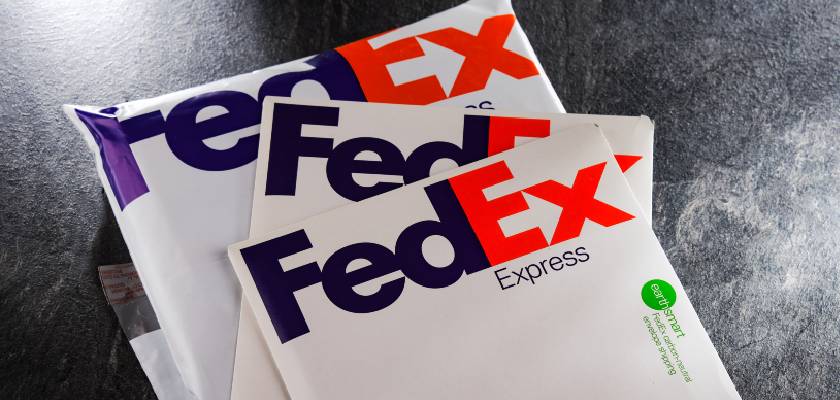
FedEx isn’t just about boxes and planes; it’s about speed, reliability, and a global network. It’s a multi-channel brand, as dynamic and ever-evolving as the e-commerce business landscape, catering to the diverse needs of customers with the support of cutting-edge technology and partnerships with leading e-commerce agencies.
So much so that, according to a report, published by ShipMatrix, a leading provider of supply chain data and analytics, for the 2023 peak season (Black Friday to Christmas Eve), FedEx Express achieved an on-time delivery rate of 95.2% for domestic Priority Overnight shipments. And, that’s big.
So, gather around the digital campfire; we’re about to dig into FedEx’s marketing strategy and uncover the secrets that keep them at the top of the delivery chain.
Inside FedEx Marketing Campaigns
- From Traditional Media to Digital: FedEx’s Marketing in A Nutshell
- FedEx Marketing Strategy: Dominating the Digital
- 6 Standout FedEx Campaigns
From Traditional Media to Digital: FedEx’s Marketing in A Nutshell
FedEx, the global shipping giant, wasn’t always the digital powerhouse it is today. Their journey from traditional marketing to a data-driven, customer-centric approach is actually a case study for any digital marketer.
FedEx marketing took off from traditional billboards and print ads; remember the adorable talking FedEx dog and the catchy “FedEx, the world on time” jingle? The brand created these TV ads to build brand awareness and emotional connection with customers.
Moreover, the shipping brand was an early adopter of the Internet, launching its website back in 1994. At that time, this move allowed customers to track shipments, schedule pickups, and get quotes online, paving the way for e-commerce dominance.
As all the digital marketers already know, FedEx, now actively engages on social media platforms, sharing informative content, responding to customer queries, and building a strong online community (we’ll focus on it soon.) They create valuable content like blog posts, infographics, and videos that educate and engage customers. Their “Purple Promise” blog series is a prime example, showcasing their commitment to customer satisfaction.
As of 2024, FedEx is continually pushing the boundaries of digital marketing with tech like virtual reality tours & interactive AR experiences. In other words, they’re not afraid to experiment. Let’s explore more about FedEx’s online presence.
FedEx Marketing Strategy: Dominating the Digital
FedEx is walking the walk with drones, robots, and AI-powered logistics. The shipping giant’s digital campaigns showcase these advancements visually and with data-driven storytelling; take the “Delivering Tomorrow” project as an example.
And, yes, FedEx’s digital dominance is no accident. It’s a bold result of their forward-thinking approach, customer-centric mindset, and dedication to innovation. No doubt that they’re building relationships and shaping the future of e-commerce, all while keeping the audience engaged and entertained. But, how do they do so?
Here is the to-do list for digital marketers who want to do it like FedEx. (At this point, teaming up with one of the seasoned digital marketing agencies can be a better idea.)
#1 Don’t Underestimate the Power of User-Generated Content
If you wander around social media platforms (even for a very limited time), you can see that user-generated content (UGC) is a powerful tool in FedEx’s digital dominance strategy.
By encouraging individuals to share photos of FedEx vehicles and packages they encounter in their everyday lives within campaigns like “FedEx in the Wild,” the brand always creates a sense of community around the customer experience.
FedEx also actively urges customers to leave reviews and share their experiences on social media – both about delivery personnel and the service. This provides valuable social proof.
When considering user-generated content builds a sense of community and brand loyalty among the user base, it’s not surprising that FedEx acquired global reach and generated organic excitement.
#2 Fuel Your Route with Good Vibes: FedEx Drivers’ Positive Approach
Undoubtedly, in social media, heartwarming interactions between FedEx drivers/workers and customers often go viral. A simple act of kindness captured on home video can reach millions while generating organic engagement. For example, a touching video of a FedEx driver rescuing a dog and reuniting it with its owner is pure gold for digital marketing.
And yes, witnessing a positive approach encourages customers to share their experiences with friends and family – both online and offline. This organic, word-of-mouth marketing is priceless, extending the reach of FedEx’s positive image beyond its own marketing efforts.
Regardless of how competitive the delivery landscape is, small gestures of kindness can make a big difference.
#3 Invest in Social Media Listening – FedEx Customer Service
Though there are some “throwing packages” videos wandering around the internet, it is possible to say that FedEx is also good at understanding customer sentiment.
The delivery giant actively monitors mentions of their brand and competitors on social media; gains valuable insights into customer sentiment, preferences, and pain points. At the end of the day, they can adjust their marketing strategies and messaging to better resonate with their audience.
6 Standout FedEx Campaigns
When we were putting this FedEx campaigns collection together, we really wanted to look past the standard corporate talk of supply chains and transit times. We think the best marketing happens when a brand stops treating its service like a cold transaction and starts looking at the human stories behind it.
Our selection approach was all about finding that exact tension. We looked for moments where the narrative shifts from simply moving a cardboard box to protecting the emotional or professional value of what is inside that box.
We intentionally chose a mix that balances the brand’s legendary, dry-humored workplace situational comedies with their quieter, deeply empathetic personal stories.
Let’s dive into some of their recent standouts:
Love. What We Deliver by Delivering
Launched in 2023, this heartwarming campaign captures the idea of love being delivered through packages.
As always, via that campaign, FedEx goes beyond the package/delivery itself one more time and highlights the emotional impact of what they do. It shows how receiving a package can bring joy, happiness, and memories to life.
As a part of the digital marketing strategy, FedEx encouraged viewers to share their own stories of joy inspired by deliveries using the hashtag #FedExDeliversJoy, building community and engagement.
Why It Worked
- We think it works so well because it honors the consumer’s emotions. It builds massive trustworthiness by showing that the brand understands that a lost or delayed package isn’t just a statistical error—it’s a broken personal connection.
- It completely disarms the cold perception of global logistics. By focusing on the sentiment behind the shipment, the tone shifts from tracking numbers to genuine human empathy.
FedEx Delivery Manager Campaign
FedEx, continually investing in tech, created a campaign to introduce its delivery manager app.
In the ad released back in 2022, the brand displayed how FedEx Delivery Manager provides flexible options for delivery date, time, and location — giving customers/users the convenience to fit deliveries into their busy day.
The ad and related digital campaign is a successful example of problem-solving marketing. It identifies a common pain point for recipients (lack of control over deliveries) and presents a clear solution (Delivery Manager) with tangible benefits. The ad’s focus on empowerment, visual clarity, and simple messaging make it impactful and effective in promoting the Delivery Manager tool.
Why It Worked
- By showing people taking control of their own deliveries, the campaign shifts the brand’s role from an unpredictable external force to an authoritative, reliable tool that respects the user’s time.
Father’s Day: Delivering Quality Time
Here is another heartwarming digital campaign by FedEx.
The campaign, which evokes warmth and nostalgia, is actually a celebration of the special bond between fathers and children. And, of course, timing the campaign around Father’s Day ensures maximum impact. While the focus is on quality time, the campaign subtly highlights FedEx’s ability to deliver items on time.
Moreover, within that campaign, FedEx took advantage of a multi-channel approach; the brand used diverse mediums like video ads, social media posts, and even blog articles to reach a broader audience.
Why that FedEx Campaign Worked
- It touches on a reality that millions of modern, working families navigate every single day.
- The FedEx campaign positions the shipping network not as an expensive luxury, but as a silent, essential bridge for family connection, building a deeply rooted layer of brand affinity.
Late to Meeting | FedEx. The New Power Move.
FedEx has always owned the B2B comedy lane, and this ad is pure gold.
It taps straight into corporate survival instincts. A professional walks into a high-stakes executive meeting visibly late, facing total judgment from his peers. But instead of fumbling through a weak apology, he drops a pristine FedEx Express envelope right in the center of the table.
The new power move? Preventing supply chain issues before they happen. Stay ahead with FedEx predictive modeling.
Why It Worked
In B2B marketing, you aren’t selling to a faceless corporation; you are selling to an anxious employee who wants to look indispensable to their boss. By positioning the physical FedEx envelope as a psychological shield that carries undisputed authority, they made the brand synonymous with ultimate career security.
Take Control of Your Sales Storm
If you want to talk to small-to-medium e-commerce founders, you have to speak the language of burnout.
This high-energy FedEx campaign uses a literal, physical storm inside a small warehouse—papers flying, inventory spinning out of control—to visualize the chaotic reality of peak sales seasons. The moment the business integrates FedEx’s automated shipping and tracking APIs, the storm abruptly breaks, restoring perfect, operational zen.
Why That Campaign Worked
- Software integrations and APIs are incredibly dry to visualize. However, FedEx demonstrated immense industry expertise. They positioned themselves as an active partner that protects a founder’s sanity.
- It tells stressed entrepreneurs that FedEx has the engineering capability to streamline their back-end operations, building deep professional trust when business owners need it most.
Delivering Smiles for Mother’s Day
This campaign is the definition of “anti-advertising.”
FedEx stripped away the studio lighting, the scripts, and the actors, opting for raw, documentary-style captures of real moms opening unexpected packages from their far-away children. The contents range from fragile childhood keepsakes to preserved family heirlooms.
Why That Campaign Worked
- Raw human emotion is the ultimate un-fakable social proof. It builds immense trustworthiness by letting real people tell the story.
- It shines a massive spotlight on the final, most critical touchpoint of the brand journey—the courier at the doorstep. It reminds the audience that the brand’s integrity isn’t just in its tech; it’s alive and well in the real-world human interaction at the door.