
















Marketing Strategy of Primark: How Their Advertising Campaigns Win Without Breaking the Bank
Primark marketing strategy is like a retail fairy tale: If you’ve ever walked past a Primark store on opening day, you’ve probably seen something remarkable: hundreds of people queuing around the block, shopping bags in hand, ready to storm through those doors like it’s Black Friday.
But here’s the thing that makes this even more fascinating: Primark doesn’t spend millions on flashy TV ads, they don’t have a transactional website, and they’ve built an empire on selling t-shirts for less than your morning coffee.
So how does Primark do it?
What’s the secret behind the Primark marketing strategy that keeps customers coming back despite *or perhaps because of* their unconventional approach?
Let us take you behind the scenes of one of the most intriguing success stories in retail.
What’s Inside
- Primark Marketing Mix: 4Ps
- SWOT Analysis of Primark
- Primark Target Audience & Target Market
- Primark Marketing Campaigns
- Primark Digital Marketing Strategy
- Primark Social Media Strategy
- Who are Primark’s Main Competitors?
- FAQ about Primark Marketing Strategy
Primark Marketing Mix: 4Ps
Let’s start with the foundation of any good marketing strategy of Primark, a.k.a the 4Ps. But trust us, there’s nothing classic about how Primark executes them.
🛒Product: The Supermarket of Fashion
When you walk into a Primark store, you’re entering what industry experts call “the supermarket of the retail world.” And that’s actually a compliment.
Primark’s product strategy is brilliantly simple: offer (almost) everything to (almost) everyone. We’re talking about men’s clothing, women’s clothing, children’s clothing, toddler clothing, homeware, beauty products (their PS Beauty line), sportswear (the AthLeisure collection), and even accessories.
They now operate 470 stores across 18 countries in Europe, the US, and the Middle East, employing more than 80,000 colleagues, with approximately $12 billion.
But here’s what makes their product strategy genius: diversity meets speed. Primark can take a design from concept to store shelf in just six weeks. Yes, you read that right, just six weeks. While other retailers are still planning their seasonal collections, Primark is already selling catwalk-inspired pieces at a fraction of the price.
The variety is staggering. You can find everything from basic essentials to trendy statement pieces. Their product range includes formal wear, casual wear, fitness gear, and even adaptive clothing for people with limited mobility (launched in 2024).
As “Primark Marketing Strategy: An Analysis” noted:
This wide variety may entice shoppers as they can find most of their needs are met in one store with cost leadership being implemented.
And the best part, Primark’s product innovation extends beyond just clothing.
💲Price: The Cost Leadership Champion
Now we get to the heart of marketing strategy Primark, their pricing (it’s quite aggressive).
Primark’s motto since 2010 has been “look good, pay less,” and they mean it. We’re talking about t-shirts that can cost as low as $3.50. Their average summer clothing prices are about $30 lower than competitors like Zara. To put this in perspective, while H&M might charge $25 for a basic dress, you’ll find similar styles at Primark for $8-12.
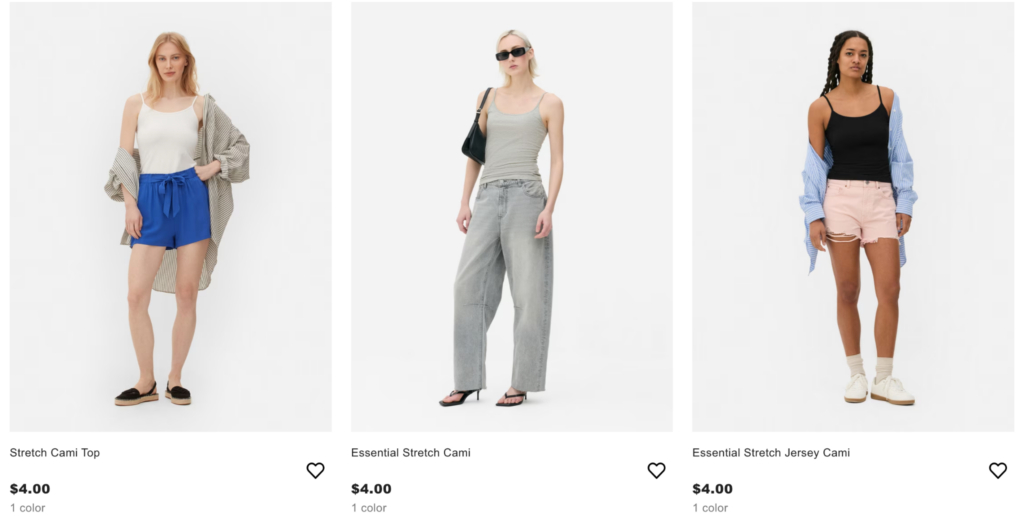
Source: https://www.primark.com/en-us/c/women/clothing
According to the article titled “In Data: Primark’s low prices help make it UK’s biggest apparel brand” addresses:
Primark’s affordability has undeniably been a cornerstone of the brand’s success but that is not all. Through a series of multifaceted strategies aimed at driving demand, the brand implemented initiatives like reducing prices on essential kidswear items, trialing Click+Collect services in stores, and expansion plans with new store openings in the pipeline.
But how do they pull this off without going bankrupt? It’s all about cost management:
- Economies of Scale: Primark orders massive volumes, which drives down the per-unit cost from suppliers. With over 450 stores globally employing more than 80,000 people (according to data provided on the brand’s About Us page), they have serious bargaining power. When you’re ordering tens of thousands of the same item, manufacturers offer significant discounts.
- Lean Operations: They focus staff primarily in cashier areas, saving on labor costs. As their annual report reveals, they also skip anti-theft measures that other retailers invest in.
- No Ecommerce Costs: Primark avoids huge logistics costs, warehouse management expenses, and the losses from returns and exchanges that plague online retailers.
- Minimal Marketing Spend: Primark invests very little in traditional advertising, instead relying on customers to “do the talking” with their distinctive shopping bags. It means the brand saves millions compared to competitors who spend on traditional advertising & TV campaigns.
- Direct-to-Consumer Model: By controlling their own retail spaces and not working through department stores or third-party retailers, Primark eliminates the middleman markup.
But we would like to remind you that the pricing strategy isn’t just about being cheap. When you buy a $5 shirt from Primark, you’re not expecting it to last ten years.
As the study titled “The Reasons of Primark Brand Loyalty in the Post-Epidemic Era Based on Marketing Mix Theory,” noted:
A lower price reduces the decision-making time for consumers, as the price is not too high, so consumers do not need to worry too much.
📌Place: Anti-Ecommerce
In an era where even small boutiques have Shopify stores, Primark stubbornly refuses to sell online—zero ecommerce.
So, you want Primark? You walk into a Primark store.
Their place strategy focuses on strategic physical locations:
- Primark stores are located in major shopping districts where foot traffic is guaranteed.
- Their Tottenham Court Road store in London is often called “the physical showcase.” These flagship stores can exceed 10,000 square meters, creating destination shopping experiences.
- Primark is currently in 17 markets, including their big push into the United States (first store opened in Boston in 2015, with continued expansion). They’ve been particularly successful in Spain, where they “took the Spanish retail scene by storm” over just 10 years.
- And, pop-up stores within flagship locations. These temporary spaces focus on specific themes like sustainability, featuring the Apparel Care Kits and hosting workshops. The pop-ups create newsworthy moments.
Why no ecommerce? Primark argues it would slow down their six-week turnaround and add significant costs. However, strategic brand visualizations suggest Primark is exploring ecommerce partnerships. Recent concepts include collaboration with Amazon for limited-edition collections, allowing Primark to test online sales without building its own e-commerce infrastructure.
However, the stores themselves are promotional tools. With open floor plans and strategically placed new arrivals, the physical space is designed to encourage browsing and impulse purchases.
🏷️Promotion: Word-of-Mouth
Here’s where the Primark advertising strategy gets unconventional.
Traditional advertising spend? Minimal. TV commercials? Rare.
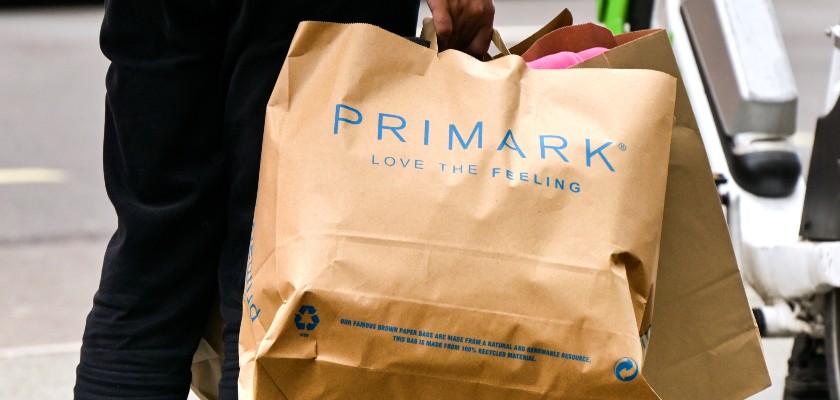
Instead, Primark has mastered what they call “bag marketing.” And that approach lets customers become walking billboards with their distinctive shopping bags. Those blue-and-white bags are instantly recognizable and signal “I’m a smart shopper” to everyone who sees them.
But don’t mistake minimal ad spend for no promotion. Primark is extremely active where it matters:
On social media, Primark has 24 million followers across social platforms. They’re constantly posting on Instagram, TikTok, Facebook, and YouTube. Their content strategy focuses on user-generated content through campaigns like “Primania.” So, Primark’s social media channels act as a hub where customers share their Primark outfits and styling ideas.
What’s more, as a part of its promotion strategy, Primark collaborates with major brands and IPs, like Disney, Marvel, NBA, Barbie, Winnie the Pooh.
SWOT Analysis of Primark
Let’s explore Primark’s position using a traditional SWOT analysis. This will help us understand the overall picture of Primark’s marketing strategy.
Strengths
- Fashion is fickle, and being able to respond quickly to trends means Primark can capitalize on them before they fade.
- They’re the undisputed champion of affordable fashion. With their massive scale and lean operations, competitors struggle to match their prices without sacrificing quality entirely.
- From baby clothes to homeware to beauty products (as we mentioned above), Primark’s range attracts diverse customer segments. You can outfit your entire family and decorate your home in one shopping trip.
- With 66% of clothing containing sustainable materials and comprehensive programs like the Primark Cotton Project, they’re addressing consumer concerns about ethics and the environment. Their partnership with organizations like UNICEF, partnerships with 36 external organizations supporting workers, and 21 social impact programs demonstrate serious commitment.
- Working with direct suppliers and maintaining long-term relationships creates stability and reliability.
Weaknesses
- Primark’s refusal to sell online is leaving significant money on the table. They’re invisible to the growing segment of consumers who prefer online shopping.
- The Tottenham Court Road flagship is impressive, but smaller stores can feel chaotic and poorly merchandised. An industry analysis notes that “the obvious uniqueness between stores could affect customer encounters.”
- Even fans admit Primark clothes aren’t built to last decades. The low prices create expectations of lower quality and shorter lifespan, contributing to the fast fashion criticism.
- Despite genuine sustainability efforts, Primark faces skepticism about whether their initiatives are meaningful or just marketing. The fashion industry generates around 20% of the world’s wastewater and accounts for 10% of global carbon emissions, making it the world’s second-most polluting industry after oil.
Opportunities
- While maintaining their no-ecommerce stance, they could develop apps for store navigation, stock checking, or loyalty programs.
- Encouraging their 24 million social media followers to shop directly through Instagram, TikTok, and other platforms is a good call.
- Only 17 markets currently; it means there is plenty of room to grow, especially in Asia.
- RFID tags, cloud computing, and AI for better inventory control. Strategic proposals include using RFID technology throughout the supply chain for real-time tracking, and QR codes for enhanced customer engagement. These technologies can improve the customer experience while maintaining cost efficiency.
- Their Durability Framework on their sustainability reports (with 66% of tested clothing passing 45 washes) could be marketed more aggressively.
Threats
- Fast fashion isn’t getting less crowded. H&M, Zara, Forever 21, Shein, and countless others are fighting for the same customers. Online-only retailers like Shein have cost advantages without physical stores.
- New EU regulations around sustainability, supply chain transparency, and corporate responsibility require significant investment and compliance efforts.
- Gen Z and younger Millennials increasingly prefer secondhand shopping, clothing rental, or online shopping. The rise of “sustainable fashion” could work against the fast fashion model.
- Shein, ASOS, Boohoo, and other online-only retailers have cost advantages without physical stores and can react even faster to trends. The global e-commerce market remains in a fast-growing position, with worldwide retail e-commerce sales reaching $3.89 trillion in 2026 (projected).
Primark Target Audience & Target Market
Understanding who shops at Primark is crucial to understanding their marketing strategy of Primark. Let’s get specific about who’s filling those shopping bags.
Primary Target Demographics
- Age: The sweet spot is 16-35 years old, with particular strength among the 16-24 demographic.
- Income Level: Primark explicitly targets low-to-middle income consumers. They’re perfect for students, young professionals, families on tight budgets, and anyone conscious about spending.
- Family Status: While young singles are important, Primark also attracts families who need to clothe multiple children without breaking the bank. The wide range from premature babywear to adult sizes makes them a one-stop shop for families.
- Geographic Focus: Currently strong in UK, Ireland, and expanding across Europe (Spain, France, Germany, Italy, Portugal, Netherlands, Belgium, Austria, Czech Republic, Hungary) and the US.
- Gender: While they serve all genders, women’s wear receives the largest floor space and widest variety, reflecting their importance as a customer segment.
Psychographic Profile
- Fashion-Conscious but Budget-Aware: They want to look good and stay on-trend, but they’re not willing to pay premium prices. They’re savvy shoppers who understand that spending $200 on a trend that’ll be outdated in six months doesn’t make sense.
- Impulse Shoppers: The low price points enable guilt-free purchases. “It’s only $5” makes it easy to buy that extra top you don’t really need.
- Environmentally Aware (but pragmatic): They care about sustainability but recognize they can’t afford entirely ethical wardrobes.
- Fitness/Beauty Enthusiasts: New product lines like AthLeisure and PS Beauty attract specific lifestyle segments.
Who Primark DOESN’T Target
- Luxury shoppers seeking exclusivity and prestige brands,
- Consumers prioritizing maximum durability and “buy it for life” quality,
- People who refuse to shop without extensive online research first (though this may change with proposed digital strategies),
- Those who need high levels of personal shopping assistance and white-glove service,
- Customers who only shop online and refuse physical retail experiences,
- Consumers who can afford premium prices and aren’t motivated by value,
By being crystal clear about who they serve (and who they don’t), Primark can focus their Primark marketing strategy with laser precision, avoiding the trap of trying to be everything to everyone.
Primark Marketing Campaigns
Let’s start with the “No Marketing is the Marketing” approach. Like Balenciaga’s anti-marketing approach, Primark deliberately under-invests in traditional marketing compared to competitors. While H&M or Zara spend millions on advertising campaigns, Primark’s approach is to let the products and prices speak for themselves.
According to marketing analysis, Primark “relies on their customers to ‘do the talking’ and promote the store.” This word-of-mouth strategy works because the experience is genuinely worth talking about. When you score five items for $30, you tell your friends.
Research we mentioned above (The Reasons of Primark Brand Loyalty …) confirms:
Primark rarely uses traditional advertising and marketing methods to cut costs and instead relies heavily on social media.
But don’t confuse minimal spend with no strategy. Primark’s marketing strategy maximizes impact while minimizing costs.
In other words, while Primark traditionally avoided expensive advertising, they’ve recently shifted toward creating content-driven campaigns that generate organic reach and engagement.
Before looking at their most notable Primark advertising campaigns, we would like to mention how we chose these Primark campaigns:
At Digital Agency Network, we evaluate campaigns through a combination of strategic, creative, and business-focused criteria.
The campaigns below were selected because they demonstrate how Primark has successfully connected with audiences through cultural relevance, emotional storytelling, strategic partnerships, purpose-driven marketing, and strong brand consistency. Each campaign achieved its objectives differently, but they all share one common trait: they strengthened Primark’s relationship with consumers while reinforcing the brand’s accessible and inclusive positioning.
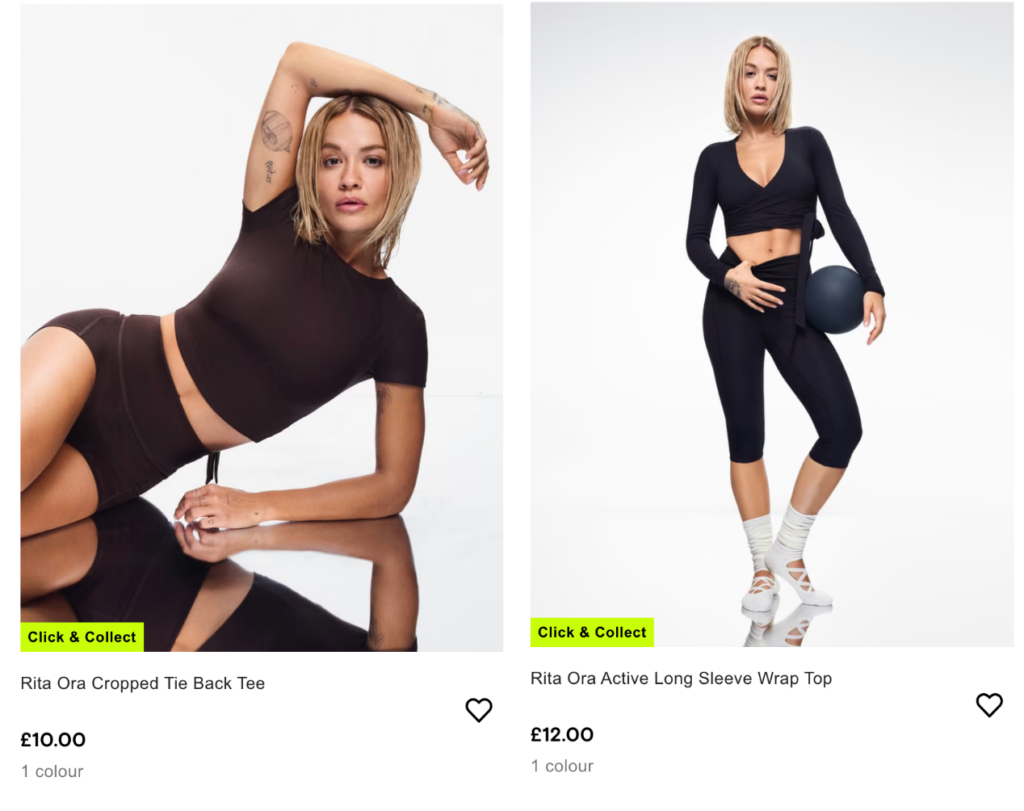
Rita Ora X Primark (2024)
Back in 2024, Primark made headlines by partnering with global superstar Rita Ora for their gym clothing line. This was a strategic integration of star power with brand values.
This collaboration helped reposition Primark in consumers’ minds. If Rita Ora (a fashion icon with high-end credentials) was partnering with Primark, it would validate the brand for customers who might have seen it as “too cheap” to be fashionable.
Source: https://www.primark.com/en-gb/r/rita-ora/view-all
Why It Worked
- Rita Ora was a natural fit for Primark’s audience, bringing global recognition while remaining relatable and accessible.
- The campaign blended celebrity appeal with affordability, making fashion-forward styles attainable for a broad customer base.
- Extensive social media content generated excitement before launch and encouraged user-generated content after release.
- The collection created a sense of exclusivity without compromising Primark’s value-driven proposition.
- By positioning Rita Ora as a creative collaborator, the campaign felt authentic and credible.
PRIMARK | Minions (2016)
Primark’s collaboration with the Minions franchise exemplifies their strategy of partnering with beloved intellectual properties to drive excitement and foot traffic. We see the same patterns in John Lewis marketing strategy.
Like Primark’s campaigns focused on Mickey, Minnie, Donald Duck, Goofy, and more, the Minions campaign demonstrates how Primark leverages existing IP affinity.
Minions fans are already passionate about the characters, Primark just gives them affordable ways to express that passion.
Why It Worked
- The Minions were already a cultural phenomenon with strong international recognition.
- The partnership tapped into emotional connections audiences had with the characters.
- The collection appealed to multiple demographics, including children, parents, and young adults.
- Bright visual merchandising and highly recognizable characters increased in-store visibility.
- The campaign leveraged the popularity of entertainment IP to drive footfall and impulse purchases.
PRIMARK | Breast Cancer Awareness (2024)
Primark has a long-standing partnership with Breast Cancer Now in the UK. And this campaign demonstrates how Primark integrates cause marketing into their strategy.
The fast-fashion brand has employed that campaign through pink-themed products with proceeds benefiting breast cancer research. Items ranged from clothing to accessories to homeware, making it easy for customers to contribute at any price point.
The retailer has pledged to donate more than £1 million to cancer charities across the UK, Europe and the US, to help raise awareness, fund vital research and help those affected by breast cancer. This includes a donation of more than £300,000 to help with research and support for cancer charity.
– Source
Why It Worked
- The campaign aligned the brand with a cause that resonates deeply with many consumers.
- It balanced awareness, education, and fundraising, creating meaningful social impact.
- The initiative demonstrated that purpose-driven campaigns can support both communities and brand reputation.
- Clear messaging made it easy for consumers to understand how their purchases contributed to the cause.
- The campaign strengthened emotional connections by showing Primark’s commitment to issues that matter beyond retail.
THE GET AWAY | Primark Summer (2026)
The Get Away campaign captured the excitement, optimism, and freedom associated with summer travel and seasonal experiences. Through vibrant creative assets and destination-inspired styling, Primark positioned its products as part of consumers’ summer memories:
A slower pace. A lighter suitcase. A summer that feels like a film. The Get Away is here – with effortless dresses, sun-faded prints and pieces made for long lunches and late nights. And the best part? You don’t have to go anywhere to feel like you’ve arrived. When you pull off this look, at this price, you feel like you can get away with anything. This summer, get away with more style for less at Primark.
The campaign embraced lifestyle marketing, focusing on how people want to feel during the summer season.
Why It Worked
- Summer marketing works best when it taps into aspirations, and The Get Away did exactly that. It invited consumers to imagine holidays, adventures, and moments of relaxation.
- The creative execution elevated affordable fashion into a lifestyle experience.
- Its ability to balance aspiration with accessibility.
- The visuals felt premium and inspiring, yet the products remained attainable for everyday shoppers.
Penneys Christmas Ad (2020)
The 2020 holiday season was unlike any other.
Against a backdrop of uncertainty and disruption, Penneys chose to focus on the emotional significance of Christmas rather than traditional festive retail messaging.
The Primark campaign centered on togetherness, connection, generosity, and appreciation for loved ones, themes that felt particularly meaningful at that moment.
As we celebrate 50 Years of Affordable Fashion we’re bringing back our old friend Zack to celebrate Christmas the classic Penneys/ Primark way.
Why It Worked
- The campaign demonstrated a strong understanding of cultural context.
- This emotional intelligence helped the campaign stand out. While many brands focused heavily on promotions and holiday shopping, Penneys focused on people and relationships.
- It reflected experiences that audiences could relate to. Consumers were not looking for perfection during that period; they were looking for reassurance, hope, and connection.
- It strengthened emotional associations with the brand that extended far beyond product purchases.
PRIMARK | Lotto (2020)
The Primark x Lotto collaboration brought together affordable fashion and sportswear heritage at a time when retro athletic styles were enjoying renewed popularity.
By leveraging Lotto’s history and recognition, Primark was able to create a collection that felt both nostalgic and contemporary.
Why It Worked
- The campaign tapped into a major fashion trend.
- Lotto’s established heritage added authenticity to the collection: Primark partnered with a brand that already had credibility within the category.
- Sportswear enthusiasts appreciated the heritage elements, while fashion-conscious consumers were drawn to the retro styling and trend appeal.
- Heritage sportswear brands often command premium prices, but Primark made the trend available to a much wider audience.
PRIMARK | PRIMARK X RED Collection (2020)
The RED Collection partnership connected Primark with a globally recognized initiative dedicated to supporting efforts to combat health inequalities and major global health challenges.
The campaign combined product sales with purpose-driven messaging, allowing consumers to contribute to a larger cause through their purchases.
Why It Worked
- It offered consumers an opportunity to make a positive impact through everyday shopping decisions.
- The RED brand brought significant credibility to the initiative. Consumers were already familiar with the organization’s mission and history of partnering with major global brands, which helped build trust.
- It showed that large-scale retailers can use their reach and influence to support causes that extend beyond the retail environment, creating benefits for both society and brand perception.
What makes these campaigns particularly effective is how Primark integrates them across multiple channels:
- Email newsletters (for employees and potentially customers) announce campaigns,
- In-store signage, window displays, and point-of-sale materials bring campaigns to physical locations,
- Press releases generate coverage in fashion, retail, and lifestyle publications,
- Influencer partnerships create authentic content and reviews,
- User-generated content from customers amplifying campaigns organically,
- Media coverage of charitable partnerships and sustainability initiatives,
- Hashtag campaigns (#PrimarkMinions, #BreastCancerAwareness) trending across platforms,
- TikTok challenges and trends amplifying campaign messages,
- Geographic targeting around new store openings or flagship locations,
- Strategic paid placements to support major launches.
As a summary, here are several elements making Primark marketing strategy unique:
- Anti-marketing marketing,
- Physical-only retail,
- Pop-up shops and Amazon collaborations,
- Extreme value focus,
- User-generated content engine (Primania),
- Transparency about trade-offs,
- The shopping experience itself.
Primark Digital Marketing Strategy
Primark believes that “no marketing is the marketing” and it avoids usual ecommerce sales; however, the brand is very active in digital marketing.
Primark.com isn’t a shopping site, but it’s not passive either. So much so that they display products with prices, allowing customers to browse before visiting stores. This drives foot traffic rather than online sales. It means you see something you like, then you plan a store visit.
Blog posts about styling, sustainability initiatives, company news, and seasonal trends keep people engaged with the brand between shopping trips. Also, there is a store locator helping customers find their nearest location with opening hours, facilities information, and accessibility details.
As we mentioned before, while Primark doesn’t currently sell online directly, strategic brand visualizations show they’re exploring hybrid models. For instance, the Amazon Partnership Concept, which includes strategic proposals like limited-edition collections.
Secondly, pop-up e-commerce, which allows selling specific collections like sustainability-focused lines or designer collaborations.
Despite no e-commerce, Primark invests in search visibility. Local SEO efforts (“Primark near me” or “clothing store in [city]”), brand protection, content marketing, and featured snippets are handled by the company.
Speaking of Primark digital marketing, it is a must to mention the social media efforts of the brand.
Primark Social Media Strategy
Despite minimal traditional advertising spend, with 24 million followers across platforms, Primark social media strategy is sophisticated and effective.
On Instagram, Primark posts product showcases with prices clearly visible, styling inspiration and outfit combinations, user-generated content and behind-the-scenes content from stores and designers.
On the platform, you can see partnerships with micro- and macro influencers who create authentic content.
On the fastest-growing platform among Gen Z, TikTok, Primark shares quick styling videos (3 ways to wear this $5 shirt), daily store & shopping videos, store hauls and tips & facts by using popular sounds and formats.
Primark also good at polished social media ads; take This Season’s Worst Kept Secret as an example. The campaign strategy was brilliantly simple, the brand shared cryptic posts on social media hinting at something big coming. No details, just enough to spark curiosity and conversation.
Primark “accidentally” revealed small details through influencer partnerships and employee social posts. These “leaks” were calculated to build buzz while maintaining plausible deniability. The “worst kept secret” positioning acknowledged the leaks while making customers feel like insiders. Then the brand announced the collection/collaboration with full product details, availability dates, and comprehensive visual content. By this point, anticipation was at its peak.
This campaign worked because it tapped into fundamental human psychology.
What about YouTube? Primark is among the brands that uses YouTube as a longer-from content library. The fashion brand shares behind-the-scenes at factories and programs, seasonal lookbooks and more.
Perhaps the best content on the Primark YouTube channel is “P’s In A Pod.” As a great lifestyle marketing example, that video series covers topics beyond just fashion; discussing trends, lifestyle, sustainability, and cultural moments that matter to their target demographic.
The format is conversational and approachable, featuring discussions between Primark team members, influencers, and sometimes customers.
Another great Primark marketing campaign on YouTube is the brand’s careers videos series. You may think that it’s not a marketing move, however, we can simply say that employer branding is a part of positioning.
These videos showcase real employees sharing their experiences, career progression stories, and what makes Primark a great place to work. The genius here is dual-purpose content. These videos help recruit talent while simultaneously building brand credibility with consumers.
What’s more? Like Wayfair marketing team does, Primark invests in Pinterest; the brand shares visuals for users actively seeking inspiration.
And here is Primark’s secret weapon: turning customers into content creators.
Remember Primania. As we metioned before, it’s a dedicated community where customers share their outfits, styling ideas, and shopping hauls. That community provides Social proof and peer recommendations.
In addition to that, Primark encourages its customers to share using specific hashtags, then features the best content on official channels.
Who are Primark’s Main Competitors?
So far, we’ve discovered Primark digital marketing & social media strategy in detail. It’s time to name Primark competitors.
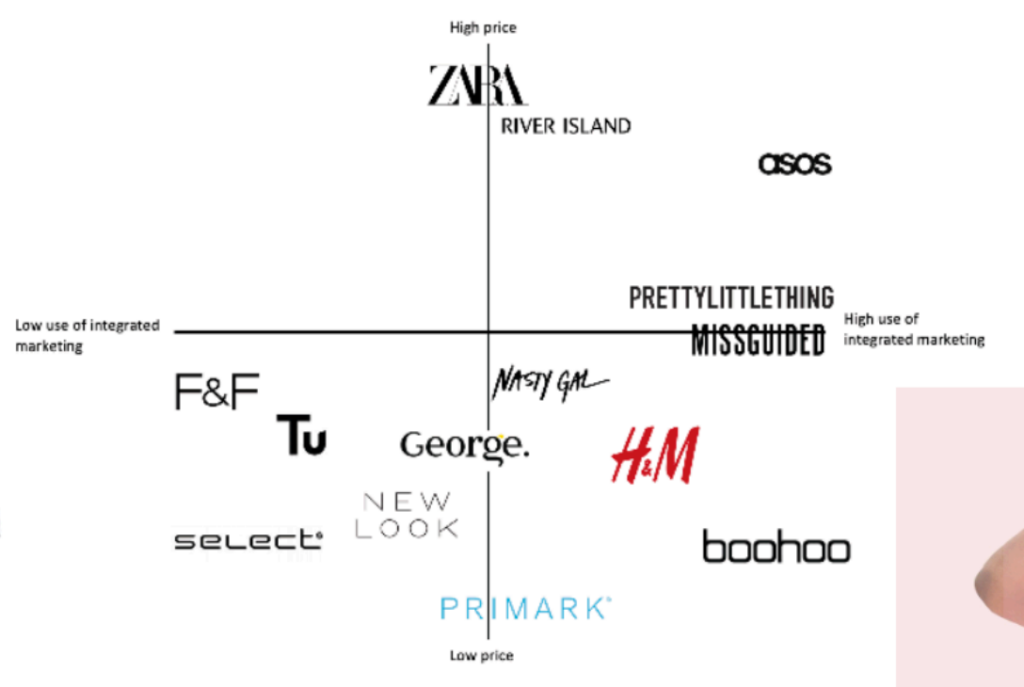
- Fast Fashion Retailers: Uniqlo (the biggest competitor), John Lewis, H&M, Zara, Forever 21 and New Look.
- Online-Only Fast Fashion: Shein, ASOS and Boohoo.
- Supermarket Brands:George (Asda), F&F (Tesco) and Tu (Sainsbury’s).
- Value Segment: TK Maxx, Matalan.
Primark’s competitive advantage is the combination of lowest prices, physical store experience, rapid trend response, and increasing sustainability focus. No single competitor matches all these attributes.
In addition to that quick scoping, the paper titled “Strategic Brand Concept Visualisation” says more about competitor analysis:
FAQ about Primark Marketing Strategy
What is the marketing strategy of Primark and how does it differ from other fast fashion brands?
While Zara, H&M, and other fast fashion brands are pouring millions into glossy ad campaigns and aggressive digital marketing, Primark marketing strategy is built on extreme word-of-mouth amplification and creating shareable moments that customers actually want to talk about. Unlike competitors who balance online and offline presence, Primark advertising doubles down on the physical retail experience, making their stores the hero of the story. They focus on community-driven content through their Primania platform, strategic partnerships with beloved brands like Disney and Minions, and purpose-driven campaigns like their Breast Cancer Awareness initiative.
How does Primark’s marketing strategy support its low-cost, high-volume business model?
Every single element of Primark’s marketing strategy is laser-focused on protecting their cost leadership position. In other words, Primark marketing approach creates urgency and excitement around physical store visits (not online browsing), which supports their brick-and-mortar-only model and eliminates the costly infrastructure of e-commerce warehouses, returns processing, and digital customer service. The campaigns they do run are designed to create FOMO and drive foot traffic in concentrated bursts. The genius is that their low prices are the marketing message; when you can genuinely offer a t-shirt for $2.50, that fact spreads faster than any ad campaign could. Plus, by creating shareable moments and encouraging haul videos, they turn customers into content creators who essentially provide free advertising to millions of viewers.
What role do advertising campaigns play in Primark’s overall marketing strategy?
Primark advertising campaigns aren’t about traditional “buy this product” messaging, but strategic content moments designed to spark conversations and build community. Not constant advertising presence like their competitors maintain, Primark drops crafted campaigns at key moments. In other words, Primark’s campaigns function as cultural moments that deepen relationships with existing customers, generate earned media coverage, provide fresh content for their 24 million social followers, and give people compelling reasons to talk about and share the brand.
How does Primark approach advertising compared to digital-first fashion retailers?
The contrast between Primark’s approach and digital-first retailers like ASOS, Boohoo, or Shein is absolutely stark. Digital-first brands pour massive budgets into paid social media ads, as you already know; Google Shopping campaigns, retargeting pixels or influencer sponsorships. Since that’s their only way to capture customers who’ll never walk past their (non-existent) physical stores. Primark, on the other hand, is basically doing the opposite. Primark obsesses over creating in-store moments so compelling that customers flood TikTok with haul videos that rack up millions of views. While online retailers use sophisticated retargeting to follow you around the internet after you browse their site, Primark relies on those distinctive blue shopping bags.
What is Primark’s marketing mix and how does it reinforce its brand positioning?
Primark’s marketing mix is a masterclass in internal consistency. Product is all about volume and variety: offering everything from premature baby clothes to homeware to their PS Beauty line means customers can meet multiple needs in one trip. Price is obviously their superpower, at $2.50 for a t-shirt and averaging $30 less than Zara for similar items, they’re the undisputed cost leaders. Place strategy is physical-only (for now), with 451 stores in prime high-street locations creating destination shopping experiences. Promotion flips conventional wisdom by minimizing paid advertising and maximizing earned media.
How has Primark’s advertising strategy evolved without relying heavily on paid media?
Primark’s advertising strategy has smartly evolved from relying solely on word-of-mouth buzz and iconic shopping bags to mastering earned and owned media in the social media era. They launched Primania to turn customer hauls and outfits into viral user-generated gold, sparking organic shares without hefty ad spends, then layered in purpose-driven campaigns that forge genuine emotional connections and earn media coverage. Today, they’ve transformed into a mini media machine within retail, pumping out videos, posts, event highlights, and tips that fill the void of traditional ads, while perfecting influencer partnerships with micro and macro creators for authentic, trust-driving content like haul videos that outperform polished commercials.