
















Top Retail Marketing Campaigns: Must-Know Tactics Driving Sales for Brands
When Walmart rolled out its Deals for Days campaign, it didn’t just increase traffic. Actually, it turned limited-time promotions into record-breaking e-commerce sales.
Similarly, Target’s Circle Rewards program has done the same by using data-driven personalization to keep customers coming back week after week. These initiatives stand out as some of the best retail advertising campaigns because they move beyond visibility and directly fuel long-term revenue growth.
So, what makes these campaigns work?
Research indicates that retail marketing campaigns, anchored in targeted ads (PPC or social media), influencer marketing, and content-driven storytelling, are effective in driving traffic and conversions. Especially when supported by data analytics and customer segmentation, these marketing efforts create personalization at scale, capturing attention and converting interest into sales.
Just as important, effective engagement strategies further elevate these campaigns.
We also know that brands that connect with their customers on a “personal level” to build stronger, more engaged communities. When a customer feels seen and valued, whether it’s through a loyalty program, a personalized email, or a simple comment response on social media, they’re much more likely to stick around and keep buying from that brand.
According to the research titled Influence of Social Media Marketing on Profitability of Commercial Banks, social media platforms like Instagram, Facebook, and Twitter are key to this. They let brands share their own stories and content, but more importantly, they give a platform to the real-life experiences of their customers.
When prospects/buyers see “real” reviews and unboxing videos, it, of course, builds trust in a way that traditional advertising can’t. This mix of branded content and real user posts is what really deepens the connection between a brand and its community.
The best retail advertising campaigns, therefore, go beyond selling products.
So much so that they create experiences that blend precision targeting with genuine engagement.
For marketers, agencies, and brands, the challenge is clear: how can we design campaigns that achieve the same level of measurable impact? Let’s find out together.
What’s Inside
Best Retail Advertising Campaigns That Made an Impact
As we stated above, the best retail advertising campaigns succeed because they go beyond discounts and promotions; they actually create experiences that blend online shopping convenience with emotional connection.
What’s more, these campaigns meet the target audience where they spend time, often on a social media platform, and spark conversations that extend through word of mouth. Brands are also experimenting with augmented reality to make these campaigns more interactive and memorable.
In that section, we will look closer at the top retail marketing campaigns that made an impact:
- M&S – Paddington & The Christmas Visitor #LoveTheBear
- Walmart – Moms Answer Moms
- Target – Secretly In Love with Fall with Teammates of Target ft. Karl Anthony Towns & Jordyn Woods
- Whole Foods Market – Vegan Berry Chantilly Cake
- 7-Eleven – 7-Election
- IKEA – Do Try This at Home
- Sam’s Club – Join the Club
- Lidl – A Magical Christmas
Before We Look at the Best Retail Marketing Campaigns: Build Your Own
Before exploring the campaigns that made an impact, see what kind of retail campaign could work for your own brand. Choose your goal, audience, channel, and offer to generate a tailored campaign concept.
Create a retail campaign concept based on your brand, audience, goal, offer, and preferred channels.
The 48-Hour Drop
–
–
–
–
M&S – Paddington & The Christmas Visitor (#LoveTheBear)
The M&S Paddington & The Christmas Visitor (#LoveTheBear) campaign is a reminder that sometimes the most effective retail marketing campaigns are the ones that make people feel something first.
By bringing well-known movie star Paddington Bear into the story, M&S tapped into nostalgia and warmth that connected instantly with families.
What’s more, that successful retail campaign flowed naturally into online shopping, with Paddington merchandise flying off shelves and ecommerce platforms. On every major social media platform, the hashtag #LoveTheBear gave people a reason to share their own reactions, creating genuine word of mouth that no paid placement could replicate.
Why It Worked
- M&S put the story before the sale. Paddington gave the campaign a recognizable emotional hook, while the Christmas setting made nostalgia, family, and generosity part of the brand experience.
- The campaign connected entertainment with commerce naturally. Paddington merchandise gave customers a way to take a piece of the story home, helping the campaign move beyond awareness and into the shopping journey.
- #LoveTheBear extended the idea onto social media and gave audiences a simple way to join the conversation. The result felt more like a shared Christmas moment than another seasonal retail promotion.
When the Holiday Hype Fades, What’s Next?
Big holiday moments like M&S – Paddington capture hearts, but sustaining that momentum requires strategic brand building. We looked at agencies that help retail brands translate campaign attention into lasting performance.

Walmart – Moms Answer Moms
Moms Answer Moms campaign, released via TikTok and Instagram, is a community-driven retail campaign. Walmart’s marketing campaign is designed to connect potential customers through authentic, peer-to-peer interactions.
Instead of relying on traditional top-down messaging, Walmart built an online space where moms could ask questions, share advice, and recommend products to one another. With a popular figure, Paris Hilton.

By creating this environment of shared experiences, Walmart not only increased engagement but also built stronger brand loyalty among families who saw the retailer as part of their support network.
Why It Worked
- Walmart understood that parents often trust other parents more than polished brand messaging. By putting real questions, recommendations, and experiences at the center, the retailer positioned itself as the facilitator of the conversation.
- The TikTok and Instagram format also mirrored the behavior the campaign was trying to encourage, such as asking something, answering something, and sharing an experience, and repeating. That made participation feel native to the platforms.
- Bringing Paris Hilton into the campaign added reach and entertainment value without pushing the community element into the background. The celebrity helped attract attention; the moms gave people a reason to stay engaged.
Target – Secretly In Love with Fall with Teammates of Target ft. Karl-Anthony Towns & Jordyn Woods
When it comes to retail marketing campaigns, it’s impossible not to mention Target.
Secretly In Love with Fall with Teammates actually is a seasonal lifestyle retail campaign designed to capture the excitement of fall shopping.
Instead of focusing purely on products (or services in other cases), Target leaned into the cultural energy of the season while bringing in high-profile figures to support the message.
By featuring NBA star Karl-Anthony Towns and influencer Jordyn Woods alongside real Target teammates, the campaign shows how a retailer can feel both aspirational and approachable at the same time. For potential customers, this is a mix of celebrity influence and employee storytelling.
Why It Worked
- Pairing Karl-Anthony Towns and Jordyn Woods with Target teammates created a smart mix of aspiration and familiarity. Celebrity pulled attention in, while employees kept the campaign grounded in the actual Target experience.
- Most importantly, products became part of a lifestyle story. That is a much stronger creative position for seasonal marketing than placing a few pumpkins beside a promotional price tag and calling it autumn.
Whole Foods Market – Vegan Berry Chantilly Cake
Actually, it is not a traditional 360-degree retail campaign, yet it became one of the most talked-about product stories on TikTok.
Before talking about the campaign, we would like to mention that Whole Foods Market has a great online presence on social media. Take a look at the follower numbers; it seems very good for a retail brand.
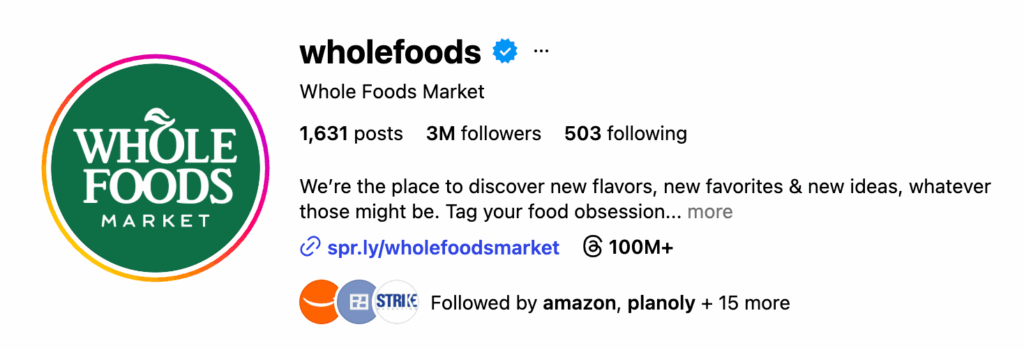
And its various posts, some of which went viral:
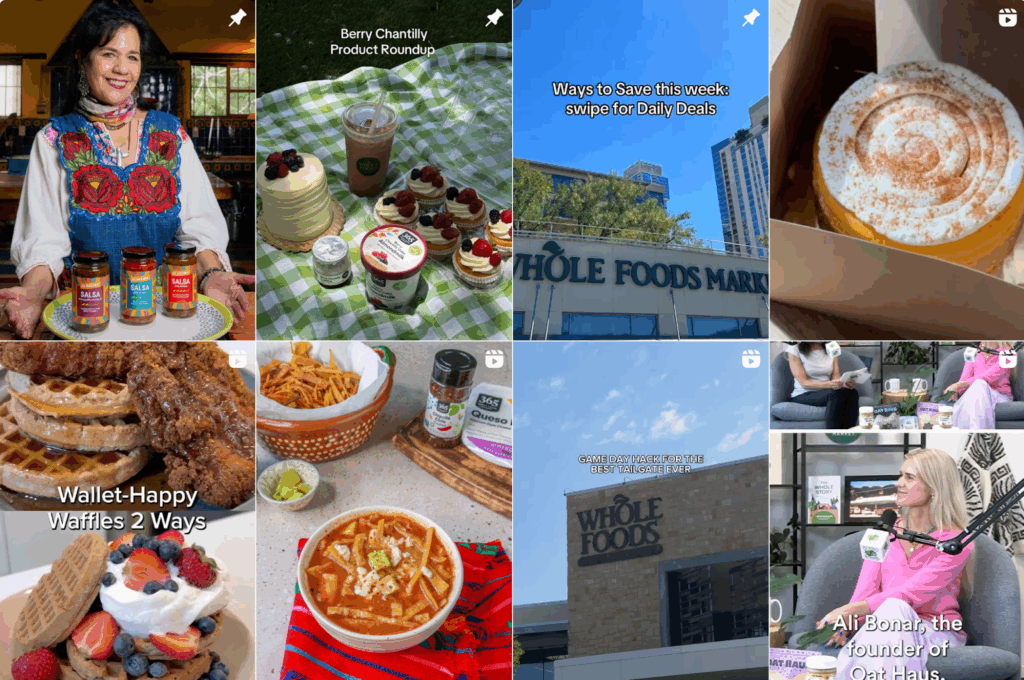
When it comes to the campaign, it became a viral success because it tapped into one of the most powerful consumer trends today: plant-based living.
What drove the momentum wasn’t heavy advertising but the cultural pull of veganism itself. For potential customers, the cake represented more than a dessert; it was a lifestyle choice that aligned with values of health and sustainability.
Why It Worked
- That retail marketing campaign benefited from a product that already belonged to a highly active cultural conversation around plant-based & vegan food. Whole Foods gave an existing community something new to discover and talk about.
- TikTok was also a natural home for the product. Food reveals, reactions, recommendations, and comment-driven follow-ups can turn a single item into ongoing content.
7-Eleven – 7-Election
During U.S. election years, the well-known retail brand introduced paper cups in red and blue and invited customers to “vote” with their daily coffee purchase.
This unique retail marketing campaign turned an “everyday product” into an interactive experience and gave customers a playful way to participate in the political season.
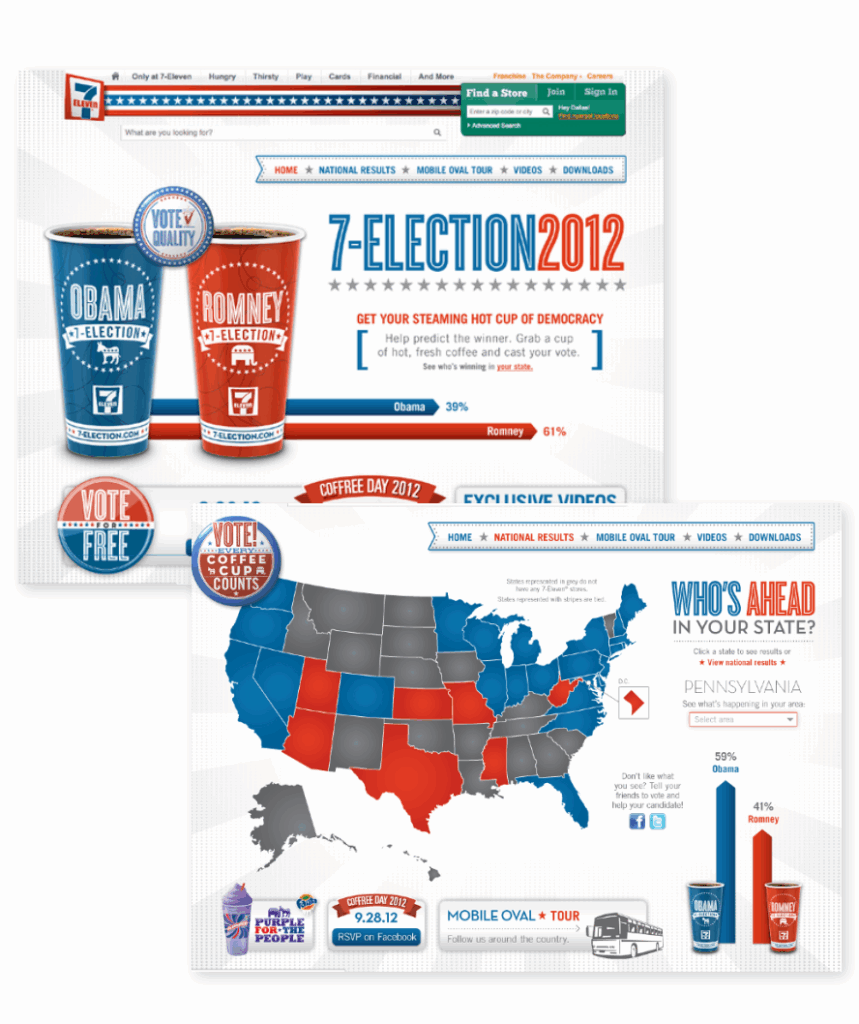
Customers didn’t just buy coffee; they posted the campaign on social media and debated with friends.
Why It Worked
- The idea made participation almost effortless. Customers could simply choose a coffee cup while making a purchase they may have made anyway.
- 7-Eleven also attached an everyday product to one of the biggest conversations happening in American culture; that gave an ordinary coffee run a timely social layer.
- Most importantly, the campaign was built to be discussed. Red cup or blue cup? One tiny decision created an excuse for customers to compare choices, post about them, and bring the campaign into conversations outside the store.
IKEA – Do Try This at Home
IKEA puts everyday life at the center of “Do Try This at Home,” a campaign that celebrates the very human ways people use their homes.
The idea of the IKEA campaign is simple: your home is not a showroom. It is where people play, improvise, make a mess, host friends, rearrange things, and somehow turn a spare corner into something useful. The campaign shows that reality with a playful tone, placing IKEA products inside familiar domestic moments.
That approach gives the campaign an easy warmth. A sofa, table, storage unit, or lamp becomes part of the scene because someone is actually using it. The product story stays visible, but the human behavior carries the creative.
For anyone looking at retail marketing campaigns that make affordability feel emotionally relevant, IKEA offers a strong example. The brand keeps its long-standing value message in view while giving people something more engaging than price-led advertising.
Why It Worked
- IKEA products fitted naturally into the action, so viewers could understand what the products enabled without sitting through a heavy-handed sales pitch.
- Humor gave the campaign personality. It helped IKEA keep the tone light while still addressing a serious consumer concern around household spending.
- The campaign also worked across markets because the situations were easy to understand without relying on highly specific cultural references.
- So, among recent retail advertising examples, it stood out because the creative idea and the retail proposition supported each other closely. The entertainment had a clear commercial role.
Sam’s Club – Join the Club
Sam’s Club builds its “Join the Club” campaign around one of the most useful phrases available to a membership retailer.
The line works as a direct invitation, but it also gives the campaign a conversational rhythm. Shoppers talk about what they want from a retailer, and Sam’s Club answers with a reason to become a member. The scenarios cover areas such as premium food, private-label products, easier checkout, curbside pickup, and other shopping conveniences.

Source
The campaign makes the membership proposition easier to digest because it breaks it into specific everyday benefits. Instead of asking viewers to think about a long list of features at once, each execution focuses on a recognizable shopping need.
Why It Worked
- The campaign structure gave Sam’s Club room to talk about many parts of the business without losing the central idea.
- The humor made the membership message feel conversational and helped the ads avoid sounding like a list of benefits.
- The executions showed how Sam’s Club fitted into real shopping decisions, from buying better food to saving time during the trip.
- It became a strong example of retail advertising because the campaign turned a practical business proposition into an idea people could remember after the ad ended.
Lidl – A Magical Christmas
The story follows a child who discovers a magical bell capable of granting Christmas wishes. That device gives the campaign room to move through different festive moments, including food, presents, family gatherings, and seasonal shopping.
Lidl products sit throughout the story, but the campaign also connects the advertising with something customers can take part in through the retailer’s Toy Bank initiative. Shoppers can donate new toys in store, giving the Christmas message a physical presence inside the retail environment.
That link between advertising and store activity makes the campaign especially relevant in conversations about the best in store marketing campaigns. The emotional idea does not stop when the film ends. Customers encounter a related action when they visit the store.
Why It Worked
- The magical bell created a flexible story device that allowed the film to move through different products, categories, and festive moments without feeling fragmented.
- The Toy Bank initiative added a real-world participation layer. Customers could engage with the campaign during the shopping trip, giving the idea more depth.
- Seasonal products appeared throughout the story in a way that supported the setting and kept the retail offer visible.
- The campaign created a useful connection between brand advertising and the store experience, which made it stronger than a Christmas film that lived only on screens.
Retail Marketing Strategies that Actually Move Shoppers
So far, we’ve explored some good retail marketing campaign examples. Now, we need to answer that question: What makes someone notice a retailer, walk into the store, add something to their cart, and actually come back?
A customer can spot a product in a creator’s video, Google it during lunch, check reviews that evening, visit the store at the weekend, scan the product with an app, leave without buying it, then order it from the sofa two days later. The strongest retail marketing strategies understand this behavior and build around it. Advertising still creates the spark, but the wider strategy has to connect discovery, convenience, stores, personalization, loyalty, and the purchase experience.
Here are the retail marketing strategies worth paying attention to.
1. Treat Social Media Like a Storefront for Discovery
People scroll with shopping somewhere in the back of their minds more often than retailers might think.
PwC’s Voice of the Consumer Survey, based on more than 20,000 consumers across 31 countries and territories, found that 67% use social media to discover new brands. Even more telling, 46% have purchased products directly through social media, up from 21% in 2019. And before committing to a company, 70% look for reviews to validate it. That changes the job of retail social content.
A retailer’s Instagram, TikTok, or YouTube presence can introduce products, answer questions, demonstrate use cases, surface customer reactions, and build enough confidence to trigger a purchase,” explains Alex Tkacovs, founder of the ad agency, 94n Digital.
Think about the content people already enjoy watching: a surprisingly good supermarket product, an IKEA storage trick, a Costco-sized item that looks absurd until somebody demonstrates it, a seasonal Target find, or an Aldi product that suddenly becomes impossible to find because TikTok discovered it first.
Those moments feel native to retail because discovery is part of the fun.
Influencers add another layer. Adobe found that influencer-driven shoppers converted at 10 times the rate of social media traffic overall. Among Gen Z respondents in Adobe’s survey, 37% said they had purchased something based on an influencer recommendation.
So, it’s best to give creators something worth showing. A strong product, useful discovery, interesting store experience, unusual feature, limited release, or clever use case can carry a lot more weight than another carefully approved “Hey guys, I partnered with…” introduction.
Quick takeaway: Build social content around what makes someone stop and send the post to a friend. Add the shopping path once you have earned that attention.
2. Make the Physical Store Worth the Trip
Although we’ll look closer at that in the following section, “Coordinating Online and Offline Campaign Touchpoints,” let’s see some figures.
IBM’s consumer research found that 73% of surveyed consumers prefer physical stores, yet only 9% said they were satisfied with the in-store experience. The same research found that 65% use mobile apps while shopping in stores.
So, the store has advantages that digital channels cannot fully reproduce. Customers can touch products, test them, compare sizes, ask staff questions, discover something they never searched for, or walk out with it immediately. In other words, good in-store marketing gives those advantages more room to work.
Think product demonstrations, sampling, limited-edition drops, member events, interactive displays, QR-enabled product information, smart fitting rooms, local collaborations, personalization stations, workshops, seasonal installations, and experiences people genuinely want to photograph.
Quick takeaway: Walk through your store as a customer with one question in mind: What is genuinely easier, more useful, or more enjoyable here because I came in person? If the answer is “there are shelves,” there is some work to do.
3. Personalize Around Usefulness
Personalization sounds great until a retailer sends you six emails about the toaster you already bought. Customers do want relevant experiences. They also have a finely tuned radar for marketing that feels intrusive, repetitive, or slightly clueless.
McKinsey found that 71% of consumers expect companies to deliver personalized interactions, and 76% become frustrated when those expectations are missed. Its research also found that 78% of consumers said personalized communications made them more likely to repurchase.
The business upside can be significant too. McKinsey reports that faster-growing companies generate 40% more of their revenue from personalization compared with slower-growing companies. Useful personalization can be surprisingly ordinary.
A grocery retailer can remind someone about frequently purchased items. A fashion retailer can surface new pieces in the customer’s preferred category or size. A home retailer can recommend accessories that fit a previous purchase. A loyalty app can show offers based on actual shopping patterns. Local inventory can shape the products shown in an email.
Quick takeaway: Ask, Does this message become more helpful because we know something about this customer? If the customer data adds no value to the experience, adding their first name to the subject line will not save it.
4. Build Loyalty Around More Than Points
Retailers love loyalty programs. Customers love rewards. Somewhere along the way, we collectively ended up with enough points systems to require a separate spreadsheet.
There is still plenty of value in rewards, but emotional loyalty appears to be getting harder to earn.
Salesforce reports that 54% of customers say they feel an emotional connection to the brands they buy, down from 62% in 2022. Its research also found that 54% of retail loyalty programs still offer points-based rewards. Points are useful. Recognition can make them much more valuable.
“Early access to products, member pricing, free services, personalized offers, birthday rewards, exclusive events, easier returns, useful recommendations, priority delivery, surprise perks, or access to experiences can all give the relationship more texture,” explains Brian Lim, founder of fashion brands iHeartRaves and INTO THE AM.
That is especially relevant when studying the best retail marketing campaigns. The campaign may create the first burst of excitement, while loyalty determines how much of that excitement survives after the initial purchase.
Retailers such as Sephora, Target, Tesco, Starbucks, Walmart, and major warehouse clubs have learned that membership can become an ecosystem. The app, offers, checkout experience, purchase history, promotions, and service benefits all contribute to how valuable that relationship feels.
Quick takeaway: Look through your loyalty benefits and remove the word “points.” What useful reasons remain for someone to identify themselves as a member?
5. Remember That Returns Are Marketing Too
The customer journey does not politely end at checkout. Sometimes the shoes do not fit. The lamp is enormous. The birthday gift misses the mark. The customer bought three sizes because online sizing remains one of retail’s great unsolved mysteries. The return experience becomes part of the brand experience.
A frustrating return can undo the work of paid media, social content, email, CRM, creative production, and a lovely Christmas ad in about seven minutes.
NRF’s research shows that 76% of consumers are more likely to choose a return option that gives them an instant refund or exchange. Convenience during the least exciting part of shopping can create a surprisingly strong impression.
As Happy Returns co-founder and CEO David Sobie puts it:
“Return policies and their overall process have transformed into a strategic touchpoint for retailers.”
Retail marketing teams should care about that touchpoint. Customer experience has a funny habit of becoming word-of-mouth.
Quick takeaway: Test your own return process from start to finish. Count the clicks, forms, waits, labels, emails, and awkward instructions. Your customers already do.
6. Plan Around Shopping Moments, Then Find the Human Story
The retail calendar is full before January even begins.
Deloitte found that 59% of consumers planned to use social media during their 2025 holiday shopping, while 33% planned to use generative AI, more than twice the previous year’s figure. Those numbers show how quickly the research and discovery part of seasonal shopping is evolving.
Yet a calendar date alone rarely produces a strong campaign. “Christmas is coming” tells you when to advertise. However, the best retail marketing campaigns usually find that second layer: the ritual, tension, joke, behavior, feeling, or cultural observation sitting underneath the shopping occasion.
Quick takeaway: Put the promotional calendar aside for ten minutes and write down what customers are actually experiencing during that period. Start the creative discussion there.
Key Principles of Retail Campaign Management
No need to repeat, but running a retail campaign today isn’t just about getting products in front of people. Most retailers already know this.
In fact, research shows that 85% of them believe digital marketing gives them access to a much larger customer base, which is why they are now using digital tools to promote their products. The challenge isn’t adopting digital nowadays; it’s knowing how to manage campaigns in a way that feels relevant and impactful.
So, here are our key principles of retail campaigns:
Aligning Campaigns with Consumer Journey Stages
Shoppers don’t move from awareness to purchase in a straight line; they pass through stages of discovery and decision-making. And they are mostly influenced by social media and personalized online content along the way.
When campaigns align with these stages, they feel less like promotions and more like timely support. At the end of the day, that approach helps potential customers make confident choices.
The most successful retail advertising campaigns also extend beyond the point of purchase. Post-purchase engagement, like thank-you emails, invitations to loyalty programs, or UGC, reinforces repeat purchases, as we stated before.
Just as important, campaigns that connect on a human level are the ones that last.
As we’ve seen with Walmart’s Moms Answer Moms or 7-Eleven’s 7-Election, the campaigns that really stick are the ones that connect with culture and everyday life.
When people feel like a campaign reflects them, they talk about it, share it, and come back for more. So, at the heart of it, campaign management is about listening, responding, and creating experiences that matter to your target audience.
Setting Clear Goals and KPIs for Retail Success
Successful retail campaigns only deliver value when they are backed by clear goals and measurable outcomes. We are talking about KPIs.
In retail marketing, the most vital metrics go beyond vanity numbers and focus on what matters most: attracting potential customers, converting them into buyers, and building loyalty.
Commonly used KPIs include website traffic, click-through rates, and conversion rates, which show how well campaigns capture attention. Others, like customer acquisition cost (CAC) and customer lifetime value (CLV), help measure efficiency and long-term profitability.
Using tools such as Google Analytics, Facebook Ads Manager, and email marketing dashboards, retailers can track performance in real time and adjust campaigns on the fly. Like refining targeting, updating creative, or testing offers to improve outcomes.
In short, the best retail advertising campaigns succeed not just because they’re creative, but because they’re measured, optimized, and held accountable to the results that matter most.
Coordinating Online and Offline Campaign Touchpoints
The customer journey is too fragmented, with buyers moving between online shopping, mobile apps, and physical visits before making a decision. According to McKinsey’s research titled The Future of Retail Grocery in the Digital World:
For a long time, many grocery retailers essentially did not market their brand at all, relying instead on merchandising and promotions such as flyers and couponing. That linear era has long since passed. Marketing and brand building can no longer happen predominately within the four walls of the store.
To meet evolving expectations, retailers must adopt omnichannel strategies that combine the strengths of online and offline campaign touchpoints.
To effectively reach and engage with a broader audience, retailers should adopt omnichannel strategies that combine the benefits of both digital and traditional marketing. Ensuring a seamless and cohesive customer experience across online and offline touchpoints—such as physical stores, websites, mobile apps, and social media—will increase customer retention and drive brand loyalty. Retailers should integrate their e-commerce platforms with in-store experiences and offer consistent messaging across all channels.
Source: https://www.jetir.org/papers/JETIR2505804.pdf
Retail Campaign Development Process
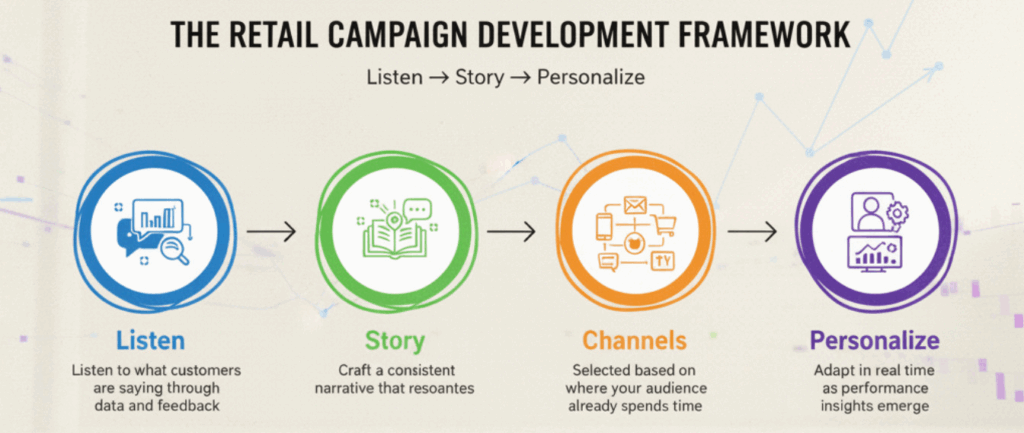
A home truth: Behind every memorable retail marketing campaign is a process that balances data & insights, creativity, and execution.
While no two campaigns are identical, the strongest ones tend to follow a similar flow: understanding the customer, shaping a story that resonates, and choosing the right channels.
Let’s be more specific.
Market Research and Customer Insights
As we mentioned before, successful retail marketing campaigns begin with understanding how customers feel.
Numerical performance data says so much; however, qualitative insights from customer feedback give a deeper understanding of how messages & offerings are being received.
Customer testimonials, comments on social media, post-purchase surveys, or any kind of feedback are valuable sources for retail brands. Retailers operating customer support or sales lines can mine that channel, too – a conversation intelligence platform can surface common pain points and sentiment trends directly from call transcripts, adding another layer to the qualitative picture. In recent years, sentiment analysis, where NLP is used, also help brands to get customer perception.
Positive sentiment around an influencer campaign, for example, may confirm strong brand alignment, while negative comments can signal issues with product quality or misleading promotions. Retailers who actively monitor and respond to this feedback don’t just refine their marketing strategies—they also build trust and foster stronger relationships with their customers.
Creative Concept Development and Storytelling
With insights in place, the next step is creating a story that people want to follow.
The most effective creative concepts make people feel seen. Customers don’t just remember prices or promotions; they remember stories that reflect everyday life. When the narrative resonates, the campaign becomes something people want to share, not just something they scroll past.
This is also where experienced retail marketing agencies can add real value, turning customer insights into creative concepts that work across social media, ecommerce, paid media, and physical stores.
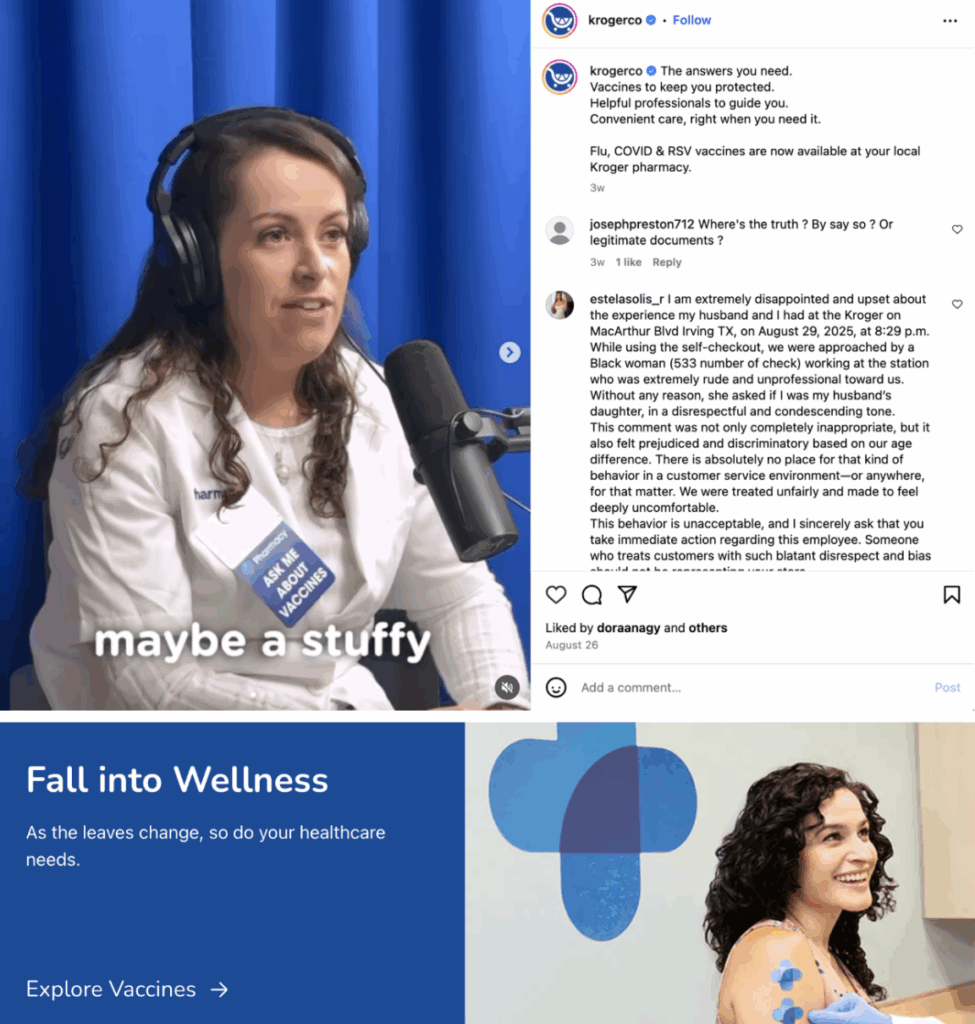
While doing all of these, also remember to keep the story consistent. The tone, message, and visual direction should feel connected wherever customers encounter the campaign, even when the execution changes from one channel to another.
The audience may see the ads on Instagram or TikTok, shop on the website, and then visit a store later that day. If the experience feels fragmented, the connection weakens. The boldest retail campaigns tell the same story everywhere.
Take Kroger’s approach to its Fall into Wellness campaign on its social media channels and official website:
Channel Selection and Budget Allocation
Being consistent is important; however, the goal isn’t to be everywhere. It’s to be in the right places where your target audience already spends their time.
That might mean social media platforms for younger shoppers, loyalty apps for repeat buyers, or in-store activations for seasonal campaigns. Budgets work hardest when they’re spread strategically, with each channel reinforcing the same message so the customer’s experience feels connected whether they’re online, in an app, or walking through a store.
At that point, also remember to start with the customer, not the channel. In other words, instead of asking, “Which channel should we push this on?” the better question is, “What does our customer actually care about right now, and how can we deliver it most naturally?”
Thanks to digital transformation, retailers now have detailed insights into customer preferences:
Retailers now have access to vast amounts of information about consumer preferences, browsing behaviors, and purchase history, which can be leveraged to tailor marketing efforts and improve customer satisfaction. In this context, digital transformation in retail refers not only to the adoption of digital tools but also to a fundamental change in how retailers interact with consumers, with a strong focus on personalization, real-time engagement, and data-driven decision-making.
Here is a summary of the retail campaign development process:
Measuring and Optimizing Retail Campaigns
No retail campaign should run blind.
So, to evaluate the real-world impact of digital marketing strategies in the retail sector by using both quantitative and qualitative metrics is a must.
While digital marketing strategies & AI tools can improve customer outreach, brand engagement, and revenue, their effectiveness needs systematic assessment to align with business goals. Digital channels provide real-time feedback (e.g., through dashboards), enabling marketers to quickly identify what works and what doesn’t, allowing for immediate adjustments.
Here are key practices for measurement and optimization, along with a concrete contrast example:
- Track KPIs: Use metrics like website traffic, CTR, conversion rate, customer lifetime value, and bounce rate to judge how well campaigns are moving the audience from interest to action.
- Analyze feedback & sentiment: Deploy sentiment analysis, reviews, social comments, customer support transcripts, and surveys to understand how people feel about the campaigns.
- Take advantage of real-time analytics: With data flowing live, underperforming creative or targeting can be swapped out, budgets reallocated, or messaging refined almost instantly to improve results.
- Inspect engagement depth: High clicks are good, but if people aren’t spending time or exploring deeper content, it may point to a messaging mismatch or weak landing experiences.
- Iterate with agility: Use A/B tests, creative variants, and small-scale experiments. A campaign that feels “done” is often one that died too soon.
- Learn from past cases: Case reviews help refine the retail marketing playbook.
Take Walmart’s Back-to-School campaign as an example for that case. The campaign executed in partnership with Fruit of the Loom and The Trade Desk is a strong example of optimization in action.
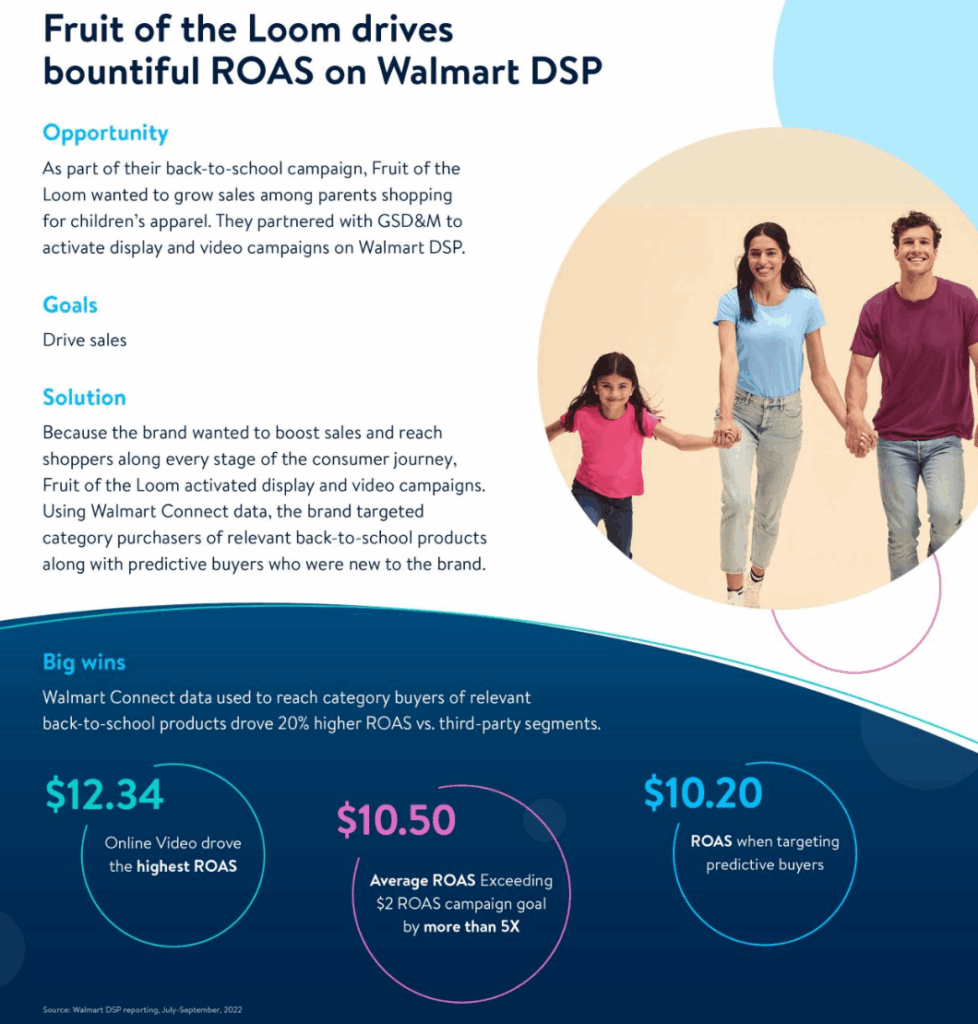
The campaign combined on-site display, off-site media, and in-store promotion, and Walmart used measurement data to shift budget towards top-performing segments, improving cost efficiency and lifting conversions.
FAQ about Retail Marketing Campaigns
1. What is a retail marketing campaign?
A retail marketing campaign is a coordinated effort designed to move shoppers from discovery to purchase and, ideally, toward repeat buying. It can combine paid advertising, social media, influencer content, email, loyalty programs, ecommerce, mobile apps, and in-store activity around one clear goal. Strong retail marketing campaigns connect these touchpoints so customers encounter a recognizable message throughout the shopping journey. The campaign may aim to launch a product, increase store traffic, generate ecommerce sales, grow membership, strengthen loyalty, or build brand awareness.
2. Who is the target market for retail marketing campaigns?
The target market depends on the retailer, product, shopping occasion, and campaign objective. Retail brands can segment audiences using factors such as customer preferences, browsing behavior, purchase history, stage in the customer journey, and channel habits. A campaign aimed at younger shoppers may lean on social platforms, for example, while a campaign for existing customers may use loyalty apps, email, or personalized offers. Seasonal shoppers may also be reached through in-store activations and timely digital campaigns. The key is understanding what the audience currently cares about and choosing the channels and message that fit that context.
3. What makes a retail advertising campaign successful?
Successful retail advertising starts with a clear customer insight and turns it into an idea people can understand, remember, and act on. As we mentioned above, he strongest campaigns tend to combine targeting, storytelling, personalization, customer engagement, and measurable goals. They also fit into the customer journey and maintain a connected experience across social media, ecommerce, apps, and physical stores. The creative idea still matters enormously. M&S used emotion and nostalgia with Paddington, Walmart built Moms Answer Moms around peer conversations, and 7-Eleven turned an everyday coffee purchase into an interactive cultural moment. These campaigns gave people something worth talking about while keeping the retailer close to the action.
4. What are the best examples of retail marketing campaigns?
- M&S – Paddington & The Christmas Visitor (#LoveTheBear): Uses storytelling, nostalgia, merchandise, and social sharing to create an emotional Christmas campaign.
- Walmart – Moms Answer Moms: Builds engagement through peer-to-peer advice on TikTok and Instagram, supported by Paris Hilton.
- Target – Secretly In Love with Fall: Connects seasonal shopping with celebrity talent, Target employees, and lifestyle storytelling.
- Whole Foods Market – Vegan Berry Chantilly Cake: Taps into plant-based culture and social discovery to turn a product into a highly shareable story.
- 7-Eleven – 7-Election: Turns red and blue coffee cups into an easy participation mechanic during U.S. election seasons.
- IKEA – Do Try This at Home: Uses humor and recognizable home life to communicate affordability and product usefulness.
- Sam’s Club – Join the Club: Builds a flexible creative idea around membership benefits and everyday shopping needs.
- Lidl – A Magical Christmas: Connects a festive story with products and an in-store Toy Bank initiative.
5. Which marketing channels work best for retail campaigns?
There is no single channel that works best for every retail campaign. So, we recommend starting with the customer and choosing channels based on where that audience already spends time. For younger shoppers, that might mean TikTok, Instagram, or other social platforms. Loyalty apps and email can be especially useful for existing customers. Ecommerce, paid media, mobile apps, and in-store activations can support shoppers at different stages of the journey. The strongest approach is usually omnichannel. Customers regularly move between ads, websites, apps, and physical stores before buying, so each channel should reinforce the same campaign idea and make the next step easy.
6. How do retail brands measure the success of a marketing campaign?
Retail brands should connect campaign measurement to the business goal from the beginning. KPIs such as website traffic, click-through rate, conversion rate, customer acquisition cost, customer lifetime value, and bounce rate are important in that case. Retailers can also examine engagement depth, reviews, social comments, customer surveys, support conversations, and sentiment to understand how shoppers actually responded. Real-time analytics make those findings more useful during the campaign itself. Brands can adjust targeting, change creative, test offers, or move budget toward stronger-performing audiences. The Walmart Back-to-School examples show this in practice: Walmart combined on-site display, off-site media, and in-store promotion, then used measurement data to shift investment toward the strongest segments.
9. How can retail brands create effective in-store and digital marketing campaigns?
Start with one customer experience and build the campaign around it across both environments. Digital channels can create discovery through social content, paid ads, influencers, ecommerce, and personalized messaging. The physical store can add product interaction, displays, seasonal experiences, activations, loyalty benefits, or participation mechanics. Lidl as a good example; its Christmas campaign carries an emotional story through advertising while the Toy Bank gives shoppers a related action to take inside the store. That connection gives the campaign a life beyond the screen. What’s more, retailers should also connect ecommerce and store experiences, keep campaign messaging aligned across channels, and use customer data to make communication more relevant. The end goal is simple: when a shopper moves from Instagram to the website and then into a store, the campaign should still feel like the same idea.