

















What Marketers Can Learn from the John Lewis Marketing Strategy & Campaigns
Being loved for over a century and providing stories people trust? We are talking about John Lewis marketing strategy. It’s a case study in how heritage, positioning, communications, digital change, and customer experience work as an integrated system.
According to adam&eveDDB, John Lewis marketing strategy throughout the years (especially Christmas advertising efforts) created Britain’s most famous campaigns.
It’s a story about giving and sharing. John Lewis gave the public heart-warming stories they could share. And when the nation gave John Lewis their business, they shared the profits with their staff. Based on business, brand and customer insights, John Lewis’ strategy is to be the home of ‘thoughtful gifting’.
What’s more, every year, John Lewis’ marketing strategy is brought to life via emotive stories and:
The result was Britain’s most famous advertising campaign. People loved the stories and they got everyone talking. Campaign launches became a national event. People increasingly sought out the advertising online leading to 78m views online.
In that blog, we’ll focus on that “great story” and what marketers can learn from it.
Inside John Lewis Marketing Campaigns
John Lewis Marketing Strategy Overview
Let’s start with a bold truth: John Lewis’s marketing is not a promotion at all; it’s stewardship of a brand identity rooted in reliability, trust, and quality.
As highlighted in a Brunel University study on John Lewis’ branding, one of the company’s biggest strengths is how it treats its heritage.
Remember the “Never Knowingly Undersold” promise? It became a symbol of trust.
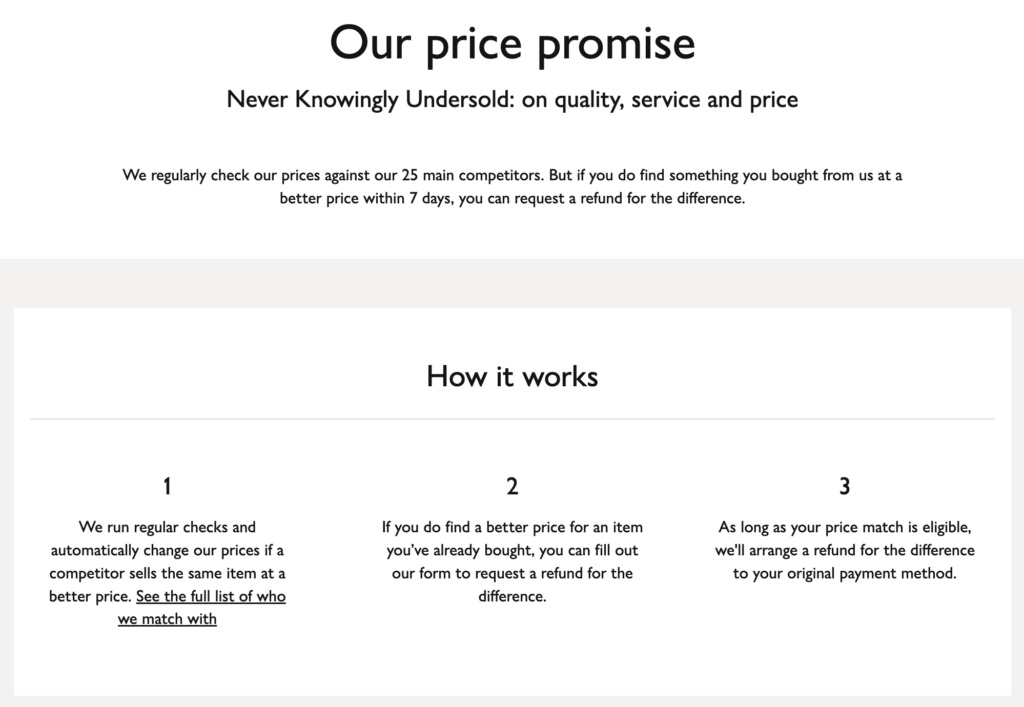
Source: John Lewis website
Customers knew John Lewis was looking out for them long before the term “customer-centricity” became a marketing cliche.
It also shows marketing world that heritage is powerful, but only if it’s actively managed. John Lewis never sat still, they combined the nostalgia of reliability with modern cues like store design, digital platforms, and new product ranges to signal that they’re as relevant today as they were to past generations.
Take a quick look at a glimpse from its official Instagram account; highly nostalgic and aesthetic:

In addition to that, in case you work in marketing, you know John Lewis’ marketing campaigns, including digital ones, are practically a masterclass in brand storytelling.
So much so that the retail brand is best known for its heartwarming, seasonal ads. The brand continues to release Christmas adverts each year:
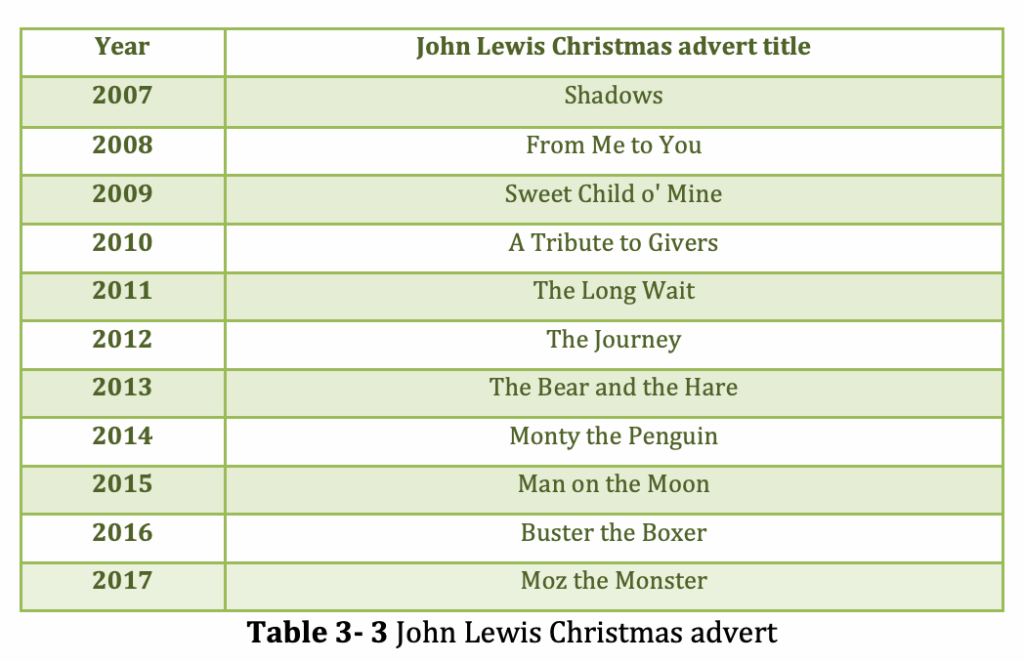
Source: Thesis
Behind the heartwarming ads (we’ll focus on these later), John Lewis takes measurement seriously. The Marketing Society report highlights their use of econometric modelling to track which channels deliver real sales uplift. T

Source: Marketing Society on John Lewis
For marketers, this is a reminder: creativity wins attention, but data defends the budget.
Finally, as you already know, one of the biggest challenges in retailer marketing campaigns is making the physical and digital experience feel seamless.
John Lewis has invested heavily in this space, ensuring that its website, app, and stores all feel connected. Staff can place digital orders in-store, mobile is prioritized, and campaigns flow across platforms without feeling disjointed.
The most important part: This isn’t just about tech or technical stuff. It’s about removing friction from the customer journey. And for modern consumers, that’s the new baseline for loyalty.

Speaking of Customer Journeys on Retail & Fashion…
From the first scroll to the final checkout, every interaction feels on-brand. This agency stood out to us for creating customer journeys that feel less like marketing… and more like part of the lifestyle itself.

Iconic John Lewis Marketing Campaigns
As we stated before, when we talk about John Lewis marketing strategies, the conversation almost always circles back to their campaigns.
However, if we zoom out, these moments are more than just tear-jerking TV ads. They’re the beating heart of the John Lewis partnership marketing strategy, designed to make the brand stand out on the high street and online alike.
Below you will find several of the most memorable campaigns that shaped both their brand and the wider retail industry. But before:
How We Chose These John Lewis Campaigns
For this selection, we looked beyond popularity alone. These ads were chosen because each one captures a different stage in John Lewis’s Christmas marketing evolution, from emotional nostalgia and character-led storytelling to humor, social purpose, and changing family traditions.
- The selected John Lewis campaigns cover the emotions the brand has become known for: childhood excitement, friendship, love, loneliness, joy, and family connection.
- Another reason these campaigns stood out is their simplicity. Most of them can be explained in one sentence: a hare wants its friend to enjoy Christmas, a boy wants his penguin to have company, a girl wants an older man to know he is not alone. The stories are easy to follow, but the emotional impact grows as the ad develops.
- We included John Lewis Christmas campaigns because they show how a brand can create an annual event around advertising. The work gives audiences something they want to watch, talk about, and remember.
- These campaigns are emotional, but they still support a clear retail objective. The products are not always placed at the center of the story, yet they are part of the final emotional payoff. A gift wakes the bear for Christmas. A second penguin completes Monty’s story. A telescope helps the man on the moon feel seen. A trampoline becomes the source of Buster’s excitement.
- The campaigns were also selected to show how John Lewis adapted its style across different years.
And each campaign gives marketers a practical lesson:
- Remember the Feeling shows the value of nostalgia.
- The Bear and the Hare proves that simple storytelling can create a powerful emotional response.
- Monty the Penguin highlights the strength of memorable characters.
- Man on the Moon shows how purpose-led storytelling can connect with audiences.
- Buster the Boxer proves that humor can be just as effective as emotion.
- Traditions Grow demonstrates how brands can modernise seasonal messaging without losing warmth.
Let’s see them now:
Remember the Feeling (2009)
According to a Marketing Society case study, Christmas represents about 40% of the retailer’s annual sales and 20% of profits.
During that critical season, instead of focusing on discounts, John Lewis leaned into emotion.
From the little boy impatiently waiting to give a gift, to the man on the moon, their advertising piece became national talking points. And they worked; consistently helping the brand outperform general retail sales during December.
So, what can we take away? Emotional storytelling is not a luxury at all; it’s a growth driver.
Why it worked: It connected a retail message to a universal memory. The visual transition from child to adult made the point clear: gifts matter because of the feeling they create, not just what is inside the box.
The Bear and the Hare (2013)
Is there a better idea than a Winnie the Poo-like Christmas ad?
This animated Christmas story about a bear experiencing his first Christmas became one of the brand’s most loved advertising campaigns. According to the statement on John Lewis’ official website, the music also worked so well:
Lily Allen’s version of the Keane song gave her a third number one hit.
Beyond the ad, John Lewis extended it into merchandise, in-store experiences, and digital storytelling. The best feature? It’s an early example of how their digital marketing strategy turned campaigns into ecosystems.
Why it worked: Friendship sat at the center of the campaign. The animation made the story accessible to children and adults, while the cover of Somewhere Only We Know added nostalgia and warmth. The brand created a full festive world around a single thoughtful gesture.
Monty the Penguin (2014)
Here is another example, which is not just an ordinary ad.
Monty the Penguin became a product line including toys, books, and even a companion app.
An in-store experiential idea was extended digitally, letting kids upload photos to “bring toys to life” online.
For a high street retailer facing online competition, this was a smart way of blending brand love with retail impact.
Why it worked: It balanced charm with a reveal that rewarded viewers at the end. The campaign also gave John Lewis a character people could talk about, share, and associate with the brand during the season. The emotional idea was clear without becoming overly sentimental, helping it appeal across age groups.
Man on the Moon (2015)
Another John Lewis Christmas marketing campaign, which truly reflects the broader John Lewis marketing strategies.
This campaign tackled loneliness at Christmas with a poignant story of a young girl reaching out to an elderly man on the moon.
It reflected John Lewis’s ability to combine brand storytelling with social purpose.
Why it worked: The John Lewis marketing campaign addressed loneliness through a child’s point of view, which made a difficult subject feel human and approachable. Its partnership with Age UK gave the message a meaningful real-world connection, showing how a seasonal film could open a wider conversation about older people who may feel isolated during Christmas.
#BustertheBoxer (2016)
Although Buster the Boxer was the tenth Christmas advert of the brand, it became a social campaign in its own right.
John Lewis launched Snapchat filters, GIFs, and interactive content to encourage sharing.
The brand understood that for campaigns to work in the digital era, they must live on Instagram, Facebook, and Twitter just as much as on TV.
Why it worked: The humor was a smart reset. Buster gave audiences something joyful, while the trampoline remained part of the story from start to finish. It proved that John Lewis did not need sadness to create a memorable festive ad; pure delight could do the job just as well.
#TraditionsGrow (2023)
In 2023, John Lewis launched its Snapper: The Perfect Tree campaign under the banner #TraditionsGrow, a fresh take on its Christmas storytelling. The campaign was seen 18 million times just on TikTok.
More than just a TV spot, the campaign showcases the strength of the John Lewis digital marketing strategy, with shoppable formats on YouTube and Google, a digital advent calendar in the MyJL app, and even an AR filter that let users bring Snapper into their own homes.
Regarding the campaign, Charlotte Lock, Customer Director for John Lewis, says:
We are a nation that loves the traditions of Christmas – from classic traditions like pantos and putting up the tree to evolving new ones like crafting our own presents and Zoom get-togethers. Many of us have our own unique festive traditions and that makes them even more special. The film celebrates themes of family and evolving traditions and shows that a ‘perfect’ Christmas is finding joy together with loved ones, whatever your traditions.
Why it worked: The campaign acknowledged that Christmas traditions are not fixed. John Lewis built the story around the idea that families create new rituals, and that imperfect moments can become the ones people remember most. The brand’s own research informed the campaign, highlighting how households mix established customs with newer ways of celebrating.
John Lewis Digital Marketing Strategy
For the brand John Lewis, digital marketing has become more than a channel. Actually, it’s the backbone of its growth strategy.
As outlined in The Partnership Plan, the company has set out to reimagine the shopping experience by prioritizing eCommerce, data-driven personalization, and digital-first customer engagement. With over 60% of sales now coming through online channels, digital has moved from a supporting role to the primary stage for the John Lewis marketing strategy.
In the same document, we also see one of the clearest examples is how John Lewis transformed its website and app into seamless shopping hubs: 74% of customers now begin their purchase journey online, even when they complete it in-store.
When it comes to advertising, digital is tightly integrated into every John Lewis marketing campaign. The abovementioned campaigns, like Monty the Penguin or #TraditionsGrow start with TV, but their real impact comes when extended into digital formats. From shoppable social media ads to app-based experiences and YouTube story cuts.
What’s more? Let’s find out the core strategies shaping the John Lewis marketing strategy online:
Personalisation That Feels Like Service
John Lewis has always been known for attentive service in its stores. And now it’s replicating that online.
The retailer uses AI-powered recommendations and tailored content to make shopping feel personal. Features like “get the look” let customers build an outfit or redesign a living room around a single John Lewis product.

It’s a clever way to turn browsing into buying.
Promoting English Identity
In early 2025, John Lewis Money announced a multi-year deal as an official partner of England Rugby. This is more than a sponsorship.
As you already know, Rugby is woven into English identity, and by linking with the sport, John Lewis anchors itself to tradition while signaling progressiveness.
From a marketing perspective, the partnership brings a new stream of content for John Lewis marketing campaigns, from social storytelling with players to in-store promotions tied to match days.
Teaming up with Micro-Influencers for Everyday Storytelling
Instead of only relying on polished, big-budget adverts, the brand John Lewis has embraced micro-influencers to tell smaller, more relatable stories.
These creators showcase real-life use of John Lewis products, from styling a living room for a movie night to setting up a family brunch table.
Take the brand’s collaboration with twogirls_co, which got more than 35K likes:
For John Lewis, this strategy expands reach in digital spaces.
Promoting Cosy Nights and Family Moments
John Lewis also uses themes of comfort and togetherness on social media channels, central to its identity as a trusted high street brand.
Think TikTok or Instagram reels where parents show off back-to-school uniform hauls, or creators post weekend “cosy night in” setups featuring John Lewis homeware.
These activations bring the brand closer to its core values of comfort, family, and trust.
Mobile-First Shopping Experience
More than half of John Lewis’s digital visits now come from mobile, and the brand has responded with a slicker app and mobile-first campaigns.
As we mentioned before, during #TraditionsGrow, the MyJL app hosted a digital advent calendar that rewarded customers daily with offers.
Blending High Street with Digital
There is no doubt that the brand John Lewis is still deeply tied to the high street, however, digital marketing efforts are making those stores feel more connected than ever.
For example, in-store staff can instantly order online for customers if a product isn’t available, and click-and-collect options tie digital convenience to physical presence.
Key Lessons from John Lewis Marketing Strategies
Why is John Lewis such an important brand for us as marketers to study?
The answer goes beyond its Christmas adverts or strong high street presence. So, here are some key lessons from John Lewis marketing strategies:
- John Lewis is one of Britain’s most iconic heritage retail brands, with more than 150 years of history. But the well-known brand doesn’t treat that history as nostalgia; they see heritage as a driver of continuity and a foundation for success.
- The retail brand pioneered profit-sharing with employees, making them partners in the business long before “employee ownership” became fashionable. For marketers, the lesson is that employee experience and customer experience are deeply connected.
- The company itself supports academic studies through its Heritage Centre, providing access to archives and people. This openness mirrors how John Lewis approaches its marketing: data-driven, evidence-based, and willing to be scrutinized. From econometric modeling to customer research, their ability to measure creativity with data is what keeps marketing central to the business.
- John Lewis’ recent activations, from AR filters to app-based advent calendars, show how campaigns must be designed for mobile, social, and omnichannel from the start. This is a reminder for marketers that true social media strategies for retail are not about repurposing TV content.
- The Partnership Plan also makes clear that John Lewis is open to collaborations that build cultural capital. Partnerships allow the brand to extend its message into new spaces while reinforcing its values.