















Top Things You Should Know About Adidas Digital Marketing Strategy & Campaigns
The digital marketing strategy and campaigns are behind much of the success of the number one sportswear manufacturer in Europe that it has enjoyed in recent years. Adidas focuses on leveraging the power of digital channels to create engaging and personalized experiences for its customers.
Changing consumer behaviors with the digital transformation leading people to make more online purchases also changes what Adidas focuses on. For instance, Adidas is investing more than €1 billion in digitalization, including digital marketing, as part of its main growth strategy until 2025, “Own the Game.”
Inside Adidas Marketing Campaigns
Digital Marketing Strategies of Adidas
Adidas focuses heavily on digital marketing, dedicating a significant portion of its budget to campaigns that span platforms like YouTube and social media. The brand aims to engage with its audience and create personal connections, using data-driven insights to be where its customers are online.
Let’s look at Adidas’ digital marketing strategies one by one:
Digitalization
The company spends the biggest part of its marketing budget on digital campaigns. Describing itself as a digital company, Adidas wants to be the world’s best sporting apparel brand. For the “best” means designing, building, and selling the most unique and comfortable sports goods in the world. In order to achieve this, they use digitalization as the key part of their marketing strategy to inform their target audience about their products. From commercials published on YouTube to engaging social media posts, Adidas utilizes various digital marketing channels to spread the word.
Relationship with Customers
Adidas tries to interact with its customers and create personalized experiences. In other words, Adidas generates enthusiasm and excitement about sports on a personal level. The brand takes every touchpoint like mobile, social, and retail to interact with the consumers to provide an inspiring and personal experience. By taking insights from digital analysis, Adidas tries to be everywhere its consumers are.
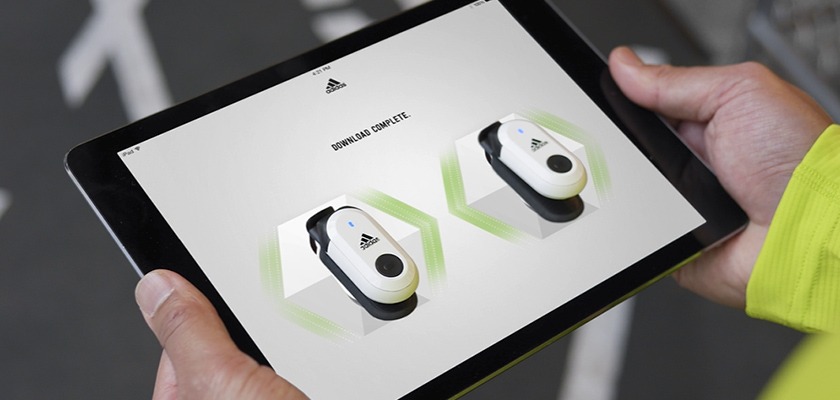
Engine Digital collaborated with the Adidas Digital Future Team to meet the needs of Run Genie’s audience. The agency was tasked with defining an end-to-end customer experience that enables the sales team to guide the purchase decision through data visualization and connected hardware.
Here you can learn more about the project: Adidas: Using Data to Choose the Perfect Shoe
Impossible Is Nothing. Your Brand Can Go Big Like Adidas.
To help your brand rise to Adidas’ league, we suggest partnering with agencies that have proven success in this field. After reviewing numerous case studies, we carefully selected these two agencies for you.

The Charles
We analyzed their impact on Birkenstock and Russell Athletic. With bold creative strategy, they don’t follow trends—they build them.

Takt
We reviewed Takt’s work with brands (Localised and Ketch) and admired how they blend data, creativity, and storytelling to connect genuinely with audiences.
Open-Source Innovations and Collaborations
Adidas opens its doors and calls everyone including athletes, consumers, and partners to shape the future of sports and sports culture. They focus on bringing unique and useful products to the market altogether to meet the demands of today’s world and the common future. A great example of such creative collaborations is Adidas’s partnership with Parley for the Oceans producing three new UltraBoost models from ocean plastic waste.
How Would Adidas Turn Your Product Into a Creator-Led Campaign?
Adidas marketing often connects the product with the right athlete or creator, then extends that story through social media, culture, community participation, and digital commerce. Build your own creator collaboration below to see how your product could be positioned, who should tell the story, what audiences should do with it, and how the campaign can move from social attention to measurable action.
Adidas-Inspired Creator Collab Campaign Builder
How do you market a product through a creator without making the partnership feel like a generic endorsement? Choose your product, audience, creator type, collaboration reason, and social channel. The builder will create a product marketing strategy, creator role, campaign idea, social media activation, commerce path, and measurement plan.
Your Creator-Led Marketing Blueprint
Why This Creator Fits
How to Market the Product
The Creator Collab Big Idea
Creator Role
Social Media Activation
Digital Marketing Strategy
Product-to-Commerce Path
KPIs to Track
Collab Fit Score
This independent planning tool applies general creator marketing, social media, product marketing, and digital campaign principles inspired by the topic of Adidas marketing. It is not affiliated with or endorsed by Adidas.
Strategic Cities
Six cities (London, Los Angeles, New York, Paris, Shanghai, and Tokyo) that shape the consumers’ perceptions, trends, and buying decisions have strategic importance in Adidas’s marketing strategy. Adidas spends more to market its products in these countries but it differentiates the products to be advertised for each country regarding the culture and the demands of the markets. For example, in Europe, they focus on selling soccer products, but the US is a key country for other subsidiaries like basketball and baseball.
Portfolio
The company is constantly revisiting its portfolio with a focus on the core brands: Adidas and Reebok. For instance, in 2018, Adidas repositioned Reebok for more profitability. For Reebok, they collaborate with influential women designers like Victoria Beckham and women who want to change the world like Ariana Grande and Gigi Hadid to make the brand more appealing to women.
Adidas Target Audience Analysis: Who Does Adidas Target?
Let’s have a breakdown of Adidas’ target audience and how the brand tailors its approach for each group, with a focus on sports marketing.
Age: Adidas primarily targets individuals between 14 and 40 years old; the company caters to:
- Teens (14-19 years), focusing on trendy and affordable pieces through the Adidas Neo collection.
- Young adults (20-29 years), targeting athletes and fitness lovers with performance-driven products.
- Adults (30-40 years), offering a mix of high-performance and stylish products for older, active consumers. Adidas ensures it keeps this age group engaged with both fashion and function.
But there’s more:
- Gen Z Focus: Adidas launched a new fashion-forward collection aimed at Gen Z, blending trendy styles with performance features.
- Inclusivity Efforts: The brand opened a gender-neutral store in Soho, London, to cater to consumers who value inclusivity and sustainability.
SWOT Analysis of Adidas
| Internal Factors | External Factors |
|---|---|
Strengths
|
Opportunities
|
Weaknesses
|
Threats
|
Adidas Marketing Mix
Adidas’ success is rooted in a carefully crafted marketing mix, often referred to as the 4Ps: Product, Price, Place, and Promotion.
Let’s break down how Adidas has positioned itself for success in these key areas.
Product Strategy
Adidas has long been recognized for producing high-quality, innovative products, a legacy that dates back to its early years.
Through strategic investments in technology, such as Boost cushioning for enhanced comfort and performance, Adidas continues to push boundaries in sports footwear. The brand’s commitment to sustainability is clear through initiatives like collaborating with BASF to enhance Boost technology and using recycled marine plastics in its products.
These efforts cater to the growing environmental consciousness among consumers while maintaining product excellence. Adidas’ product range also spans sportswear, footwear, and accessories, ensuring appeal to a wide range of consumers. Collaborations with high-profile designers and exclusive collections like Yeezy further cement Adidas’ position in the fashion-forward market.
Price Strategy
Adidas employs a competitive pricing strategy that aligns with the value of its premium products. In a similar pricing range to its main competitor, Nike, Adidas strikes a balance between accessibility and premium positioning.
The brand adjusts its pricing according to product lines, such as the Adidas Originals range targeting style-conscious youth and the Adidas Performance line designed for professional athletes. Despite the higher price points, consumers are willing to pay for Adidas products because they recognize the exceptional quality and technological advancements that come with them.
Place Strategy
Adidas boasts an expansive distribution network, reaching consumers across the globe through both online and offline channels. With a strong retail presence, including branded stores, department store concessions, and factory outlets, Adidas ensures its products are easily accessible. The brand has also embraced the rise of e-commerce, making significant strides in digital partnerships and investments to cater to consumers in both emerging and developed markets.
Its direct-to-consumer (DTC) model, supported by proprietary apps, strengthens customer engagement and allows for a more personalized shopping experience. Adidas’ efficient logistics network, supported by third-party providers, maximizes global reach while minimizing costs.
Promotion Strategy
Adidas employs a comprehensive promotional strategy that mixes traditional advertising with cutting-edge digital marketing. The brand collaborates with global sports figures, influencers, and celebrities to promote its products and elevate brand visibility.
Adidas’ digital campaigns focus on social media engagement, targeted ads, and influencer partnerships that resonate with Adidas’ brand ethos.
Additionally, sponsorships with major sports events and teams contribute to building brand loyalty and recognition. Sustainability and community engagement are also key components of Adidas’ promotional messaging, positioning the brand as a socially responsible entity committed to environmental and social change.
Top Marketing Campaigns of Adidas
Adidas advertising campaigns have always had a long-term impact on people.
We selected these marketing campaigns because they represent the full arc of Adidas’s brand communication; from its most enduring philosophical statement to its most targeted product-level execution. Together they show how a global brand can operate simultaneously at the level of cultural values, sporting identity, and direct consumer activation without losing coherence. Each campaign here demonstrates a different creative register: long-term brand building, challenger provocation, and tournament-scale celebration. What unites them is Adidas’s consistent ability to make sport feel like more than competition, to make it feel like identity, possibility, and belonging.
Let’s see the most memorable Adidas marketing campaigns:
Impossible Is Nothing (2024 to present)
Adidas has been using this motto since 2004 to highlight “the attitude Adidas shares with athletes around the world – the desire to push yourself further, to surpass limits, to break new ground.”
In 2022, the “Impossible is nothing” motto started to evolve into something bigger and more inclusive. This time, Adidas’ “Impossible is nothing” campaign features female athletes to call all women to action who “keep making the impossible possible every day.”
With this campaign telling female athletes’ stories who are making their own paths to success despite the gender apartheid, Adidas demonstrates that it can keep up with changing world of new generations demanding equality.
Why that campaign worked
Few slogans in sports marketing history have earned the right to return after 17 years.
“Impossible Is Nothing” did because its truth never expired.
The 2021 revival worked by updating the format: Adidas chose raw, intimate documentary films that felt personal rather than promotional. The home-video aesthetic stripped away the mythology of athletic greatness and replaced it with recognisable human struggle, which is the more powerful message. By featuring activists and artists alongside elite athletes, the campaign also expanded who the slogan belongs to. The result was a platform that generated 15% sales growth on its original launch and reinvigorated Adidas’s brand voice at a moment when it needed to reassert itself after years of strategic drift.
Take the Deal, Dare to Create (2019)
Launched in 2019, this campaign aims to push the boundaries of creativity and inspire people to make bold statements through their style and create their own paths. The “Take the deal, dare to create” campaign features a diverse group of athletes from different cultures who dare to challenge the norm and create their own style.
The message given with this campaign is that by taking the deal and being bold, you can create something one of a kind. Adidas implies that its sportswear is the product of creativity with the highest level of uniqueness and it is always ready to accompany you in your journey to find your true self and express it through what you wear.
Why that campaign worked
What made this campaign disruptive was its inversion of the traditional endorsement dynamic. Usually, a brand pays a star to tell you how great the product is. Here, the star looks directly at you and tells you whether you deserve it. The “creators only” framing also aligned perfectly with Adidas’s Football positioning, which had been building a creator identity around flair, imagination, and individualism rather than pure athleticism. At 2.5 million YouTube views within the first two minutes of launch, the campaign proved that a provocation lands faster than a promotion. The multi-film format (we’re taking about 32 master films and 21 individual player versions across languages) also gave each market’s fanbase a reason to engage specifically with their player, multiplying organic reach across territories.
When Football Is Everything, Impossible Is Nothing (2022)
Adidas fuelled the FIFA World Cup 2022 excitement with a new version of its classic motto, “When football is everything, impossible is nothing.”
In this commercial, Adidas becomes a symbol of reunion and warm feelings. As Lucio Dalla Gasperinathe, the Director of Global Brand Communications of Adidas states that the focus on a family reunion in this campaign demonstrates that everyone gets together for the love of football; even the superstars reunite for such precious events. So, Adidas invokes a feeling of nostalgia in the audience and benefits from the power of digital to associate itself with the good old days.
Why that campaign worked
The behind-the-scenes story of this campaign is itself a masterclass: Adidas completely rebuilt its World Cup campaign concept in under 30 days after recognising that external pressures had drained the joy from football coverage. Rather than ignore that tension, the team pivoted their north star to celebrate what the World Cup is actually about: the rare, collective feeling that anything is possible. The casting across nationalities and generations (from Messi to Bellingham) made the “family” metaphor feel earned rather than manufactured. The Al Rihla Arena extended the campaign from screen to physical space, turning Adidas’s sponsorship into something fans could step inside.
Inspiring Social Media Campaigns of Adidas
We selected these Adidas social media campaigns because each one demonstrates something rare in brand communication: the ability to use digital platforms not as broadcast channels but as genuine engines of community, activism, and participation.
In a space full of performative brand content, these campaigns stand out because they asked audiences to do something rather than simply watch and scroll. Each one also reflects a different dimension of Adidas’s values: environmental responsibility, gender equality, and individual empowerment. Together they show how a brand of Adidas’s scale can generate authentic grassroots momentum on social media when it trusts its audience to lead the conversation.
Get ready to witness a brand that constantly pushes boundaries, celebrates diversity, and proves that on social media, ‘impossible’ is just another hashtag. Here are some of the best Adidas campaigns that create buzz on social media:
She Breaks Barriers
In a world where sports media silence echoes for female athletes, Adidas steps up with “She Breaks Barriers.” This campaign amplifies, empowers, and fuels. It tells the stories of champions like Biles and Vonn, inspiring a generation to shatter glass ceilings. Educational programs break down biases, paving the way for equal media and opportunities.
Support, choose, and advocate are what the brand suggests with this social media campaign, leading the audience to rewrite the narrative of achievement, where women in sports not only conquer but redefine.
Why that campaign worked
The foundation of this campaign’s credibility is that it started by listening, not broadcasting. By using #CreatorsUnite to gather real athlete testimonies before building anything, Adidas ensured that the campaign reflected actual lived experience rather than brand assumptions about what female athletes face. That reversal, community input before creative output, is visible in every execution that followed and is why the campaign felt earned rather than opportunistic. The Twitter high school livestream was a genuinely historic move: it addressed the specific barrier of media invisibility with a direct, measurable action.
What’s more, the Pharrell Williams partnership extended the campaign into real-world access programmes, giving it accountability beyond a film launch. This is values-led marketing that builds long-term brand trust precisely because it converted stated commitments into funded, concrete initiatives.
Run for the Oceans
Partnering with Parley for the Oceans, Adidas proves that sneakers aren’t just for the streets; they’re for saving the seas, one stride at a time. So, go on, chase those endorphins and the tide against plastic pollution.
Every mile you conquer cleans a mile of plastic off our precious blues. Join the #RunForTheOceans movement and watch your run become a ripple of change.
Why that campaign worked
Run for the Oceans is one of the cleanest examples of purpose marketing executed with genuine intelligence. The core mechanism is frictionless by design.
It asks participants to do something they were already going to do (run) and converts that everyday behaviour into environmental impact, which creates a sense of agency without requiring sacrifice. This is fundamentally different from campaigns that ask people to buy something green: it invites participation regardless of purchase. The app integration also made the campaign native to how Adidas’s most engaged running community already lived their lives.
Every shared run with #RunForTheOceans became organic social proof that the movement was real and growing. Over three million participants across more than seven years is not a campaign, it is a movement, and that distinction is the measure of how well the strategy was designed from the start.
Impossible Is Nothing
Remember the kid who dreamed of backflips in the backyard? #ImpossibleIsNothing is that dream taking flight, fueled by cheers from a community as passionate as your goals.
Micro-challenges, everyday heroes, and creators pushing boundaries redefine “impossible” one scroll at a time. It’s a movement about defying limits, not chasing views, lifting each other up as we conquer personal peaks.
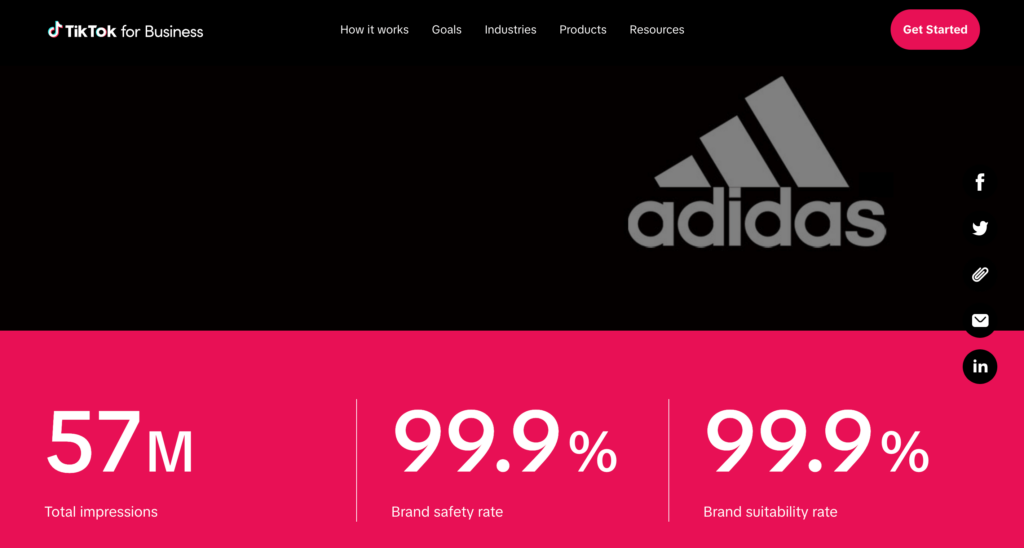
The #ImpossibleIsNothing campaign, featuring Candace Parker, achieved remarkable reach on TikTok, with over 57 million impressions. This success was further amplified by near-perfect brand safety and suitability scores, ensuring viewers encountered the campaign within highly trustworthy content environments.
Why that campaign worked
Each film was short enough for Instagram, intimate enough to stop a scroll, and personal enough to invite sharing. The decision to release 20 films sequentially also turned a campaign into a series: audiences had a reason to return, to follow, and to anticipate the next story. The participatory layer — #ImpossibleIsNothing inviting user stories — transformed Adidas’s audience from passive viewers into co-authors of the narrative, which is the highest form of social engagement a brand can generate. By including activists and non-traditional athletes alongside global superstars, the campaign also sent a clear signal that the slogan belongs to everyone.
Conclusion
Adidas’ campaigns play an important role in the brand’s digitalization process. It effectively utilizes various channels, like its captivating social media campaigns, to forge connections with its target audience and increase brand awareness. Adidas’ digital marketing strategy is developed to boost its growth, as it is not content with being the number one sportswear brand in Europe. It uses digital mediums to beat its biggest competitor, Nike, in this game. If you are curious about what kind of campaigns Nike has been running, you can check out our blog post about Nike’s marketing strategy. And if you are looking for professionals to get ahead of your competitors, you can discover top sports marketing agencies and take action!
FAQ about Adidas Marketing Campaigns
What is the core strategy behind Adidas’ digital marketing success?
At the center of everything, Adidas treats itself almost like a tech company that happens to make sportswear. The brand pours a huge chunk of its marketing budget into digital campaigns across YouTube and social platforms, using data-driven insights to figure out exactly where its customers spend time online. That digital-first mindset isn’t just about ads either. Adidas leans into open-source innovation, inviting athletes, consumers, and partners to help shape new products. Its partnership with Parley for the Oceans, which turned ocean plastic waste into UltraBoost sneakers, is a great example of collaboration driving both product and messaging at the same time.
How does Adidas use digital marketing to engage its target audience?
Adidas breaks the audience down by age and interest, then tailors content accordingly. Teens get trendy, affordable pieces through the Adidas Neo collection, young adults get performance-driven gear, and older active consumers get a mix of style and function. The brand has also launched fashion-forward collections aimed specifically at Gen Z and opened a gender-neutral store in London to reflect growing consumer interest in inclusivity. Geography matters too. Adidas focuses heavily on six strategic cities, London, Los Angeles, New York, Paris, Shanghai, and Tokyo, since these places shape broader trends and buying behavior. The brand even adjusts what it promotes based on regional interest, pushing soccer gear hard in Europe while focusing on basketball and baseball products in the US.
What are the key elements of Adidas’ most successful marketing campaigns?
A few ingredients show up again and again in Adidas’ best work. First, there’s emotional storytelling that goes beyond the product itself. Remember the 2021 revival of “Impossible Is Nothing.” Second, there’s a willingness to flip traditional advertising formats on their head. “Take the Deal, Dare to Create” had athletes questioning the viewer’s worthiness and that inversion helped the campaign hit 2.5 million YouTube views within the first two minutes of launch. Third, Adidas leans on scale paired with personalization, releasing dozens of individual film versions across different languages and markets so local audiences feel like the campaign was made specifically for them.
How does Adidas incorporate sustainability into its marketing strategy?
Sustainability shows up as a real product feature, not just a talking point. The Parley for the Oceans partnership is the clearest example, turning recovered ocean plastic into actual UltraBoost shoes people can buy and wear. Adidas also worked with BASF to improve its Boost cushioning technology using more sustainable materials. On the social side, “Run for the Oceans” turned an everyday activity, running, into an environmental action. Every mile logged with the campaign hashtag became tied to ocean cleanup efforts, letting people participate without needing to buy anything new. That approach paid off in a big way, with the movement pulling in more than three million participants across over seven years. It’s sustainability built around participation rather than guilt or obligation.
Why is Adidas’ social media marketing so effective?
Adidas social platforms act as spaces for genuine participation. “She Breaks Barriers” is a strong example of this. Before launching anything, the brand gathered real testimonies from female athletes using the hashtag #CreatorsUnite, which meant the campaign reflected actual lived experiences rather than assumptions about what women in sports face. The “Impossible Is Nothing” TikTok campaign, featuring Candace Parker, pulled in over 57 million impressions by releasing short, personal films in a steady sequence, giving audiences a reason to keep coming back for the next story. Adidas also invited user-generated content under the same hashtag, turning followers into active contributors to the brand’s narrative.
What can brands learn from Adidas’ long-term marketing campaigns like “Impossible Is Nothing”?
The biggest lesson is that a strong message can outlast trends if it’s allowed to evolve. Adidas has used “Impossible Is Nothing” since 2004, and it still works today because the brand keeps updating who the slogan speaks to and how it’s told. What started as a statement about individual athletic greatness expanded to include female athletes, activists, and everyday creators, which kept it feeling relevant instead of dated. Another lesson is that authenticity beats polish, especially when a brand needs to rebuild trust. The stripped-down, home-video aesthetic of the 2021 revival worked well because it felt human. And finally, giving people something to actually do with a campaign builds far deeper engagement than simply asking them to watch and admire from a distance.