












How Jacquemus Advertising Mastered Minimalist Marketing (+ Campaigns)
Jacquemus advertising, actually, starts with a single, minimalist frame that stops the scroll, but the impact goes far deeper than a clean aesthetic.
If you’ve spent even a few minutes on Instagram or TikTok, you’ve likely paused on a Jacquemus visual. And if you’ve explored the data, from Reddit threads to soaring search queries, you’ll notice something even more compelling: People aren’t just watching; they are intent on buying.

This transition from “like” to “add to cart” is driven by a powerful shift in consumer psychology.
Today, 72% of luxury consumers report that minimalist, “quiet luxury” aesthetics influence their purchasing decisions more than loud logos. By using this, the Jacquemus marketing strategy excels exactly where others fail: at the intersection of high-concept art and high-conversion demand.
Let’s go deeper this time. Beyond just the campaigns, we are looking at behavior, data, and search intent to see how Jacquemus converts fleeting attention into a global obsession.
Inside Jacquemus Advertising
- The Core of Jacquemus Marketing Strategy: Minimalism as a Power
- Target Audience: Who Is Jacquemus Really Talking To?
- 4P Marketing Mix of Jacquemus
- SWOT Analysis of Jacquemus Marketing
- Jacquemus Advertising: Campaign Breakdowns
- Jacquemus Digital Marketing Approach
- FAQ about Jacquemus Advertising
The Core of Jacquemus Marketing Strategy: Minimalism as a Power
I don’t do clothes; I do stories.
While the fashion world is full of heritage houses and cold, distant luxury, Jacquemus has built a $300M+ empire by doing the exact opposite.
When we talk about the Jacquemus marketing strategy, we aren’t just talking about selling clothes; we’re talking about selling a “vibe.” Simon Porte Jacquemus has mastered the art of “sunny minimalism.” While other luxury houses like Hermes or Balenciaga often lean into maximalism or “ugly-chic” irony, Jacquemus stays rooted in the aesthetic of the French Riviera.
Look at Jacquemus’ style for a moment:

Actually, the power of their minimalism lies in scannability.
In a world of 3-second attention spans, a Jacquemus ad or social post is instantly recognizable. Whether it’s a giant “Le Bambino” bag on wheels or a single lemon against a blue sky, the brand communicates luxury through simplicity.
This, of course, isn’t just an artistic choice; it’s a calculated digital marketing move. By stripping away the noise, they make their products the undisputed stars of the show.
Agencies That Understand Minimalism as a Luxury Language
Minimalism in luxury only works when every detail feels intentional. We looked for agencies that understand restraint, visual precision, and elevated storytelling. These agencies stood out for their refined execution across luxury branding, digital campaigns, and premium brand positioning.
Target Audience: Who Is Jacquemus Really Talking To?
Jacquemus has successfully captured a segment of the market that traditional luxury houses often struggle to reach: The digitally native aspirationalist. In that sense, we can say that the brand speaks to the same audience that Acne Studios does.
Let’s be more specific:
Demographics & Psychographics
- The “Gen Z” Core
Primarily females aged 18–35. Unlike older luxury buyers, this group values authenticity and brand personality over legacy.
- The Global Urbanite
While the brand is French, its largest growth markets are the US and China.
So much so that, by January 2026, the brand saw 828,696 sessions on its website, dwarfing the lifestyle brand median of roughly 39,000. This audience lives in New York, Seoul, and Paris, but they dream of a summer in Marseille.

- The “Entry-Level” Luxury Buyer
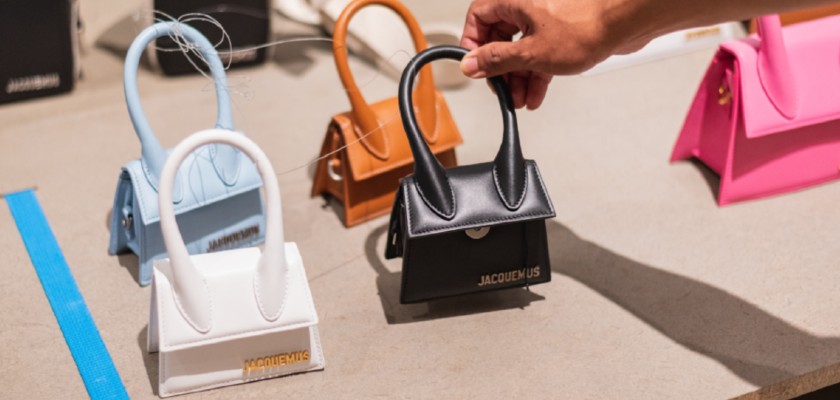
By offering accessories like the “Le Chiquito” bag (which ranges from $250 to $850) Jacquemus has made luxury accessible to people who can’t afford a $5,000 dress but want to be part of the “club.”
4P Marketing Mix of Jacquemus
To understand the Jacquemus marketing case study, we have to break down the classic 4Ps through a modern lens.
Product: The “Instagrammable” Object
Jacquemus products are designed to be photographed.
Whether it’s the sculptural heels or the tiny bags, they are pieces of art.
The brand maintains a 50/50 split between ready-to-wear clothing and accessories, with accessories driving the bulk of the “viral” revenue.

Price: The Bridge to Luxury
Jacquemus sits in the “Contemporary Luxury” bracket.
With an Average Order Value (AOV) of $400–$425, the brand is more expensive than Zara but significantly more affordable than Maison Margiela.
This “sweet spot” allows for high volume without losing prestige.
What’s more, Jacquemus has built its empire on “viral” luxury. Its price point is designed to be a “gateway” for younger consumers, focusing heavily on leather goods and accessories that are relatively attainable compared to traditional Parisian houses.
Place: Digital-First & Experimental
While they have a beautiful flagship on Avenue Montaigne (which feels more like a museum than a shop), the brand is “Internet-first.” 34% of their sales come from mobile web users, according to Grips Intellegence.
Promotion: The Viral Loop
As of 2026, the Jacquemus advertising strategy & promotion way is the ultimate model for “Human-Centric Luxury.”
While other companies are confined to sterile boardrooms, Jacquemus is out in the lavender fields filming his grandmother or using computer-generated imagery to send enormous bags through the streets of Paris.
They don’t spend on traditional magazine ads.
Actually, they invest in Jacquemus’ experiential marketing. From 24/7 pink vending machines in Paris to pop-up flower shops, their promotion is about creating “real-life memes.”
SWOT Analysis of Jacquemus Marketing
In the 2020s, building a brand is like trying to catch lightning in a bottle. But Simon Porte Jacquemus tamed it.
In order to truly understand how he did it without a massive corporate conglomerate like LVMH behind it, we have to look at its internal DNA and the external world it navigates.
| Internal Factors | External Factors |
|---|---|
Strengths
|
Opportunities
|
Weaknesses
|
Threats
|
Jacquemus Advertising: Campaign Breakdowns
We can clearly say that Jacquemus has built a distinct position by treating every campaign as a cultural artifact.
As we mentioned in many fashion advertising blogs, in a content environment shaped by flashy names and huge events, what stands out is not volume but clarity of creative direction.
Jacquemus takes advantage of this by making visuals simpler, emotions stronger, and designing for how people actually interact with content today.
Below, you will find the top 6 Jacquemus advertising campaigns & shows:
- Le Palmier
- JACQUEMUS + NIKE – “MOON SHOE”
- JACQUEMUS FW20 “L’ANNÉE 97” FILM BY MASSIMILIANO BOMBA
- JACQUEMOUSSE – HOLIDAY CAMPAIGN
- JACQUEMUS “MARSEILLE JE T’AIME”
- JACQUEMUS FW20 “L’ANNEE 97” SHO
Le Palmier – Social Media Ads
The “Le Palmier” executions reflect Jacquemus’ mastery of platform-native storytelling.
Originally starting as a series of playful social media teasers with “palm-tree hairstyles,” it evolved into the Fall/Winter 2026 collection titled “Le Palmier,” which premiered in January 2026 at the Musée National Picasso in Paris.
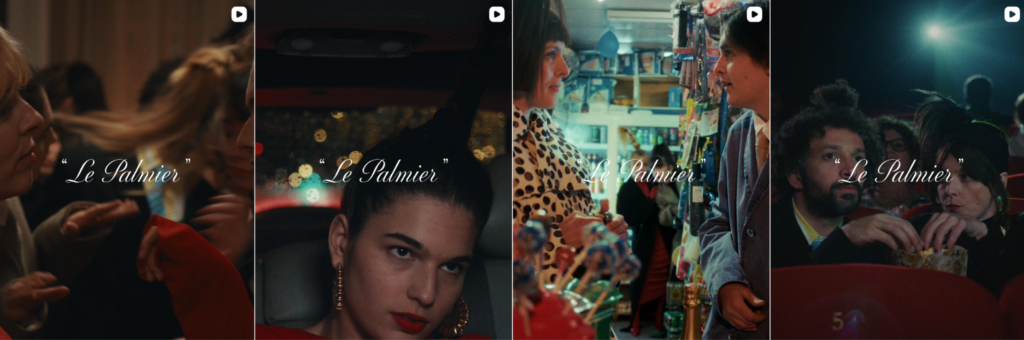
The campaign uses exaggerated proportions, bold colors, and surreal compositions to create instantly recognizable visuals that feel made for scrolling environments.
These are not repurposed campaign assets, but are designed specifically for social consumption, where attention is earned within seconds.
By embracing minimalism, Jacquemus reduces cognitive load and increases memorability, which is critical in high-speed feeds like TikTok and Instagram.
Why it worked:
The campaign aligns perfectly with platform behavior, like simple, visually striking content that invites sharing and reinterpretation, turning audiences into distributors.
JACQUEMUS + NIKE – “MOON SHOE”
By choosing the “Moon Shoe,” a silhouette hand-crafted by Nike co-founder Bill Bowerman for the 1972 Olympic Trials, Simon Porte Jacquemus anchors his brand in historical legitimacy while giving it a modern, “ballet-core” twist.
The campaign’s star power is equally strategic, featuring faces that represent the brand’s dual soul of pop culture and high art. The Jacquemus campaign starred Nicholas Alexander Chavez, the breakout lead from Netflix’s Monsters: The Lyle and Erik Menendez Story, who embodied a “sensual athleticism” in a gritty dance studio setting.
Why it worked:
By blending raw athletic heritage with a modern, almost ballet-like aesthetic, the brand managed to hit the sweet spot between “tough” and “tender.” It’s this mix of Hollywood buzz and avant-garde artistry that made the campaign feel human and multi-dimensional
JACQUEMUS FW20 “L’ANNÉE 97” FILM BY MASSIMILIANO BOMBA
This fashion ad makes you feel like you’re watching an old movie.
Clearly, this film demonstrates Jacquemus’ ability to turn nostalgia into a fashion marketing asset.
The pacing, cinematography, and emotional tone create a reflective atmosphere that contrasts sharply with fast-paced digital content.
Not by pushing product visibility; the campaign builds a narrative rooted in memory, identity, and time. This positions the brand as more than fashion.
Why it worked:
Emotional depth and slower storytelling obviously differentiate the campaign and creates stronger long-term brand recall.
JACQUEMOUSSE – HOLIDAY CAMPAIGN
Forget usual holiday cheer!
The holiday campaign of Jacquemus moves away from the bright, sentimental tone typically associated with seasonal advertising. The brand leans into a darker, more surreal aesthetic, almost cinematic in its restraint and mood.
The pacing, lighting, and composition create a slightly unsettling atmosphere, which contrasts sharply with the warmth audiences expect during this period.
Not by celebrating the holidays in a traditional sense, the campaign explores them through a stylized, almost introspective lens.
And we need to address the name changing for the campaign. In France, food and fashion are inseparable. By giving the campaign a dessert name, the brand positions its products as “treats,” something sweet and irresistible.
It moves the brand away from the “stiff” feeling of luxury and into the world of sensory marketing. When you hear “Jacquemousse,” your brain thinks of a light, airy chocolate dessert, which is exactly how the brand wants its holiday accessories to feel. You’ll see this specific branding style across many fashion and beauty labels like Rhode, as it’s a signature tactic used by fashion marketing agencies today.
Why it worked:
The darker tone creates contrast within a saturated category of overly cheerful holiday campaigns, making it more memorable and reinforcing the brand’s distinct creative signature.
JACQUEMUS “MARSEILLE JE T’AIME”
“Marseille Je T’Aime” (Marseille, I Love You) is as authentically personal as a brand campaign can get. And that authenticity is precisely what makes it such effective marketing.
As you already know, luxury fashion speaks almost exclusively in the language of Paris, Milan, New York, London. It invokes these cities as shorthand for the values the brand wants to project On the other hand, Marseille is port-city, working-class, rough-edged, hot, loud, complicated. It’s the antithesis of the luxury-brand city.
Except for Simon Porte Jacquemus, who grew up there. For whom Marseille is aspiration. The campaign became a love letter to a city that luxury fashion had never spoken to directly. And the response was enormous, from both people who know and love Marseille and people who were introduced to a version of France they’d never seen in luxury advertising before.
Why it worked:
In marketing terms, this is cultural specificity as differentiation. Compare it to the generic “Parisian luxury” trope that every heritage brand deploys. Generic Parisian luxury creates no distinct territory and obviously every brand uses it. Jacquemus’s Marseille creates territory that belongs only to them.
JACQUEMUS FW20 “L’ANNEE 97” SHOW
The FW20 runway show is technically not a Jacquemus advertising campaign. However, understanding the marketing impact of the show, and specifically the decision to cast Gigi Hadid, is essential to understanding how Jacquemus thinks about every moment as a potential marketing event.
The show itself was already extraordinary. Staged against the backdrop of the Provençal landscape, connected to the campaign film “L’Année 97” and its deeply personal narrative, it was the kind of fashion presentation that generates genuine press enthusiasm rather than routine coverage.
But casting Gigi Hadid elevated it into an entirely different media category. Gigi is one of the most-followed people on Instagram, with a following that skews young, fashion-literate, and internationally distributed.
The “Gigi Hadid effect” has been analyzed extensively. Research from Launchmetrics has found that supermodel appearances at shows can generate between $5 million and $20 million in Media Impact Value (their proprietary measure of earned media) depending on the model’s following, the extent to which she documents it on her own channels, and the general resonance of the show.
Why it worked:
The FW20 Jacquemus show, the combination of the spectacular setting, the emotional campaign narrative, Gigi’s casting, and Simon’s own documentation of the event created a compounding media effect.
Jacquemus Digital Marketing Approach
Let’s start with explaininng the Jacquemus digital marketing philosophy in two sentences:
Make content so beautiful, so unexpected, or so joyful that people share it for free and then your marketing budget becomes the creativity of your team, not the size of your media spend.
Every piece of Jacquemus digital content asks one question before it’s published: “Would someone who doesn’t follow us share this?” If yes, publish. If no, rethink.
Actually, Jacquemus has built one of the most recognizable digital identities in fashion by prioritizing creative direction over media spend. As we mentioned earlier, in a landscape where content production is scaling rapidly, advantage comes from distinctiveness. Jacquemus operates with this principle at the core, every digital touchpoint reinforces a clear, instantly recognizable brand world.
Take its ecommerce platform as an example: The site is designed with the same aesthetic intentionality as everything else the brand does. It’s not a warehouse with a checkout button, but an immersive brand environment that happens to let you buy things.
On the other hand, email marketing remains a significant channel for the brand. Jacquemus’s subscriber list, built over years of organic brand building, receives campaign communications designed to the same visual standard as the social content.
Jacquemus AI Marketing: The Future Is Already Here
Alright, let’s talk about AI, because Jacquemus AI marketing is one of the most interesting stories happening in luxury right now, and it’s unfolding in real time.
Jacquemus was among the first luxury fashion brands to actively embrace generative AI as a creative marketing tool and the results have been both commercially successful and aesthetically coherent with everything else the brand does. This is the key: they didn’t adopt AI because it was a trend. They adopted it because AI-generated imagery is capable of achieving the kind of impossible, surrealist visual language that is central to the Jacquemus aesthetic.
In other words: AI was a perfect fit because the brand was already doing surrealism. The technology gave them a cheaper, faster, more flexible way to produce the images they were already trying to make.
Jacquemus Social Media Approach
Jacquemus is a brand with fewer Instagram followers than Givenchy, Gucci, or Valentino (same with Loewe) but dramatically higher engagement rates. That’s not a thing to be sorry about. It’s the product of a very specific, very intentional philosophy about what social media is actually for.
Most luxury brands treat social media as a broadcast channel, a digital version of the magazine spread. Post beautiful images, project aspiration, remind people you exist. On the other hand, Jacquemus accepts social media as a relationship medium. The content obviously is not designed to impress you; but to make you feel something, share something, or join a conversation.

However, the engagement rate is the number that tells the real story about Jacquemus social media. A 2.1% average engagement rate on a brand account with millions of followers is genuinely extraordinary. The luxury fashion industry average sits around 0.5%.12 Jacquemus achieves more than four times that… And that means their audience is actively participating. That’s the difference between an audience and a community.
What’s more, critically, Jacquemus was among the first luxury brands to treat surrealist CGI and AI-assisted imagery as a legitimate creative tool for Instagram (as mentioned above.) The now-famous series of giant Jacquemus bags rolling through Paris streets like enormous boulders generated millions of shares and hundreds of press articles.
What about TikTok? Jacquemus entered the socia media platform relatively early for a luxury brand and has built genuine presence there. The platform is strategically important for reaching the Gen Z audience that will be the brand’s primary growth segment over the next decade.
TikTok content from Jacquemus tends to feature: behind-the-scenes manufacturing and atelier content, campaign film excerpts, pop-up store tours, and organic user content that the brand amplifies.
FAQ about Jacquemus Advertising
What makes Jacquemus marketing campaigns so effective in the fashion industry?
In a world where we all have 3-second attention spans, Jacquemus uses “sunny minimalism” to cut through the noise; the brand feels like a cool friend’s vacation feed. Their campaigns, like the giant bags rolling through Paris, are designed to be “real-life memes” that people actually want to share for free. By making visuals simpler and emotions stronger, they’ve turned fleeting social media attention into a global obsession.
How does Jacquemus use digital marketing and social media to build its brand?
Jacquemus uses its social media channels as a relationship medium; according to the brand, these platforms are not just a place to broadcast ads. Their strategy is simple: “Make content so beautiful, unexpected, or joyful that people share it for free.” They focus on “scannability,” designing posts that are instantly recognizable in a short period of time. They’ve built an immersive brand environment where the marketing budget is the team’s creativity.
What is unique about Jacquemus’ advertising strategy compared to other luxury brands?
Most heritage houses like Hermes or Balenciaga lean into “ugly-chic” irony or cold, distant luxury. Jacquemus does the opposite by staying rooted in a minimalist approach. They are also pioneers in using surrealist CGI and AI marketing. Whether it’s giant bags rolling through Paris like boulders or using AI to create impossible dreamscapes, they use technology to enhance their surrealist aesthetic rather than just following a trend.
How does Jacquemus leverage influencer marketing to reach its target market?
Jacquemus uses the unique effects of well-known figures. For example, by casting a supermodel like Gigi, who has a massive, fashion-literate following, they can generate huge value from a single show. But it’s not just about famous models; they also tap into “Hollywood buzz” by featuring stars like Nicholas Alexander Chavez to represent the brand’s “dual soul” of pop culture and high art. This strategy helps them reach their “Gen Z core,” the 18-35-year-olds who value brand personality over long-standing legacy.
What role does experiential marketing play in Jacquemus campaigns?
For Jacquemus, experiential marketing is about creating real-life memes. Instead of traditional magazine spreads, they invest in physical moments that invite sharing. We see this in their 24/7 pink vending machines, their pop-up flower shops, and even their surrealist runway shows staged in Provencal landscapes. These “activations” turn the audience into distributors. People don’t just buy a product; they participate in a cultural event that feels authentically personal.
What can brands learn from Jacquemus’ overall marketing strategy and marketing mix?
The biggest takeaway is the power of community over audience. While Jacquemus has fewer followers than giants like Gucci, their 2.1% engagement rate is four times higher than the industry average of 0.5%. They’ve also mastered the 4P “Sweet Spot”:
- Product: Designing “Instagrammable” objects that are pieces of art.
- Price: Sitting in the “Contemporary Luxury” bracket which acts as a gateway for younger buyers.
- Place: Being “Internet-first” (34% of sales come from mobile).
- Promotion: Using human-centric, joyful storytelling.