

















7 E-Commerce Customer Service Best Practices That Actually Move the Needle
Most online stores lose customers not at checkout, but in the silence that follows it. A delayed reply, a chatbot that loops, a return policy buried three clicks deep. Service is where the sale either becomes a relationship or quietly dies.
The stakes are measurable: Service professionals say customers expect their issues resolved faster than ever, while reps spend less than half their time actually talking to those customers.
That gap between expectation and reality is where loyalty is won or surrendered.
The 7 practices below are not aspirational slogans. Each one closes a specific gap, and each is anchored to what shoppers have told researchers they want. Build them well, and support stops being a cost center and starts compounding revenue.
7 E-Commerce Customer Service Best Practices
The 7 foundational best practices for scaling e-commerce support operations effectively include:
1. Create a Feedback Loop with Customers
Asking for feedback and then ignoring it is worse than never asking. Customers notice the void, and it reads as indifference. The appetite to be heard is enormous and badly underserved: Microsoft’s research found that 90% of customers want to give feedback on their experience, yet they are offered the chance to do so only 37% of the time. That is a wide-open opportunity sitting in plain sight.
The infrastructure for capturing those signals matters as much as the intent. Post-resolution surveys need to reach customers within minutes of a ticket being closed. Purpose-built customer feedback platforms integrate with help desks to trigger NPS and CSAT surveys via email, SMS, or in-app automatically, routing responses to the teams who can act on them before the insight goes cold.
A working feedback loop has two halves, and most brands only build the first. Collect signals through post-resolution surveys, review monitoring, and the patterns hiding in your ticket data. Then act on them visibly: fix the product flaw that keeps generating the same complaint, rewrite the confusing policy, and tell the customer their input changed something. Many support teams also use an infographic generator to visualize recurring customer issues, satisfaction trends, and resolution metrics, making it easier for stakeholders to identify patterns and prioritize improvements.
The second half is what converts a survey into loyalty. When a shopper sees their suggestion reflected in your store, they stop being just a transaction and become a stakeholder. Feedback you never act on is just data decaying in a dashboard.
Reward Feedback With Branded Merch
Closing the loop can be physical, too. When a customer’s suggestion genuinely shapes your store, gifting a small branded item like a sticker pack, t-shirt, tote, or notebook turns an abstract thank-you into something they can hold.
This is where Etsy print-on-demand services like Printful & Printify quietly change the economics. Branded merchandise once meant ordering hundreds of units upfront and praying they moved. But print-on-demand produces each piece only when you need it, so there is no inventory risk and no minimum order standing between you and a thoughtful gesture.
A store of any size can drop a branded surprise into a loyal shopper’s next shipment, or reward the customer whose input fixed a real problem. The merch is not the product. It is proof that the relationship runs both ways.
2. Offer 24/7 Customer Support
Your storefront sells at midnight, on holidays, across time zones. Your support has to match that rhythm or the mismatch becomes a reason to leave. Round-the-clock availability is no longer a premium feature; shoppers treat it as table stakes.
74% of customers expect support to be available 24/7, and the gap between that expectation and a nine-to-five help desk is exactly where carts get abandoned and chargebacks get filed.
Continuous coverage does not demand a night shift of fifty agents. It demands a layered model: automated agents handling routine questions overnight, intelligent routing that escalates anything thorny to humans during staffed hours, and clear expectations so customers know when a person will follow up.
The goal is for nobody to hit a wall of silence. A shopper in a different hemisphere should get the same chance at a quick answer as one messaging during your business hours. For teams designing these support experiences, practical Shadcn chat UI examples can provide inspiration for customer and agent messages, quick actions, automated responses, and seamless human handoff flows. Availability is partly about speed and partly about respect; making someone wait sixteen hours for a one-line answer tells them their time is worth less than yours.
Modern visual AI agents can make these automated interactions more natural by combining conversational AI with lifelike digital avatars, creating a more engaging support experience while still allowing handoffs to human agents.
3. Provide Personalized Support
Generic support feels like talking to a wall that occasionally talks back. Personalization is the difference between “How can I help you?” and “I see your order shipped yesterday and is running late; here’s what I’ve already done about it.” Customers now expect that level of recognition.
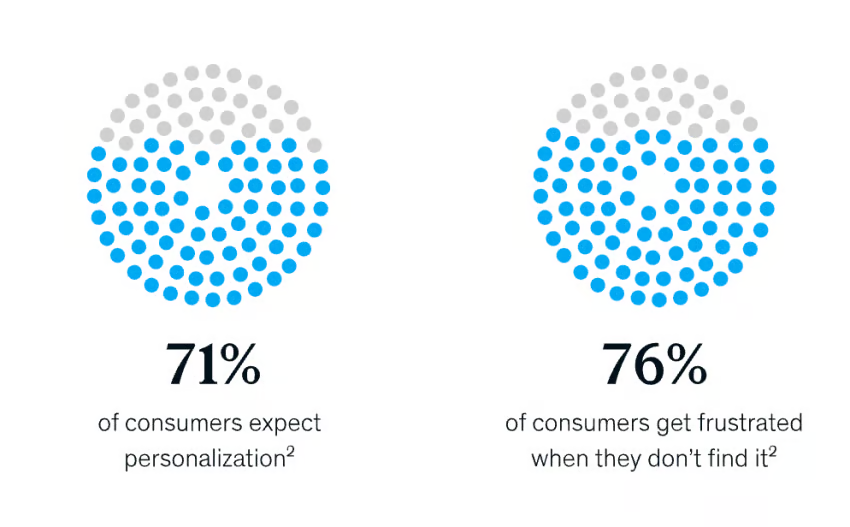
McKinsey found that 71% of consumers expect personalized interactions, and 76% get frustrated when companies fail to deliver them.
Real personalization runs on context, not on inserting a first name into a template. Pull the customer’s order history, past tickets, and preferences into the agent’s view so the conversation starts from an informed place.
Reference what they bought, acknowledge the issue they raised last month, and tailor the resolution to their situation. This is where unified data earns its keep: an agent who can see the whole relationship resolves faster and leaves the shopper feeling known.
The frustration McKinsey measured comes from being treated as anonymous by a brand that has every reason to recognize you. Closing that gap is one of the cheapest trust-builders available.
Consistent branding also reinforces that trust across every support touchpoint. Whether customers reach out through email, live chat, or social media, recognizable visual elements such as a professional logo help reassure them they are interacting with the right business. For newer online stores, an AI logo maker can provide a quick way to create a polished brand identity before expanding customer-facing channels.
4. Build Multi-Channel Customer Support
Shoppers do not think in channels. They start a question on Instagram, continue it over email, and expect to finish it in chat without having to re-explain anything. When those touchpoints are disconnected, the experience fractures, and people repeat themselves until they are exhausted.
The cost of getting this right is steep, and so is the reward: omnichannel service lifts customer satisfaction to 67%, versus just 28% for disconnected multichannel setups.
A true multi-channel operation routes every conversation into a single workspace, where agents see the full thread regardless of where it began. Live chat, email, messaging apps, phone, and social all feed a single queue with inbound email routing and unified context across channels.. The shopper picks whatever is convenient in the moment; your team handles it without dropping history.
For teams managing outbound campaigns alongside support emails, the right email marketing tools ensure both functions stay connected across channels.
When that outreach moves to the phone, recovering abandoned carts or following up on delayed orders, AI sales dialer software keeps voice outreach as organized and trackable as the rest of the support queue.
The failure mode to avoid is bolting on channels faster than you can staff them, because an unanswered message on a channel you advertise is worse than not offering it at all. Consistency across touchpoints is what turns a scattered set of inboxes into a coherent experience.
5. Provide Multi-Language Support
A shopper who cannot read your support in their own language does not struggle through it. They leave. Language is not a nice-to-have at the margins of global commerce; it is a gate.
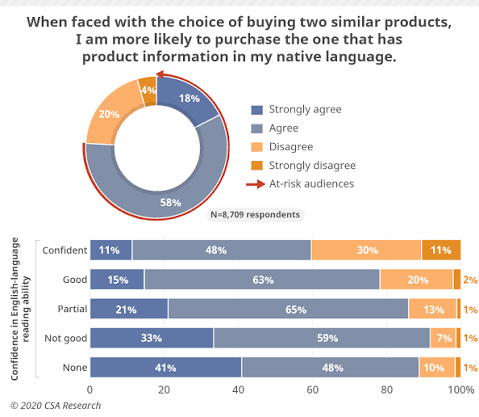
CSA Research’s landmark study found that 76% of online shoppers prefer to buy products with information in their native language, and 40% will never buy from websites in another language. Support carries the same weight as the product page.
Start with the languages your traffic and sales data actually call for rather than trying to cover everything at once. Localize your help center, deploy AI agents that handle the priority languages, and respect formatting conventions for dates, currency, and addresses. A customer who gets help in their mother tongue trusts more quickly and forgives more, because the message lands as care rather than as a barrier they had to overcome.
6. Turn Social Media Into a Service Desk
A complaint on social media is a private problem made public, and the audience is watching how you respond. Handled well, it becomes proof that you stand behind your product. Ignored, it metastasizes.
Social is now a mainstream support channel, and the clock is unforgiving: Sprout Social’s index found that 73% of consumers expect a brand to respond on social media within 24 hours or sooner, with many wanting far less.
Treat your social mentions and DMs as a support queue with full customer context, not as a marketing afterthought. Acknowledge quickly, move sensitive details to a private channel, and resolve in a way everyone can see the effort. The public nature cuts both ways: one viral complaint can do more damage than a hundred quiet call center phone calls, but one visibly excellent recovery earns advocacy that advertising cannot buy. Speed matters most here because the response window is shorter and the consequences of silence are louder. A brand that addresses complaints openly signals confidence; one that hides from them signals the opposite.
7. Scale With AI and Automation
There is a ceiling to what human teams can absorb as you grow, and AI is how you raise it without raising headcount in lockstep. Automation handles repetitive, high-volume work so your people can concentrate on the cases that require judgment and empathy.
The shift is already well underway: Salesforce reports that AI resolved 30% of service cases in 2025, a figure expected to reach 50% by 2027. This is no longer experimental; it is becoming the baseline.
The winning model pairs machine and human rather than replacing one with the other. Let AI agents in customer support handle order status, return policies, and shipping questions instantly, while people focus on conversations that require judgment, empathy, and context.
As support operations become more sophisticated, businesses often discover that integrating AI with existing customer data, internal systems, and operational workflows delivers far greater value than deploying standalone automation. This is where AI specialists such as QuantumXL can support that transition through AI development services, helping organizations build solutions that fit their operational needs as they scale.
The cost difference is stark, and the speed gains are real, but the discipline is knowing where automation ends. A bot that cannot solve a problem yet refuses to hand off is a churn machine. Done right, automation makes every other practice on this list cheaper to sustain and faster to deliver, which is what scaling actually means.
The Compounding Return on Doing This Well
These seven practices are not a menu to pick from; they reinforce one another. A trained team makes AI handoffs smoother, self-service feeds your feedback loop, and language coverage extends every other channel’s reach.
Start where your gap is widest, measure relentlessly, and treat every interaction as a chance to prove the shopper made the right call buying from you. The stores that internalize this stop competing on price and start competing on whether customers feel cared for, which is a contest far harder for rivals to win.