
















Deconstructing Glossier Marketing Campaigns and Their UGC Engine: Co-Creating Beauty
What happens when a beauty brand lets its customers shape the products, create the content, and spread the word before it spends big on traditional advertising?
You get Glossier marketing campaigns. 👉🏻 Or more precisely, you get Glossier at its most influential: before the pink packaging was instantly recognizable, before Boy Brow became a beauty-bag staple, and long before the brand showed up on Sephora shelves.
Glossier’s marketing is fascinating because it broke the usual rules. Established beauty companies built awareness with celebrity endorsements, glossy magazine placements, and expensive ad campaigns. Glossier started with a beauty blog and a crowd of people who simply loved talking about skincare.
And here’s the part that really matters: Glossier had a community before it had products to sell.
When the brand officially launched in October 2014, its editorial predecessor, Into The Gloss, was already pulling in more than 750,000 unique monthly visitors, according to Glossier’s original launch announcement. In the same announcement, Emily Weiss, founder and CEO of Glossier introduced the brand as follows:
Over the past four years running Into The Gloss, I saw the need for a beauty brand that speaks to its consumers directly, offering them a chance to engage beyond the traditional touch points of purchase, use and mass marketing. That’s what we’ve created with Glossier—a beauty brand that we want to be friends with. We offer a uniquely immersive brand experience that culminates in our pre-curated collection of products developed for our customers by us, and delivered to them from us.
Those readers weren’t just potential customers. They were already swapping recommendations, venting about products that let them down, and telling the internet exactly what they wanted from beauty brands.
Glossier took those conversations and built a business around them.
Of course, Glossier’s marketing looks different today. The brand has opened physical stores, invested in bigger ad campaigns, teamed up with athletes and creators, and moved into Sephora. That evolution holds a useful lesson for marketers: community can create incredible momentum, but keeping that momentum going as you grow takes a very different kind of discipline.
So what makes Glossier’s marketing campaigns worth studying, and what can brands and agencies actually borrow from them?
Let’s get into it.
Inside Glossier Campaigns
How Glossier Approaches Marketing and Advertising
To understand Glossier’s advertising strategy, we have to go back to a time when Glossier didn’t exist.
The company launched in 2014, but the story starts four years earlier, when Emily Weiss founded Into The Gloss in 2010. The site explored people’s beauty routines through interviews, product picks, and personal stories, and it made everyday habits genuinely fun to read about.
According to Into The Gloss’s official history, one of its signature features was The Top Shelf, where readers could peek at the routines and favorite products of women they found inspiring.
It was a deceptively simple idea. People love knowing what others actually use, especially when there’s a story attached.
That editorial relationship became the foundation of Glossier’s brand strategy.
💄 Content First, Product Second
Most beauty brands make a product first, then create content to convince people to buy it. Glossier flipped that.
Into The Gloss built its audience by publishing things people genuinely wanted to read. Readers kept coming back for beauty discoveries, honest conversations, and a glimpse into other people’s bathrooms. Over time, all those conversations gave the team a much clearer picture of what people were missing in beauty.
When Glossier launched, it introduced the Phase 1 Set: Soothing Face Mist, Priming Moisturizer, Perfecting Skin Tint, and Balm Dotcom. The lineup reflected a simple, skin-first philosophy. The launch was a continuation of a relationship the team had already built. That’s the core principle behind Glossier’s content marketing: valuable content creates attention, attention creates conversations, and conversations reveal product opportunities.
So, publishing content to feed a sales funnel can work. But building an editorial relationship gives you a reason for people to come back even when they’re not shopping.
💄 Customers as Co-Creators
Glossier’s approach to customer feedback went well beyond the occasional survey. The team treated conversations as a real part of product development. Readers talked about textures, ingredients, packaging, routines, and the products they wished existed.
In the ITG community guidelines, Into The Gloss explained that open beauty conversations helped shape Glossier’s products, and it invited readers to keep taking part. What’s interesting is how this shifted the relationship between brand and customer. Someone who contributed an idea tends to feel more invested in the outcome than someone who just runs into a finished product ad. If the product solves a problem they once talked about, the launch already means something to them.
That said, collecting feedback doesn’t mean customers run the show. Formulation, commercial viability, testing, and manufacturing are still the company’s job. But Glossier made listening a visible part of its brand, and that gave customers a reason to take part beyond receiving promotional messages.
Low Paid Media Dependency in the Early Growth Years
Glossier is often held up as an organic marketing success story, and its early history explains why.
Instead of leaning mainly on conventional advertising, Glossier grew through Into The Gloss readership, social conversations, editorial attention, customer recommendations, and organic product discovery.
In a 2017 TechCrunch interview, Emily Weiss said friend-of-a-friend recommendations drove roughly 90% of the previous year’s sales. That’s a company-reported number, not an independently audited attribution study, but it shows how much weight Glossier put on word of mouth.
It’s not a model every new brand can copy. Glossier entered commerce with an existing editorial audience, a highly visible founder, and a product proposition that suited visual social platforms. And that low reliance on paid media didn’t last forever. As the company grew, its advertising campaigns came to include outdoor media, bigger creative productions, partnerships, and retailer-supported promotions.
The takeaway isn’t that paid advertising is unnecessary. It’s that strong organic demand gives paid advertising something worth amplifying.
Best Glossier Marketing Campaigns
First, a quick word on how we picked these.
We chose these Glossier marketing campaigns for what they contributed to the company’s marketing model, not for how pretty they looked or how popular they were on social.
We looked at four things: the campaign’s strategic goal, how original the creative was, how well it fit Glossier’s broader brand positioning, and whether there was credible evidence of what it did or achieved.
We also wanted to cover different stages of Glossier’s growth. A content platform, a hero-product push, an experiential retail activation, and a major retail partnership shouldn’t be judged by exactly the same yardstick.
Some of these are individual ad initiatives. Others are ongoing programs that shaped Glossier’s identity over several years.
Into The Gloss: Content-Led Brand Building Before the Brand
Into The Gloss is an editorial platform that put beauty conversations at the center of Glossier’s marketing ecosystem, as you may know.
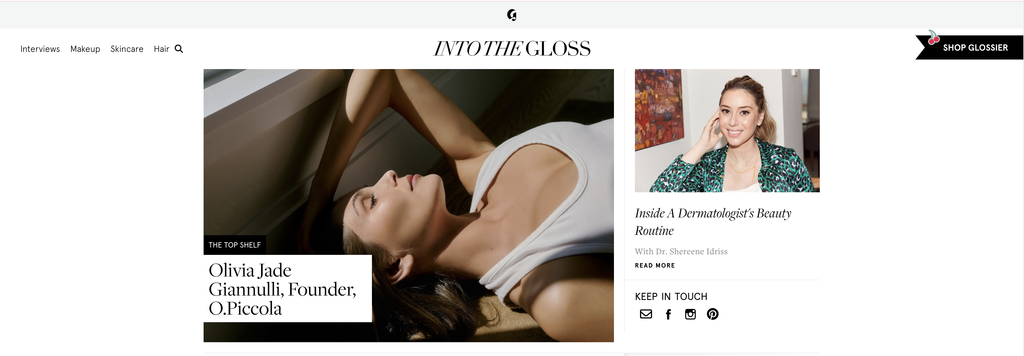
Its goal was to attract beauty-minded readers, earn credibility through genuinely useful content, and learn what potential customers liked, needed, and got frustrated by. The audience included skincare enthusiasts, beauty content fans, people curious about other people’s routines, and shoppers who trust recommendations rooted in real experience.
The creative idea is refreshingly straightforward: make the person behind the routine more interesting than the product being promoted.
Through The Top Shelf interviews, product discussions, and reader conversations, the platform turned everyday beauty habits into stories people actually wanted to read.
Its main channels were editorial content, search, social distribution, newsletters, and reader comments. Discovery and participation went hand in hand, since readers could share their own experiences and influence future discussions.
Why it worked
Unlike a typical ad campaign, it didn’t hinge on one launch date or one hero asset. Its value came from people showing up again and again. However, as we mentioned at the beginning, Into The Gloss had built up more than 750,000 unique monthly visitors by Glossier’s October 2014 launch, according to the company’s original announcement. It also gave Glossier a ready-made audience the moment its first products hit the market.
Boy Brow: How One Hero Product Became a Marketing Asset
Boy Brow is one of the clearest examples of how Glossier uses a single product to communicate its wider beauty philosophy. The goal is to make eyebrow grooming feel simple, approachable, and easy to fit into everyday routines. The target audience is people who want defined, natural-looking brows without elaborate makeup techniques.
The creative idea rests on a benefit anyone can grasp: fuller, groomed brows with minimal effort. Glossier lets the result speak for itself through close-up brow photography, product demos, and plain, simple copy.
For a later Boy Brow Arch launch, the brand worked with Shopify on location-specific, shoppable outdoor advertising. Posters with QR codes let shoppers near participating placements get early access to the product, linking physical discovery to a digital purchase.
In its official Boy Brow video from June 2023, Glossier mentioned a historical 10,000-person waitlist and said one Boy Brow was selling globally every minute at that time.
Boy Brow has practically been with us since the beginning of Glossier time. It’s loved by many (remember the 10,000 person waitlist?), and has since graced many brows of all shapes, sizes, and styles. In fact, one sells every minute globally.
The brand also ran a four-week Boy Brow outdoor campaign in Boston. Media partner JCDecaux reported millions of impressions, though it didn’t share an independently audited sales-lift figure.
Why it worked
Boy Brow became a recognizable Glossier product because its advertising described a familiar problem without making the solution feel intimidating. The demos showed how the product slotted into everyday routines, while the distinctive packaging and catchy name made it easy to remember and recommend. Early demand also handed Glossier credible material for future communications. Waitlists, customer enthusiasm, and repeat mentions all reinforced its reputation as a beauty essential. Later advertising built on that recognition instead of starting a new story from scratch.
Glossier You: Making a Fragrance Campaign About Individuality
Glossier You is a fragrance built around individuality.
The campaign aims to make fragrance feel deeply personal while taking Glossier beyond skincare and makeup. The target audience includes fragrance fans, existing Glossier customers, and shoppers who like the idea of a scent that reacts with their own skin chemistry.
The creative idea is that the person wearing the fragrance is part of the final experience. The campaign uses stylized moving images, close-up photography, social video, product storytelling, and retail discovery to give each fragrance its own emotional character.
Glossier published the official You Impressions film on October 3, 2024, introducing both fragrances as new members of the Glossier You family. The campaign marked a visible expansion of Glossier’s fragrance offering and tied the launches to distribution through Glossier and Sephora.
Why it worked
The campaign gave shoppers an emotional way to tell fragrances apart when they couldn’t smell anything through a screen. By focusing on mood and personal interpretation, Glossier made an intangible product feel easy to picture. The visual contrast between Rêve and Doux also helped customers understand the expanded range. And because the campaign stayed anchored to the broader Glossier You concept, new launches could lean on people’s familiarity with the original fragrance.
Glossier Pop-Up Stores: Turning Physical Retail Into Shareable Content
Glossier’s pop-up stores bring the brand’s visual world into physical spaces. The goal, as you already know, is to encourage product discovery, create memorable customer experiences, and introduce the brand to new audiences in selected cities. And the target audience includes existing fans, beauty shoppers who want to test products in person, experience-seekers, and people who enjoy visiting culturally buzzy retail spots.
The creative idea is to make shopping feel like stepping into the Glossier universe. With distinctive interiors, oversized product displays, mirrors, localized creative details, and photo-friendly corners, Glossier turns retail spaces into places people want to explore and document.
The execution links physical and digital channels. Visitors try products in person, snap photos or videos, and share their visits on social. Local press and creator coverage stretch the visibility even further. Take the London pop-up, which opened in Covent Garden in November 2019. It paired recognizable Glossier design with a retail concept built for that location.
Glossier reported that its London pop-up welcomed more than 100,000 visitors in its first 10 weeks and posted the highest average daily sales of any of its temporary retail experiences up to that point. The company shared those figures in an interview published by Beauty Independent.
Why it worked
Glossier’s pop-ups drew attention because they gave customers something to experience beyond the transaction. The interiors were visually memorable, but they also supported product discovery and social interaction. Customers could explore with friends, try products they’d only seen online, and create content from the visit. That let physical retail do several jobs at once: sales, brand experience, local awareness, and customer-generated social exposure.
Glossier’s Ambassador and Referral Programs: Customers as a Distribution Channel
Glossier’s ambassador and referral approach turns customer enthusiasm into an organized marketing channel. The goal, of course, is to encourage trusted recommendations, bring in new customers through personal networks, and reward people who already love the brand.
The best part? Instead of limiting promotion to conventional influencers, the program gave everyday customers ways to recommend products through personal links, referral incentives, and community relationships. Glossier’s historical representative program also offered a more structured route for selected advocates to take part in promotion.
The program ran across personal social accounts, referral links, direct recommendations, and everyday conversations. The content often felt like authentic product talk because it came from people who actually used or liked the products.
Emily Weiss talked about the importance of friend-to-friend recommendations in her 2017 TechCrunch interview, saying roughly 90% of Glossier’s previous-year sales came through that recommendation network. That figure reflects the company’s own account of its early growth, not a publicly available independent attribution analysis.
Why it worked
The referral approach tapped into the trust that already exists in personal relationships. A recommendation from someone you know feels different from an ad from a stranger. Customers could ask questions, talk through their product experiences, and get advice from people who understood their preferences.
Glossier and the WNBA: Taking Beauty Beyond Traditional Beauty Advertising
The Glossier WNBA partnership connects beauty with athletic identity and self-expression.
Glossier first tied the partnership to its Body Hero product line, inviting athletes into a conversation about their bodies, confidence, and personal expression. The partnership grew through athlete-centered content, product collaborations, social media, courtside visibility, events, and community activations.
Actually, Glossier began working with the WNBA in 2020, becoming the league’s first official beauty partner. On March 13, 2024, the two announced a renewed and expanded partnership, with more athlete-focused storytelling, major-event activations, and visibility across league media. In July 2024, Glossier extended its presence in women’s basketball by becoming the first official beauty partner of the USA Basketball Women’s National Team, according to USA Basketball.
These renewals and extensions point to a lasting strategic commitment, though no independently verified sponsorship-driven sales or acquisition figures were disclosed.
Why it worked
The athletes brought their own perspectives, routines, and identities into the creative work. That let the partnership explore beauty in a setting where people were already talking about performance, confidence, individuality, and representation.
It also grew beyond a one-off endorsement. Repeated activations and league involvement strengthened the link between the brand and women’s basketball. That staying power set the collaboration apart from a short-lived sponsorship built only to grab attention.
Glossier’s Sephora Launch: From DTC Favorite to Mainstream Retail Brand
Glossier’s Sephora launch marked a major shift in how it distributes products and finds customers.
On February 23, 2023, Glossier launched in 600 Sephora stores across the United States and Canada, along with Sephora’s website and mobile app. Glossier describes Sephora as a complementary destination for beauty discovery, a way to meet customers during their existing shopping routines. So the partnership serves two different needs. Existing customers get convenience, while new customers come across Glossier alongside other beauty products they already shop for.
The marketing activity extends into tutorial videos, retailer-supported content, social communication, and product education.
Why it worked
The Sephora partnership fixed a practical limit of Glossier’s original DTC model. Customers who used to order directly could now discover and test products through an established retailer. That’s especially helpful for categories where shade, texture, and scent matter.
The brand also kept recognizable parts of its identity inside Sephora, so the move didn’t feel jarring to existing fans. At the same time, Sephora put Glossier in front of shoppers who might never have searched for the brand online. Distribution widened without Glossier having to give up its community identity.
Glossier’s Community and Influencer Marketing
Now that we’ve been through the campaigns, a bigger pattern comes into view.
Glossier’s community marketing doesn’t hinge on one clever hashtag or one hugely popular influencer. Its strength comes from tying together product discovery, customer conversation, feedback, advocacy, and repeat interaction.
Micro-Influencers and Real Customers Over Celebrities
In its early days, Glossier’s influencer marketing leaned heavily on people whose recommendations felt relatable.
Smaller creators and everyday customers could show products as part of ordinary routines. Their content often answered the questions polished ads skipped: how a product applies, how it looks in natural light, how long it takes, and how it fits into a busy morning.
That gave Glossier’s social media a conversational feel. The brand could show a product’s practical appeal through someone who already understood what the audience was thinking. As Glossier grew, its marketing mix expanded to include higher-profile creative talent and broader partnerships. Its early preference for community voices shouldn’t be mistaken for a permanent rejection of celebrities or professional advertising.
So, a high-profile personality can build awareness. A knowledgeable beauty creator can demonstrate technique. A loyal customer can answer practical questions with unmatched credibility. Those are different jobs, and each one deserves its own creative brief.
Reviews, Comments, and Feedback Loops
One of the most useful parts of Glossier’s community strategy is the link between content and product feedback. Customer comments aren’t just engagement metrics. They can reveal demand, confusion, frustration, and unexpected ways people use existing products. Glossier saw this early.
In its 2016 Into The Gloss editorial note, the company explained how open discussions fed into product development. For modern marketing teams, the opportunity stretches across product reviews, social comments, customer service chats, creator feedback, and community discussions.
Picture noticing the same complaint over and over: a product that’s hard to use, a missing shade, confusing packaging. Those comments could drive product improvements, but they could also expose gaps in your advertising. Maybe the product needs a better demo. Maybe the copy promises something customers misread.
What matters is getting those observations to the people who handle product development, customer experience, and creative strategy.
Turning Customers Into a Sales Channel
Glossier’s history also shows how customer advocacy can feed directly into acquisition. A friend who recommends a product does more than spread awareness. They can explain the benefits, ease concerns, and help someone decide what to buy.
Referral programs try to formalize that behavior. But incentives need a careful hand. If every recommendation turns into a commission opportunity, people may start wondering why you’re really telling them this. A strong advocacy program protects the very relationship that made the recommendation valuable.
It also keeps customer-created content, gifted-product posts, affiliate activity, and paid influencer partnerships clearly separate. All of these can support Glossier’s influencer marketing, but they come with different disclosure rules and different ways of measuring success.
For brands, that means judging advocacy by more than the number of posts it produces.
Look at referral conversions, repeat purchases, the quality of customer conversations, and how incentives relate to long-term customer value.
Community Spaces and Offline Events
Glossier’s physical spaces give the community another way to connect with the brand.
Pop-ups, flagship stores, and event activations give people a chance to discover products together, meet other fans, and turn online relationships into real-world experiences. There’s a practical upside here. Someone who’s seen a product on Instagram a dozen times probably still has questions. A store visit can answer them quickly.
It can also give them something new to share. That’s why Glossier’s strongest community mechanisms are best understood as one connected process:
Content → Conversation → Product Feedback → Community Advocacy
Content attracts attention. Conversation creates engagement and information. Feedback helps shape products and communications. Advocacy introduces those products to more people. Then the cycle starts again.
It’s a handy framework for beauty marketing campaigns, because it pushes brands to connect creative activity with customer relationships and product development.
Glossier’s Visual Identity and Social Media Strategy
Let’s talk about pink.
You can’t discuss Glossier’s brand positioning without acknowledging how much its visual identity helps people recognize it. Its design language mixes restrained typography, soft colors, simple packaging, playful details, product-focused photography, and a recognizable editorial sensibility.
But reducing Glossier’s visual strategy to a color palette misses the more interesting point. The design makes the brand easy to spot wherever it shows up.
A Recognizable Design System as a Media Asset
Glossier’s brand identity works because its visual elements travel well.
Packaging, product photography, social posts, retail displays, and ads all feel like parts of the same world. A product image doesn’t always need a big logo to feel like Glossier. Its typography, composition, packaging, and creative tone do the work.
That makes visual consistency commercially useful.
When people run into the same design cues across different channels, the brand gets easier to identify. For social media marketers, that can cut down on how much any single piece of content has to explain.
That said, Glossier’s visual identity isn’t frozen in place. As its fragrance marketing and retail presence have grown, the company has introduced more experimental photography, expressive art direction, and varied creative settings. The underlying design system provides continuity, while individual product lines get room to develop their own personalities.
Packaging Designed to Be Photographed
Glossier’s packaging shows how product design can double as marketing. The familiar pink pouches, stickers, and simple product containers became recognizable parts of the early customer experience.
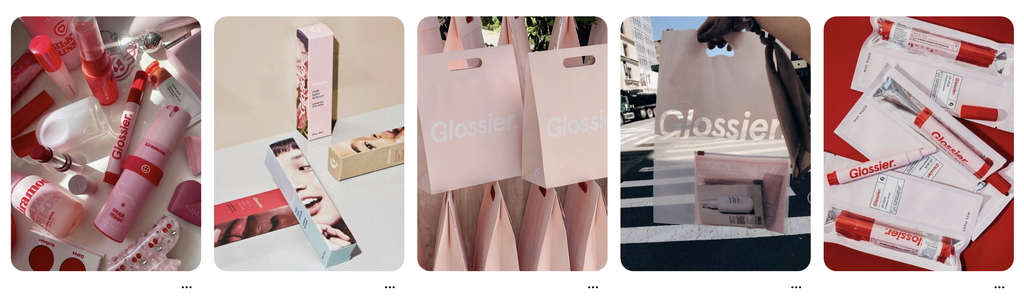
These details gave shoppers something to photograph: product shots, makeup collections, unboxing posts.
The packaging was functional, but it was also content in its own right. For a beauty brand, that matters, because customers naturally photograph products next to their personal belongings, bathroom shelves, and daily routines.
Distinctive packaging can keep the brand visible in those moments, even when the post isn’t a formal ad. Of course, packaging alone doesn’t guarantee user-generated content. Customers need a product experience they actually want to talk about. Visual design just makes those conversations recognizable when they happen.
Platform-Native Content on Instagram and TikTok
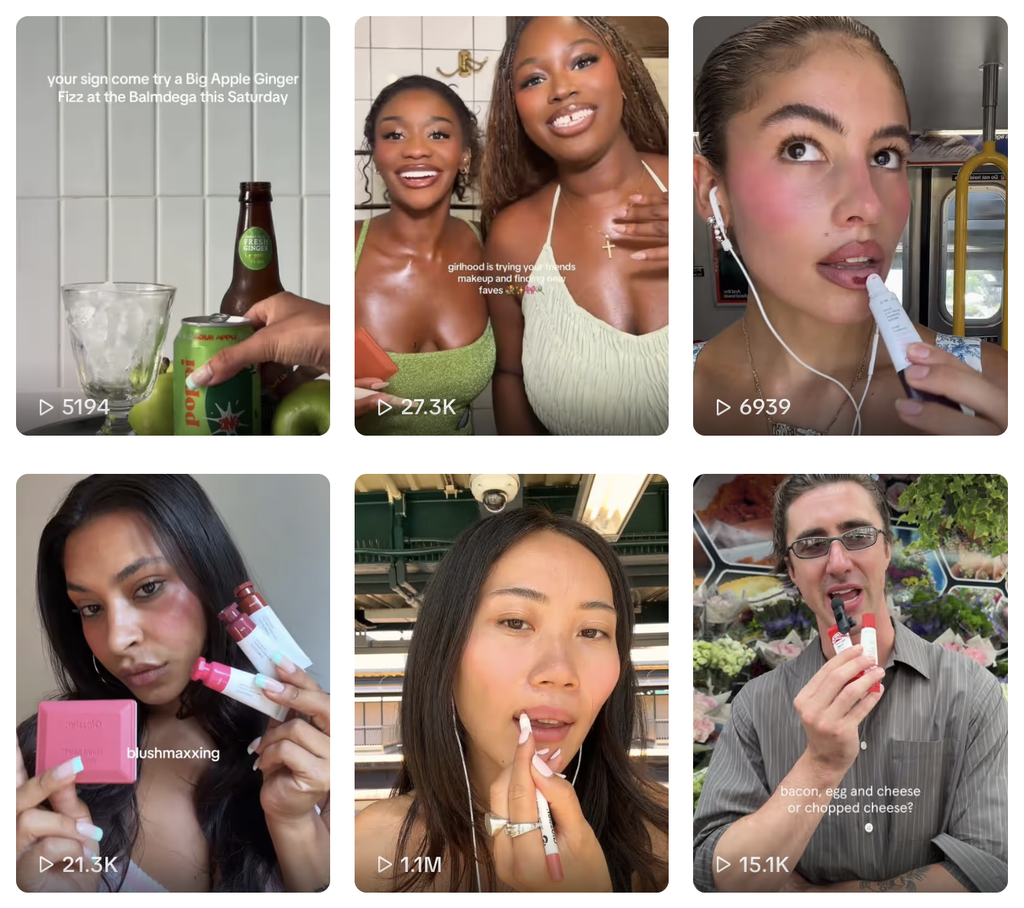
Glossier’s social media has moved well beyond polished product photography, as you can see in the examples we shared above.
The brand uses a mix of demos, creator collaborations, humor, product storytelling, and retail experiences to speak across platforms. And its actual posts show how different creative formats serve different goals. For example, in a post, Glossier features makeup artist Celia Burton demonstrating Boy Brow.
The concept is easy to follow: show the product in use and let the result do the talking. It’s a practical format for a familiar hero product, because viewers can judge the application technique without needing an elaborate campaign story.
In another post, the beauty brand celebrates one year of Cloud Paint Plush Blush by showing the different ways people wear it.
It’s a smart community-content format, because the product becomes a jumping-off point for lots of personal styles. It also reinforces an important Glossier message: beauty products are tools people can use in their own way.
What about TikTok? Glossier spotlights a SoHo installation created with Nicole McLaughlin around Glossier You Doux.
The post links a physical installation with a digital invitation, nudging viewers to experience the fragrance concept in person. It shows how social content can support experiential retail without turning into a standard store ad.
The point isn’t that every beauty brand should copy Glossier’s photography or tone. It’s that good platform-native content gives viewers something useful or interesting: a demo, a perspective, a fun idea, or a reason to join in.
Who Is Glossier’s Target Audience?
Glossier’s target audience has changed a lot since its early DTC days.
The brand originally grew around digitally engaged beauty shoppers, especially millennials who connected with its skin-first philosophy and approachable product positioning.
As the company added new categories, entered Sephora, and invested in broader cultural partnerships, its potential audience widened.
Today, Glossier’s marketing opportunities include younger beauty shoppers, editorial content audiences, experience-seeking customers, and people discovering the brand through retail partners.
The table below is a strategic audience segmentation, not a demographic breakdown published by the company.
| Audience | Marketing Opportunity | Relevant Campaign Approach |
|---|---|---|
| Gen Z and millennial beauty buyers | Everyday minimal beauty and personal expression | Hero-product campaigns, creator demonstrations, and UGC |
| Beauty content consumers | Education, discovery, and product recommendations | Into The Gloss editorial and community conversations |
| Experience-seeking shoppers | Memorable physical experiences and social sharing | Glossier pop-up stores, flagship experiences, and events |
| New retail shoppers | Convenience, accessibility, and product testing | Sephora launch and partner-channel campaigns |
Someone discovering Boy Brow through a makeup tutorial may just need a quick demo. A fragrance shopper might respond better to emotional storytelling. A Sephora customer might simply want help picking the right product.
The brand’s broader positioning ties those experiences together, but the immediate marketing job changes with the audience.
That’s a big reason Glossier’s move into retail matters so much: it opens up new ways to be discovered beyond the communities that helped build the brand.
What Marketers Can Learn From Glossier Advertising
We’ve covered content, products, influencers, partnerships, and stores.
But the most useful question is this: what can marketers actually take from these Glossier advertising campaigns?
Glossier’s history offers several principles that reach beyond beauty, especially for agencies working with consumer brands, DTC companies, and retailers.
1. Build an Audience Before You Build a Product
Into The Gloss shows the advantage of understanding customers before you introduce something new for them to buy. An established audience can give you feedback, reveal unmet needs, and offer a starting point for distribution.
You don’t have to launch a huge editorial publication to use this idea. A helpful newsletter, an educational video series, a niche community, or a focused content platform can all help you build a relationship with potential customers.
Start by figuring out what people genuinely want to know or talk about. Then give them a reason to keep coming back. The metric that matters isn’t just audience size. It’s the quality of attention and how relevant the relationship is to the products you eventually want to sell.
2. Let Customers Create the Campaign Content
Glossier’s user-generated content shows how customer experiences can extend brand communication. Product demos, reviews, recommendations, and everyday photos can introduce potential customers to a product through formats they already know. But don’t confuse encouraging customer creativity with expecting free promotional work. Good UGC programs respect creator ownership, get proper permissions, disclose incentives clearly, and give people a genuine reason to take part.
For marketers running these programs at scale, specialist influencer marketing agencies can help with creator selection, campaign coordination, rights management, and measurement. The goal is a credible link between the customer’s experience and the content being shared.
3. Design Products and Spaces to Be Shared
Glossier’s packaging and experiential retail show that creative marketing goes well beyond advertisements. Product design, delivery packaging, store interiors, and customer service all shape what people remember and talk about. This is especially useful for businesses with physical products.
Think about what happens after the sale. Is the packaging recognizable? Is the first-use experience intuitive? Does the product offer a benefit customers can easily show off? The same questions apply to stores and events.
A photogenic space may grab attention, but a memorable experience gives customers something more substantial to share. You can see another take on experiential beauty marketing in Lush marketing campaigns, where product interaction and sensory experiences take center stage.
4. Use a Single Hero Product to Carry Brand Awareness
Boy Brow shows how one identifiable product can simplify a company’s marketing story.
When customers know exactly what a product does, remember its name, and recognize how it looks, recommending it gets easier. A hero product can also cut down the complexity of your creative.
Instead of promoting every item equally, a brand can focus attention on one product that introduces the broader proposition. You’ll see the idea in different forms across beauty brands. For instance, Rare Beauty marketing campaigns and Huda Beauty marketing offer more perspectives on using recognizable products, creators, and brand identity to build awareness.
The practical exercise: identify the product customers can most easily understand, demonstrate, and recommend. That product may deserve a bigger role in your acquisition strategy.
5. Plan for the Shift From Community Growth to Paid Scale
Glossier’s journey also shows the limits of relying on early organic momentum forever.
As a brand grows, it has to reach customers who weren’t part of its original community. That can mean paid media, broader distribution, more sophisticated creative testing, and stronger measurement. The transition raises tough questions.
How much should go toward customer acquisition? How can paid creator partnerships keep their credibility? Which creative elements have to stay recognizable as the brand moves into new channels?
Glossier’s path from DTC business to Sephora distribution makes those questions especially relevant.
Brands facing a similar transition can benefit from experienced eCommerce marketing agencies that understand acquisition, conversion, retention, and omnichannel measurement. And for consumer brands entering competitive categories, specialist beauty marketing agencies can help connect creative positioning with commercial goals.
Community builds relationships and advocacy. Paid media expands reach and speeds up discovery. Retail creates more chances to try the product. The challenge is getting those channels to work together. For another view on that balance, take a look at Sephora marketing, which combines product discovery, retail experiences, loyalty, and digital communication.
Glossier’s story gets really interesting when you notice how much its marketing has changed without fully abandoning the principles that made the brand recognizable.
Frequently Asked Questions About Glossier Marketing Campaigns
1. What is Glossier’s marketing strategy?
Glossier’s marketing strategy blends community engagement, editorial content, product-led storytelling, influencer partnerships, experiential retail, and omnichannel distribution. The brand originally built awareness through Into The Gloss, customer conversations, and peer recommendations. As the company grew, it added bigger advertising initiatives, cultural partnerships, and retail distribution. At its core, the brand is about uncomplicated beauty, individuality, and products designed around real customer experiences.
2. How did Into The Gloss help build Glossier?
Into The Gloss gave Glossier an audience before its first product ever launched. Founded in 2010, the editorial platform drew in beauty-minded readers through interviews, product recommendations, and discussions. By October 2014, the site had more than 750,000 unique monthly visitors, according to Glossier’s original launch release. Those conversations helped the team understand what customers wanted and gave the new beauty brand a ready-made community to introduce its products to.
3. What are Glossier’s most successful marketing campaigns?
Notable Glossier marketing campaigns and initiatives include Into The Gloss, Boy Brow advertising, Glossier You fragrance launches, experiential pop-up stores, ambassador and referral programs, the WNBA partnership, and the Sephora retail launch. Each served a different marketing goal. Into The Gloss supported audience development. Boy Brow established hero-product recognition. Pop-ups brought experiential discovery, while the Sephora launch widened retail access. Because Glossier doesn’t publicly disclose comparable campaign-level ROI for every initiative, there’s no verified financial ranking of its most successful campaigns.
4. Who is Glossier’s target audience?
Glossier’s target audience includes digitally engaged beauty shoppers, Gen Z and millennial customers, skincare enthusiasts, fragrance buyers, and people who like uncomplicated beauty routines. The brand also reaches people through physical stores, retail partnerships, creator content, and cultural collaborations. Its Sephora expansion opened the door to customers who prefer to discover and test products in established beauty retail environments.
5. How does Glossier use influencer marketing?
Glossier’s influencer marketing mixes product recommendations, creator demos, customer-generated content, and paid collaborations. Its early strategy leaned on relatable voices and peer recommendations, which helped products become part of everyday beauty conversations. As the company grew, it brought in professional creators, athlete partnerships, and broader creative collaborations. The approach shows how different types of creators can serve different goals, from awareness and product education to community engagement and customer acquisition.
6. Why are Glossier pop-up stores important to its marketing?
Glossier’s pop-up stores make the brand’s products and visual identity something people can step into. They let customers test products, spend time in branded environments, and create social content from their visits. The London pop-up showed the potential of this approach, drawing more than 100,000 visitors in its first 10 weeks, according to company-reported figures. The stores also support product discovery and community interaction in ways online shopping can’t.
7. How did Glossier’s move into retail change its marketing?
Glossier’s retail expansion changed how it distributes products and opened up new ways to find customers. The February 2023 Sephora launch put its products in 600 stores across the United States and Canada, along with digital retail channels. That made it easier for customers to discover, compare, and test products without relying only on Glossier’s own website or stores. It also brought new marketing demands, including retail merchandising, partner-channel communication, and connecting online awareness with in-store purchases.
8. What can DTC brands learn from Glossier?
DTC brands can learn the value of building customer relationships, creating products with clear benefits, developing recognizable brand assets, and encouraging credible advocacy. Glossier also shows that early community success doesn’t mean you can stop evolving. As the customer base grows, a brand may need broader distribution, paid acquisition, and fresh creative approaches. The aim is to keep the qualities customers love while making the business more accessible to people outside the original audience.