















What Is Earned Media? Definition, Examples and How to Win It
Nearly half of agency PR practitioners, 47%, say securing earned media coverage is a priority in 2026, according to Onclusive’s 2026 PR statistics. That sounds sensible until you remember what earned media asks a brand to do: make something worth covering, then hand the final decision to somebody else.
Earned media is publicity a brand gets because a journalist, customer, creator or community chooses to carry the story. You can stack the odds with a better idea, better timing and better relationships. Someone else still marks the homework.
Earned media at a glance
- Earned media includes unpaid press coverage, organic social mentions, independent reviews, recommendations and user-generated content.
- Earned media carries no placement fee, although the work behind it still costs time and money.
- Paid media buys distribution, owned media uses brand-controlled channels, and earned media depends on another party choosing the story.
- Earned media can create third-party references that search engines and AI systems may surface or cite.
- Earned media measurement should pair coverage and share of voice with commercial outcomes and AI search citation share.
What is earned media?
Earned media is independent publicity, coverage or conversation that a third party chooses to publish or share. It builds credibility and reach through independent voices, and differs from paid and owned media in that somebody outside the brand decides whether the message appears and how they frame it.
That’s my rule of thumb for earned media: the outside party gets and keeps the final say.
Why does earned media matter in 2026?
Earned media matters in 2026 because trust is thin, feeds are crowded, and AI search has created another place where third-party references can shape what systems surface. It arrives with somebody else’s fingerprints on it. That is why it carries weight.
Trust that comes from somebody else
Earned media gets its credibility from the awkward bit brands tend to dislike: editorial independence. Anyone can buy an ad saying they are brilliant. It gets more interesting when a journalist, customer or creator reaches that conclusion themselves.
The Reuters Institute for the Study of Journalism’s Digital News Report 2026 puts trust in news overall at 37%. Trust in news on social media is 22%, while trust in news from AI chatbots is 20%.
While those figures measure news trust, we can treat them as a proxy for the wider source-credibility problem. People notice where a claim came from. Everyone expects a brand to praise itself. An independent source carrying the story is a different proposition.
Earned media and AI search visibility
Earned media has picked up a strange new readership: machines. Google AI Overviews and large language model (LLM) interfaces can surface and cite web sources, giving third-party coverage another route into brand discovery.
I map that relationship in three moves:
- Input: Earned coverage, independent reviews and third-party references on publications AI systems can access and cite.
- Process: Those sources create a wider reference footprint that AI Overview and LLM citation systems can draw on.
- Output: AI search citation share shows how often your brand or its coverage appears across a defined set of AI answers.
Digital Agency Network’s Agency GEO Guide identifies AI Share of Voice and citation presence as emerging measures. For PR teams, the question is simple: are the stories travelling into AI answers?
What counts as earned media? Types and examples
Earned media covers the moments where somebody outside the brand decides a story deserves another life. The formats vary, but the common thread is choice.
Press and editorial coverage
Press and editorial coverage includes news stories, interviews, trade features, opinion pieces and roundups chosen by an editor.
Oxfam’s 2023 legacy campaign Stay in the Fight, created with Don’t Panic, reunited protesters from the 1983 Hyde Park peace march on its 40th anniversary and gave journalists a real-world story to cover.
The launch was reported by more than 240 news outlets, according to the Third Sector Awards campaign case study. The coverage opportunity came straight from the launch itself.
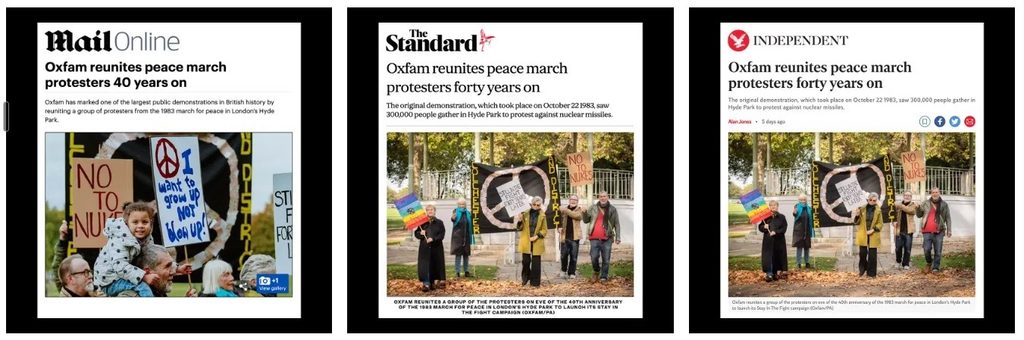
Alt: National press headlines covering Oxfam’s reunion of 1983 peace march protesters, a classic earned media result
Social media mentions and shares
Duolingo killed its own owl in 2025, which is one way to get a language app into the press. Dead Duo started as a social stunt and spilled into a wider internet event, with users, brands and media joining the joke.

Alt: Duolingo’s Instagram post announcing the death of its owl mascot, a stunt that drove huge earned media
The company later said it had benefited from the campaign while lapping 49% daily active user growth in Q1 2025, according to Duolingo’s Q1 2026 shareholder letter. The social post was the trigger. The reaction around it was the earned part.
Reviews and word-of-mouth
Reviews and word-of-mouth are earned because the audience, not the brand, writes them. A product or campaign spreads on the strength of what real customers say about it, funny, glowing or scathing, rather than through paid promotion.
Who Gives A Crap’s Trustpilot reviews put that customer verdict in public view, where prospective buyers weigh it more heavily than anything the brand says about itself.
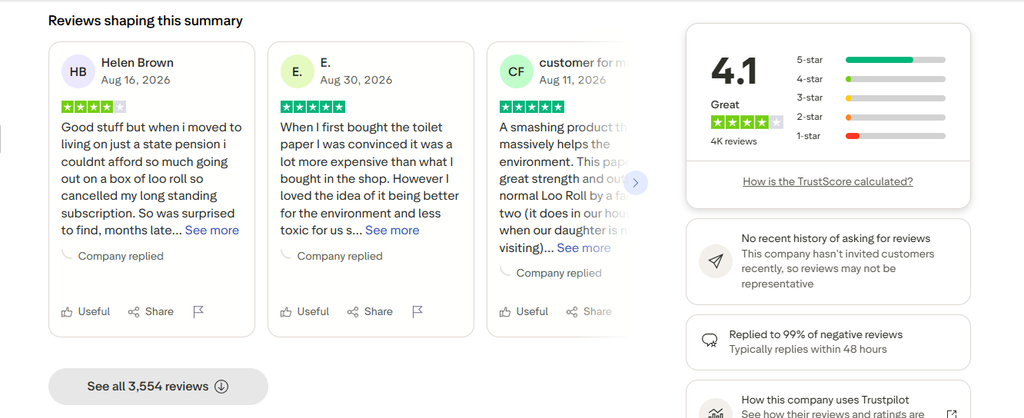
Alt: Trustpilot reviews for Who Gives a Crap
The brand makes the product. The customer supplies the verdict, and that verdict travels.
User-generated content
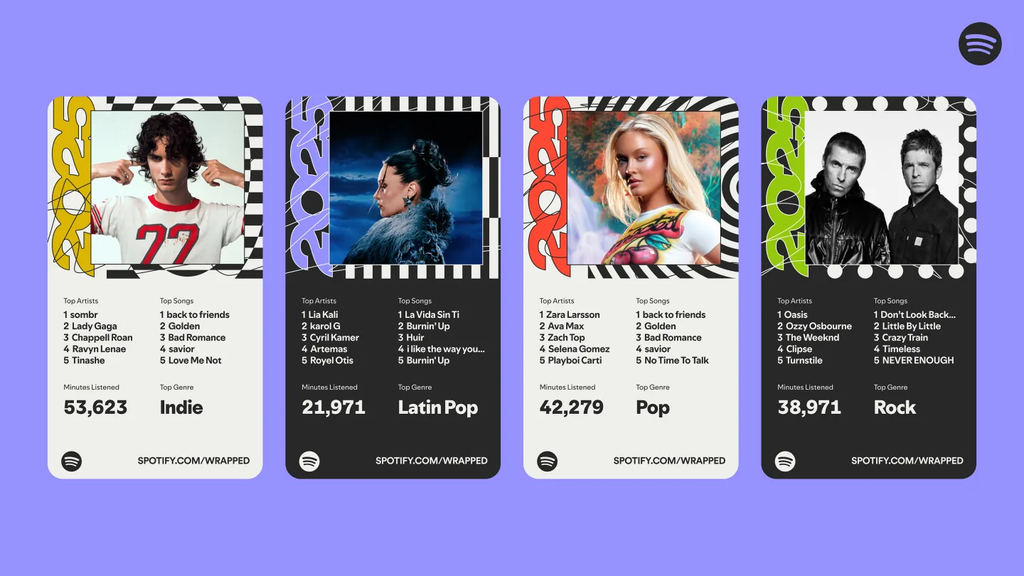
Alt: Four Spotify Wrapped 2025 cards showing top artists and minutes listened, a repeat earned media hit
Spotify Wrapped turns your listening history into a tiny annual personality test, then hands you a share button. Spotify’s 2025 data stories included share cards for friends and social channels.
They create the trigger, but earn the distribution from listeners. That beats adding a hopeful “please share” at the end.
If you make something that helps people show something about themselves, and make it easy to share, you’re creating a self-sustaining source of UGC.
A real earned media example: Shelter’s Earworm
Shelter’s Earworm starts with something painfully ordinary: being stuck on hold. A schoolboy quietly sings Bonnie Tyler’s “Total Eclipse of the Heart” through his day, annoying people around him. The final scene reveals why the song is stuck in his head: his family keeps hearing it while on hold as they desperately try to secure housing.
The idea came from lived-experience conversations about temporary accommodation, and Michael Gracey directed the film. The Drum’s interview with the creative team traces how being left on hold became the concept’s foundation.
The film earned coverage across the ad and marketing trade press without a media buy behind it:
- LBBOnline reported on the launch
- The Drum ran it twice, once as its Ad of the Day and once as a craft interview with the creative team,
- shots flagged an upcoming feature on how the spot was made
- Famous Campaigns named it Ad of the Day with a five-star rating
- The CIM’s end-of-season round-up singled it out as one of the hardest-hitting campaigns of the year, sitting Shelter alongside John Lewis, Sainsbury’s and Waitrose in the seasonal conversation.
That press did not need chasing. The story was already present in the human truth behind the film.
Does earned media cost money?
Earned media has no media placement fee. There is no invoice from the journalist for deciding your story is interesting, which is lovely. The strategy, research, creative development, production, PR time, events and monitoring behind that story still cost real money.
Think of the distinction as spend and control. You pay for the work that creates the opportunity. The publisher, customer or creator owns the decision about whether the story goes any further.
So budget for earned media properly. Calling it “free media” doesn’t make the work behind it mysteriously disappear from the spreadsheet.
How to earn media coverage
Media coverage starts with a story somebody else has a reason to carry. Relationships and timing matter, but they work much harder when the idea already has a pulse.
1. Make something worth talking about
Start with the story. The press release is wrapping paper. It can polish a good idea, but it cannot perform CPR on a dull one.
Original research can create the hook. So can a sharp creative idea, useful data, a strong point of view or a campaign that makes an abstract issue suddenly feel close. Give the journalist an actual story and the pitch becomes considerably less heroic.
2. Build relationships with journalists and creators
Journalists remember useful people. They also remember the person who sends a 600-word “quick note” about a product update nobody asked for.
Know what they cover, what their readers care about and which angles they have already seen twelve times that week. Then pitch the bit that is genuinely relevant, with the evidence and access they need to turn it into something worth publishing.
Good media relations make somebody’s job easier, and that’s something journalists remember.
3. Be responsive when news moves
Reactive work has a short half-life. By the time six stakeholders approve the joke, the joke is compost.
Set clear decision rights before the moment arrives. Know who can speak, what the brand has permission to comment on and how quickly creative can move. Then watch the news and culture around your category for moments where you can add something useful, funny or genuinely clarifying.
How to measure earned media
Earned media measurement needs a small set of metrics that answer different questions. All a singular enormous dashboard usually proves is that somebody has access to a dashboard.
- Media coverage volume counts relevant earned placements over time. Use it to track momentum, then judge placement quality separately. Work it out by counting the number of relevant earned placements within a set period.
Media coverage volume = Total qualifying earned placements per period (month or quarter)
- Share of voice shows your proportion of relevant category coverage. Use it to see whether your presence in the conversation is growing. Calculate it as your brand mentions divided by total category mentions (yours plus competitors), multiplied by 100 for a percentage.
Share of voice = (Brand mentions / Total category mentions) x 100
- Earned media value estimates a currency figure for unpaid exposure. Use EMV as a rough benchmark because the number changes with the assumptions built into the formula. A precise pound figure can make a rough estimate look far more scientific than it really is. The rough formula is impressions multiplied by an assumed cost per thousand (CPM), often with a credibility multiplier applied, which is exactly the assumption that makes the figure an estimate rather than a fact.
Earned media value = Impressions x CPM x Credibility multiplier
- AI search citation share tracks how often your brand or coverage appears across defined AI answers. Use it to see whether your media footprint reaches generative search. Work it out as the number of AI answers citing your brand divided by the total AI answers checked for your defined query set, multiplied by 100.
AI search citation share = (AI answers citing your brand / Total AI answers checked) x 100
Frequently asked questions
What is the difference between earned media and PR?
The difference between earned media and PR is scope. Earned media is an outcome, while PR is the broader discipline covering reputation, issues, stakeholder communications, spokespeople and crises. A campaign can generate plenty of press and still need PR activity long after the headlines move on.
Which is an example of earned media?
Earned media includes any third-party mention where the other party chooses to publish or share it. A useful control test is simple: an editor choosing your campaign for a roundup counts; a sponsored placement bought under contract sits in paid media. The boundary is who owns the decision.
What is meant by earned media?
Earned media means your story has crossed from brand-controlled communication into independent circulation. The practical upside is perspective: readers can see that somebody outside the organisation considered it worth mentioning. The practical risk is equally simple: that outside voice gets to frame the story in its own way.
Make the story worth carrying
Earned media is messy because people have free will, inconveniently. That is also why it works. A story that lands well carries independent credibility with it.
At Don’t Panic London, we build creative work with the press hook and human reaction in mind from the start.
The best stories keep moving after the media plan stops pointing the way.
Our earned media work shows what happens when the idea gives people something they genuinely want to carry further.