












inBeat is North America’s leading creative growth agency, growing brands through data-driven creative designed to perform and scale across channels. We combine performance creative, paid media management, influencer marketing, and growth strategy to deliver measurable results. Our services span UGC production, creative strategy, paid social (Meta, TikTok, Snapchat, Google), influencer partnerships, performance branding, and growth marketing. With proven experience working with brands like Disney, New Balance, Linktree, and Nestlé, we turn creative into a scalable growth engine.
inBeat Agency
Gold MemberinBeat is a creative growth agency that helps brands connect with audiences and drive measurable business growth through performance-led creativity.
About
- HQ
- OFFICES
-
HEADQUARTERS
- ADDRESS: 51 Rue Sherbrooke O #204, Montréal, QC H2X 1X2, Canada
- PHONE: +1 8338001506
- E-MAIL: [email protected]
Case Studies
How inBeat Reduces Client CPA by 20–30% Through UGC Creative and Scalable Dark Posting
Client: HelloFresh, NielsenIQ
Industry: IT & Technology
- Digital Strategy
- Influencer Marketing
- Online Advertising
- Social Media Marketing

How inBeat Reduces Client CPA by 20–30% Through UGC Creative and Scalable Dark Posting
Montreal, QC: inBeat Agency announces that its methodology combining user-generated content with dark posting has delivered an average cost-per-acquisition reduction of 20-30% across its client portfolio, with individual engagements reaching as high as 75%. The results span app growth, e-commerce, and multi-market consumer campaigns, pointing to a repeatable system.
The Problem Most Performance Teams Face at Scale
At a certain level of media maturity, bid strategies and audience targeting stop being the primary differentiator. What actually determines whether CPA goes up or down is the quality and volume of creative, specifically, how quickly a team can generate, test, and rotate it.
Branded creative fatigues quickly on paid social. Producing enough volume to sustain continuous testing cycles is costly when the work goes through studios or in-house production.
Additionally, when campaigns expand across markets, the inconsistency compounds: content that converts in one region may fail in another, with no clear signal explaining why.
This is the challenge inBeat Agency was built to solve.
The Methodology: UGC Volume Meets Dark Posting Infrastructure
inBeat’s approach rests on two components working in parallel: a structured UGC production system and a dark posting distribution model that keeps testing clean and scalable.
On the creative side, inBeat works with a rotating pool of creators per month for each client.
Creators are selected based on content quality, category fit, and historical performance data. inBeat Agency doesn’t consider follower count as the main selection factor. Each creator produces multiple assets per cycle, resulting in tens of unique creatives entering the testing pipeline monthly.
Those assets are, in many cases, distributed through dark posting. Dark posts are paid ads running through individual creator accounts, appearing as native content in-feed without being published organically.
This tactic removes the practical ceiling on how many variations can be tested simultaneously, and allows market-specific creative to run without fragmenting a brand’s main presence.
The media-buying team monitors performance at the individual creative level. Underperforming assets are pulled within days, and the budget is reallocated toward what the data supports. By mid-month, the second half of spend is already being shaped by performance signals from the first.
Case Study: NielsenIQ / Unroll.me
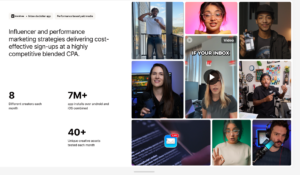
When NielsenIQ relaunched the inbox management application Unroll.me, the priority was scaling user acquisition through paid social. The company needed creative that could perform consistently across a six-figure monthly media budget without CPA climbing as volume increased.
inBeat built the campaign around UGC content distributed as TikTok ads. With sufficient creative volume to identify winning angles early, the buying team was able to allocate budget decisively on proven assets.
The outcome consisted of a 75% reduction in CPA and more than 100,000 downloads per month. This engagement sits within a broader app-growth practice that has contributed to 7M combined installs across Android and iOS and a 6-figure paid media budget managed for app promotion campaigns.
Case Study: HelloFresh Europe
HelloFresh’s European team came to inBeat after managing their influencer campaigns in-house across multiple markets. Performance was uneven, creator discovery and negotiations were consuming significant internal resources, and there was no systematic process for understanding which content was working or why.
inBeat replaced the manual approach with a data-backed system built around dark posting and rapid creative testing.
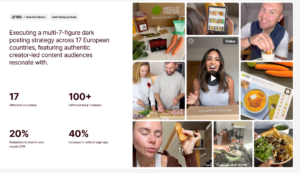
Working with 100 local creators across 17 countries, the agency standardized the production and distribution process while preserving the local authenticity that drives performance in each market.
The results over the course of the engagement included a 20% month-over-month reduction in CPA and a 40% increase in referral sign-ups. These outcomes were driven not by a single high-performing asset, but by a testing infrastructure capable of consistently surfacing what worked across a large and varied creative pool.
What These Results Have in Common
The two engagements differ in category, scale, and starting conditions.
What they share is the same underlying structure:
- UGC provides the creative volume necessary for real testing.
- Dark posting allows testing to run cleanly across accounts and markets.
- The feedback loop between creative performance data and buying decisions is what compounds into meaningful CPA reduction in the long run.
The 20-30% average inBeat delivers across its client base reflects that structure operating consistently.
For more information on inBeat’s UGC and paid media services, visit https://inbeat.agency/.
Client: HelloFresh, NielsenIQ
Industry: IT & Technology
Sector Expertise: Social Networks
Location: , USA
Technologies: UGC creative, dark posting, TikTok Ads, paid social, creator sourcing, performance testing
Completed: Apr 2026
Client: Hurom, Farmer’s Dog, Dashing Diva
Industry: FMCG
How inBeat Increased ROAS by Up to 230% for DTC Brands With UGC and Paid Social
Client: Hurom, Farmer’s Dog, Dashing Diva
Industry: FMCG
- Digital Strategy
- eCommerce
- Influencer Marketing
- PPC
- Social Media Marketing

How inBeat Increased ROAS by Up to 230% for DTC Brands With UGC and Paid Social
inBeat has been publishing results from its UGC and paid social work with direct-to-consumer brands, and the numbers are consistent enough to be worth laying out.
Across clients where UGC was the primary creative format and paid social was the main distribution channel, brands saw ROAS increase by 35% to 60% on average, CPA drop by 20% to 30%, and customer acquisition cost fall by 15% to 25%.
For DTC brands like Farmer’s Dog, Hurom, Evry, Dashing Diva, inBeat increased ROAS by an average of 230%.
About 90% of those clients were running performance campaigns on paid social.
The brands inBeat worked with include names in health and wellness, beauty, pet care, and consumer goods.
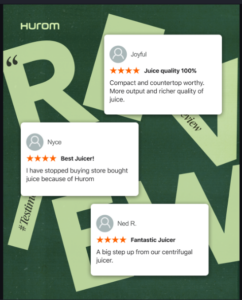
Some of them, like Hurom, have had their results published in full. Others preferred to keep the details private. But the pattern across all of them is similar enough that it points to something repeatable.
What These Brands Had in Common Before Working With inBeat
Most of the brands that came to inBeat were not starting from zero. They had been running paid social for a while, had some sense of what was working, and had hit a ceiling.
CPAs were drifting upward, the creative was getting stale, and some of them had become dependent on discount messaging to keep conversion rates up.
That last point tends to cause the most damage in the long run.
When paid social leans too heavily on promotions, you start attracting people who only show up for discounts. That makes targeting more expensive in the long run, weakens how people perceive your brand, and puts you in a loop that’s hard to get out of without reworking your creative approach.
In a lot of cases, there was also a coordination issue.
Creative, media buying, and influencer work were handled separately, with little overlap. Each team was doing its job, but they weren’t aligned on what actually drives performance.
The Shift That Drives These Numbers
The core change inBeat made for most of these brands was moving away from polished, promotional creative and toward UGC built around the actual reasons people buy the product.
This approach needs a real mindset shift in how you think about paid social content.
Instead of starting with an offer, you put a genuine person front and center.
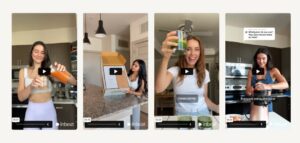
This can be a real customer or creator talking about a specific problem they had and how the product addressed it: gut health, a dog that’s a picky eater, or nails that kept breaking.
The specifics vary by category, but the structure is the same: identity first, product second.
https://www.adcollection.co/tiktok/dashing-diva-3
Content like this works in paid social because it doesn’t look like an ad.
People subconsciously decide to skip polished brand videos in their feed before processing them rationally. But when they see someone who looks like them talking about something they actually care about, they stop. UGC is based on that instinctive consumer behavior.
The other thing inBeat put in place was a proper testing process.
A dedicated creative strategist on each account tracked performance at the element level: which hooks were holding attention, which calls to action were converting, how the framing of social proof affected click-through. That analysis fed back into every new round of creative.
So instead of producing more content, the team was producing smarter content each time.
How the Work Actually Ran
For most clients, inBeat launched several UGC variations at the same time, watched the data, and made decisions based on what was actually happening. When a specific angle outperformed the others, that angle got developed further. When something didn’t work, it got cut without sentiment.
The paid media side was managed in parallel.
That’s worth doing because creative and media strategy are not independent variables.
An asset that performs well in one placement or audience context might perform very differently in another. When the people making the creative and the people running the media are working off the same information, you avoid a lot of waste.
For brands that had internal silos, inBeat also worked directly with their teams across functions.
Getting creative, media, and sometimes product or customer success aligned on what the ads were saying and who they were talking to turned out to be one of the higher-leverage things the team did, even if it doesn’t show up in the headline metrics.
What the Results Actually Reflect
A 230% ROAS improvement in the DTC niche is meaningful. The same can be said for the 60% average ROAS increase.
But the more interesting thing about these numbers is how they were achieved.
None of the brands in this group got there by cutting prices or running aggressive promotions. The improvement came from making the creative more relevant, which made the media more efficient.
When your creative is genuinely connecting with the right people, your CPMs tend to improve, your click-through rates go up, and your conversion rates follow. Each of those improvements feeds into the next.
The CPA and CAC reductions the brands saw: 20% to 30% on CPA, 15% to 25% on CAC, reflect that same dynamic.
Lower acquisition costs without sacrificing volume means you have more room to grow profitably. And because the gains came from better creative, they’re less vulnerable to the kind of platform changes that regularly disrupt brands that have built their performance mainly on audience data.
Who This Tends to Work For
The brands that have seen the strongest results with this approach share a few traits:
They have a product that people genuinely like and talk about.
They have enough budget to test properly, meaning they’re not making one piece of content and hoping it carries the account.
They’re willing to let the data drive creative decisions, even when that means abandoning something the internal team liked.
DTC brands in health and wellness, beauty, pet care, mobile apps, and consumer goods have been the most consistent performers with this model. These are categories where purchase decisions are personal and trust matters.
https://www.adcollection.co/tiktok/national-consumer-panel-2
UGC speaks to that in a way that brand advertising struggles to.
Client: Hurom, Farmer’s Dog, Dashing Diva
Industry: FMCG
Location: , USA
Technologies: Meta Ads, TikTok Ads, Google Ads, UGC Production, Influencer Marketing
Completed: Apr 2026
Client: HelloFresh, NielsenIQ
Industry: IT & Technology
Feed