












How Generative 3D Is Changing Creative Production for Digital Agencies
Generative 3D is changing how digital agencies produce creative work. It can reduce modeling, texturing, and scene-building processes that once took weeks to a matter of hours. It also gives people across creative teams easier access to spatial content creation. As a result, agencies are moving away from charging mainly for manual asset building and placing more focus on creative direction and interactive experience design. Creatives can now turn text prompts and reference images into textured, production-ready 3D meshes. This removes many of the technical delays that once made spatial computing, 3D advertising, and virtual staging too expensive for fast campaigns.
For many years, digital agencies had to balance visual quality, speed, and budget. Building custom 3D environments called for technical artists who worked through detailed stages such as box modeling, retopology, UV unwrapping, material painting, and rigging. New platforms such as Meshy AI have reduced this bottleneck. Creative technologists and art directors can now create textured 3D assets from simple text descriptions or 2D concept sketches in much less time than traditional base mesh modeling required. Because Meshy AI runs fully in the browser and offers a free tier, a strategist or copywriter can test a spatial idea during a brief period without waiting for a licence, a workstation, or an available 3D artist — which is often the real bottleneck in an agency, rather than render time.
Marketing channels are moving quickly toward immersive formats, including high-conversion 3D shopping tools and real-time spatial web experiences. Agencies are no longer treating 3D as a costly service reserved for major clients. Generative 3D is becoming a regular production tool that changes agency profit margins, pitch development, and the speed at which teams create content for every stage of a campaign.
What Is Generative 3D in Creative Production?
Generative 3D in creative production means using artificial intelligence systems to create digital objects, textures, and scenes in three dimensions. These systems can work from text prompts, sketches, or 2D reference images. They often use diffusion models, neural radiance fields (NeRFs), and 3D Gaussian splatting. Instead of asking a technical artist to place every vertex and map every UV coordinate by hand, the systems study large numbers of spatial patterns to estimate depth, shape, and surface materials.
For an agency, this technology is more than a standalone novelty. It acts as a speed layer within existing digital production pipelines. Creative directors, visual designers, and motion graphics artists can create and revise complex spatial assets without years of specialist computer graphics training. This helps connect an early creative idea with a usable, renderable 3D asset.
How Generative 3D Differs From Traditional 3D Modeling
Traditional 3D production is a technical process built step by step. An artist starts with basic shapes or digital clay, then sculpts details and adjusts the mesh so its polygons move correctly during animation. The next stage is UV mapping. This is similar to cutting the peel from an orange and flattening it onto a 2D surface. Artists then paint several texture layers, such as diffuse, roughness, metallic, and normal maps. A single detailed hero asset can take days or weeks to complete through this linear process.
Generative 3D changes the order of this work. Artists can provide a prompt or reference image to a neural system, which builds the volume and surface textures at the same time. Work that once required forty hours of sculpting and topology cleanup may now produce a usable base mesh in minutes. The artist spends less time on repetitive construction and more time selecting, correcting, refining, and directing the result. This changes the cost of creating spatial assets.
| Production Stage | Traditional 3D Pipeline | Generative 3D Pipeline |
| Base mesh | Box modeling or sculpting, hours to days | Generated from a prompt or image in minutes |
| Topology | Manual retopology by a technical artist | Automated, with artist cleanup on hero assets |
| UV mapping | Unwrapped and packed by hand | Handled during generation |
| Texturing | Diffuse, roughness, metallic, normal painted in sequence | PBR maps produced alongside the mesh |
| Skill required | Trained 3D generalist | Art director or designer with a browser |
| Cost per secondary asset | Billable artist hours | Near zero after setup |
| Where humans still lead | — | Direction, composition, brand judgment, final approval |
The table describes secondary and background assets. Hero geometry still moves through the traditional column, but it now represents a small fraction of the assets in a campaign rather than all of them.
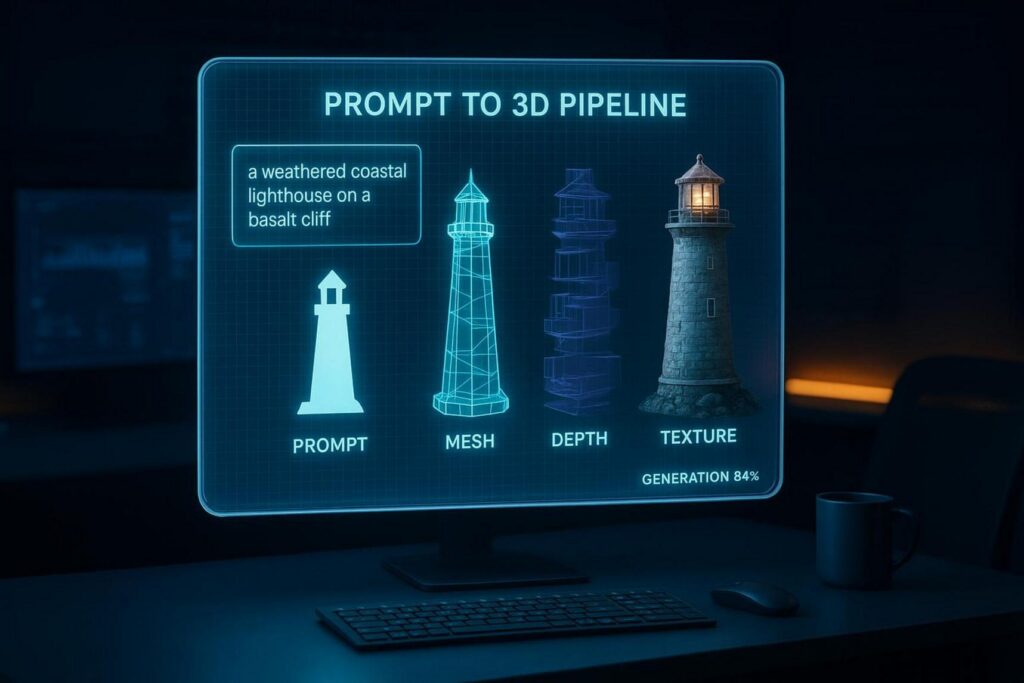
What Digital Agencies Can Create With Generative 3D
Digital agencies can use generative 3D for almost every part of modern commercial media. Common outputs include high-resolution product mockups, stylized backgrounds for advertisements, interactive objects for augmented reality campaigns, and optimized WebGL elements for online stores.
Agencies can also use these systems to fill large digital environments. Background crowds, buildings, plants, packaging options, and other scene details can be produced without assigning an entire team of generalists to the work. Generative tools help teams build varied prop libraries that make digital spaces feel full and believable without adding the same level of production cost.
How Text-To-3D, Image-To-3D, and Procedural Generation Work
Text-to-3D systems combine vision-language models with volumetric diffusion or multi-view image generation. An art director enters a description, and the system creates several 2D views of the requested subject. It then uses methods such as Marching Cubes to turn the continuous volume into a solid polygon mesh.
Image-to-3D systems use one or more reference views to rebuild an object’s shape. The model reads lighting, shadows, and perspective clues in the 2D image. It then estimates the hidden sides of the object based on geometric patterns learned during training. The number of views supplied changes the result significantly: Meshy added multi-image input in 2026, letting a single reconstruction draw on several reference angles rather than inferring rear and side surfaces from one frame, which produces higher geometric accuracy on asymmetric subjects. For an agency working from a client’s existing product photography, supplying four catalog angles instead of one hero shot is usually the cheapest available quality improvement.
Procedural generation often works alongside these AI methods. Mathematical rules and node-based systems can control an asset’s size, the density of scattered objects, and planned variations across a group of generated assets.
What Technology Supports Generative 3D Production?
Generative 3D depends on several connected layers, including neural networks, computing systems, and established digital content creation (DCC) tools. Better graphics hardware and deep learning frameworks now support fast processing that can produce meshes with useful polygon counts for production work.
Agencies often combine cloud-based AI processing with local workstations. This creates a smooth path between browser-based generation tools, desktop sculpting software, and real-time game engines.
Text-To-Image and Text-To-3D Generation Tools
Many current workflows begin with 2D generation tools such as Midjourney or Stable Diffusion. Teams use them to test moods, lighting plans, and color palettes. After the client approves a 2D visual direction, text-to-3D and image-to-3D systems can turn those concepts into complete digital assets. These assets may include polygon meshes and physically based rendering (PBR) texture maps.
Many of these tools now include automatic retopology and texture baking. They can also export common formats such as OBJ, FBX, and USDZ. This reduces file conversion work, which once made experimental creative tools harder to use in fast agency settings.
Export coverage is worth checking before a tool enters the pipeline, because an agency asset rarely has one destination. Meshy exports STL, OBJ, GLB, and FBX, which between them cover slicers and physical prototyping, DCC software, browser and AR viewers, and animation pipelines — so the same generation run can feed a WebGL banner, an Unreal scene, and a printed prop without a conversion step between each handoff.
3D Modeling, Rendering, Animation, and Game-Engine Workflows
After an AI system creates an asset, artists can bring it into familiar tools such as Blender, Autodesk Maya, Cinema 4D, and SideFX Houdini. Technical artists can then make exact edits, adjust deformers, build rigs for character movement, or refine procedural shaders to match strict brand rules.
Many projects now finish in a real-time engine such as Unreal Engine 5 or Unity. These systems allow agencies to place AI-created assets into scenes with changing lighting, plan cinematic camera movements, and publish the results across broadcast television, interactive websites, and mobile virtual reality applications.
How Generative 3D Changes the Agency Creative Workflow
Generative 3D changes the usual agency production schedule. Traditional work often follows a fixed sequence: strategy leads to copy, copy leads to 2D storyboards, storyboards lead to 3D modeling, and rendering finishes the project. Generative 3D reduces the separation between these stages. Teams can view ideas in 3D and test them at several points during a project.
When agencies bring interactive 3D assets into early client discussions, they reduce the uncertainty that often comes with flat pitch decks and simple concept boards.
1. Ideation Replaces Slow Concept Sketching With Rapid Visual Exploration
During discovery and pitch work, teams can find it hard to show physical size, lighting behavior, and spatial presence with flat moodboards. Generative 3D lets creative teams build rough 3D concepts during brainstorming sessions.
Instead of waiting several days for an illustrator to create static views of a retail activation or brand experience, an art director can make ten different spatial versions in one afternoon. This speed gives agencies room to propose more ambitious ideas. It also lets potential clients see rotating or interactive prototypes instead of only flat sketches.
2. Pre-Production Turns Approved Concepts Into Testable 3D Scenes
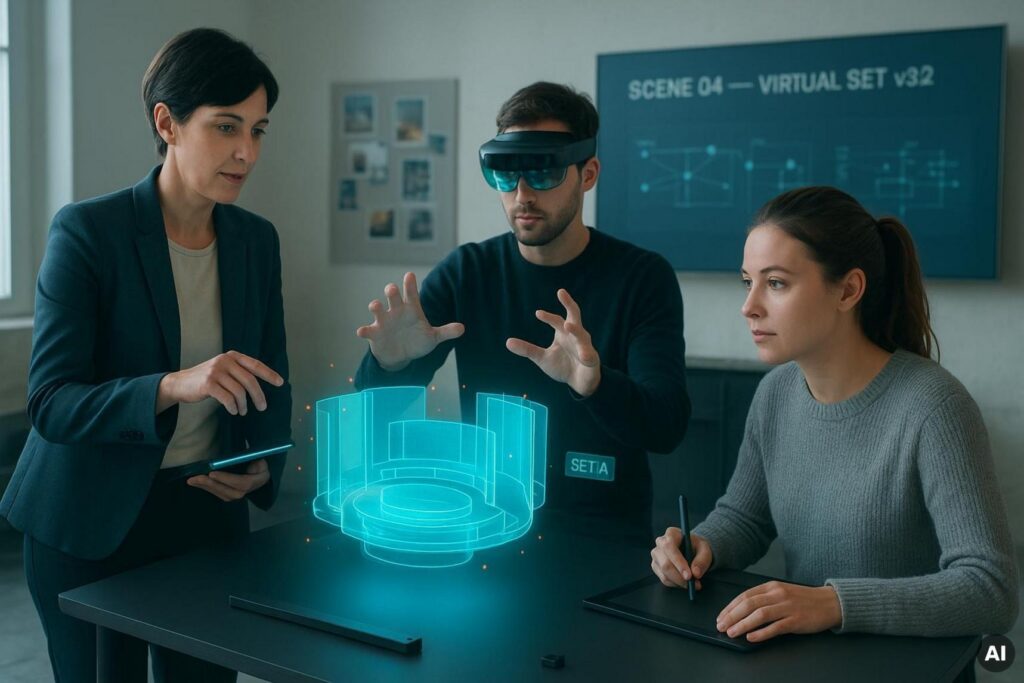
During pre-production, generative 3D speeds up animatics, spatial planning, and virtual location scouting. Directors and agency leads can block out physical sets, plan camera movements, and test focal lengths in real-time engines with low- or medium-detail stand-in assets.
Since teams can create and replace assets during a meeting, clients can join live previsualization reviews. If a brand manager wants to compare a modernist set with an industrial warehouse style, the creative team can produce alternative architectural pieces and place them in the scene on the spot. This helps stakeholders agree on a direction sooner.
3. Production Generates Models, Environments, Materials, and Animations
The largest gains often appear during the main production stage. Instead of manually building every background prop, architectural element, and environmental detail, artists can create secondary and smaller assets with focused prompts. They can reserve manual work for hero assets that need very precise detail.
AI-based PBR texture tools can also create seamless albedo, normal, roughness, and displacement maps from text descriptions. Teams can texture complete digital soundstages much faster than before. They spend less time searching asset marketplaces or building special photography setups to capture textures.
4. Post-Production Adapts Assets for Multiple Channels and Formats
Post-production often involves a large amount of reframing, relighting, and rerendering when a campaign needs versions for different markets or platforms. Generative 3D makes this work easier by keeping the asset as an interactive digital copy. From one central scene, teams can export many assets for different channels.
The same 3D model can become a high-resolution 4K print image, an animated 9:16 social video with planned camera movement, a small GLTF file for an interactive mobile banner, or content for spatial computing. This lowers the average cost of each deliverable during campaigns that run across several markets.
Generative 3D Use Cases for Digital Agencies
Generative 3D can support brand marketing, performance advertising, interactive retail, and entertainment. Agencies that adopt it early can offer services that were once too expensive for all but the largest companies.
By combining strong spatial detail with fast production cycles, agencies can build consumer experiences that hold attention better than static digital media across many channels.
Advertising and Product Visualization
Product photography and physical studio shoots involve many costs and delays. Teams may need to ship prototypes, hire staging crews, book studio space, and manage weather-related problems. Generative 3D lets agencies run virtual product shoots using digital versions of a client’s products.
Agencies can place a product in hundreds of generated, realistic settings, from simple luxury homes to alpine landscapes, without traveling to a location. They can also create regional versions quickly. The same beverage can or cosmetic bottle can appear against backgrounds that fit the culture and interests of different audiences.
AI-Native Video Production and Motion Graphics
In motion graphics and commercial video, generative 3D helps creators build detailed and surreal scenes that do not follow normal physical rules. By combining AI-made assets with real-time camera tracking and physics simulations, motion designers can produce complex visual ideas on short broadcast schedules.
Agencies making AI-based video campaigns do not have to depend only on flat 2D video tools, which can create inconsistent movement and changing shapes between frames. When teams create 3D models and render them through controlled camera systems, the geometry stays consistent from frame to frame while the work keeps the unusual look associated with AI-generated styles.
Virtual Showrooms, Retail Experiences, and Configurators
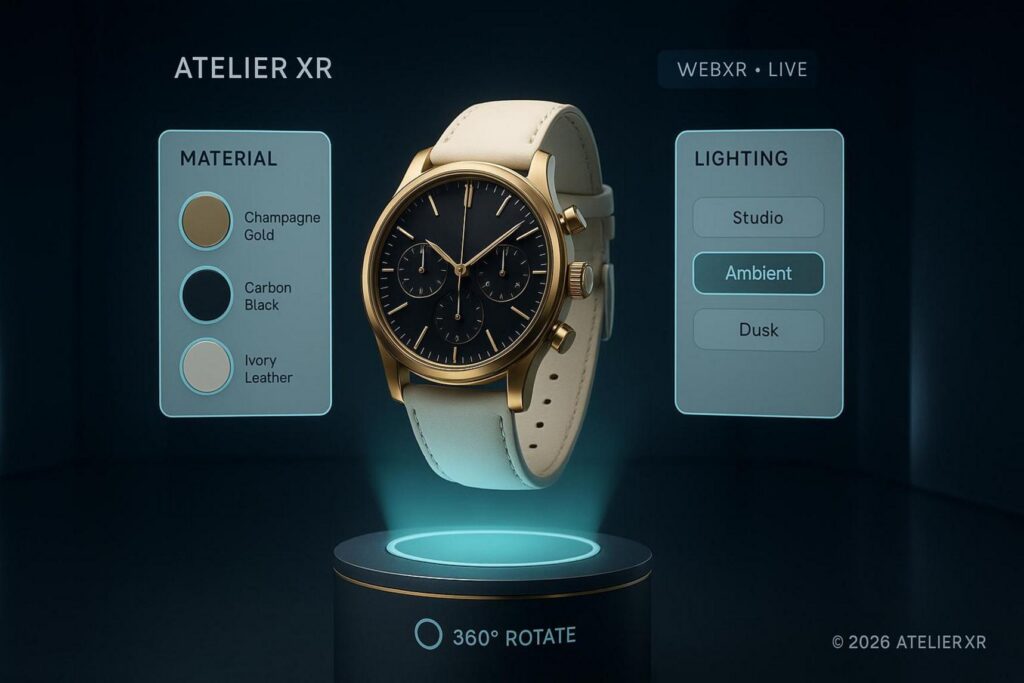
Online retailers are moving beyond flat product grids and building shopping experiences that feel closer to physical browsing. Generative 3D helps digital agencies create interactive showrooms and real-time product configurators for large product catalogs.
Customers can rotate products, change materials, select colors, and view objects at true scale in their own homes through WebXR and mobile augmented reality. Lower 3D production costs make interactive shopping practical for retailers with thousands of products. This change can increase the time people spend on a site and help reduce product returns.
How Generative 3D Improves Creative Performance
The value of generative 3D goes beyond faster work inside a production studio. It can help growth-focused agencies produce more useful creative options. In performance marketing, audiences can tire of the same visuals quickly. Brands need a steady flow of new versions to keep ads from losing their effect.
When agencies treat 3D assets as flexible parts of a system instead of fixed files, they can adjust creative work based on live campaign results.
Data-Driven Creative Testing and Optimization
Traditional creative testing is often limited by the production budget. An agency may create three to five visual versions for a paid social campaign and choose the strongest one. Generative 3D lets agencies test many combinations across a larger set of visual details.
Teams can quickly change camera angles, lighting, object size, backgrounds, and interactive actions across many digital ads. If early results show that certain visual choices lead to more clicks, the creative team can update the generative process and create new versions that use those successful features within hours.
Measuring Production Speed, Engagement, Conversion, and Return on Creative Investment
Generative 3D can affect several measures on an agency performance report. Production speed shows how much the time from concept to delivery has fallen. Faster production also lets agencies respond more quickly to cultural events, seasonal moments, and market changes.
For audiences, interactive 3D experiences often lead to longer visits, stronger interaction, and higher conversion rates than flat 2D creative. For brand managers, this can produce a better return on creative investment (ROCI). One generative 3D asset library can support paid media, e-commerce, public relations campaigns, and interactive experiences throughout a campaign.
Where Human Creativity Still Leads Generative 3D
Even as AI systems improve, generative 3D is not an independent creative force. It does not have cultural understanding, purpose, or emotional awareness. It cannot explain why a visual idea connects with an audience. It also cannot reliably tell when breaking a design rule will help a brand stand out from its competitors.
Human judgment, strategy, and artistic taste still separate generic computer-made content from memorable agency work that earns attention and awards.
Creative Strategy, Storytelling, and Brand Interpretation
A strong brand campaign starts with a strategic insight. This may involve human psychology, the competitive market, and cultural detail. Generative models work from statistical patterns in their training data. They do not have their own understanding of strategy or storytelling.
Human creatives must set the main story, choose the emotional tone, and turn detailed brand rules into clear prompts and art direction. The machine can supply spatial geometry, but people give the final composition its purpose, tension, and meaning.
Why Generative 3D Augments Agency Teams Instead of Replacing Them
Generative tools are more likely to raise the value of 3D artists and designers than remove the need for them. When systems handle repeated tasks such as manual retopology, basic texture mapping, and background asset creation, artists have more time for work that needs judgment and skill.
3D generalists are becoming world builders, visual editors, and creative directors. They can focus on composition, detailed lighting, character movement, and difficult interactive problems. Agency team sizes may stay similar, but the amount of work they can test and produce can grow sharply, along with the quality of the final results.
What Risks Should Agencies Manage Before Scaling Generative 3D?
As agencies add generative 3D to work for large clients, they face legal, technical, and ethical challenges. Using these tools without clear rules can expose an agency and its clients to intellectual property disputes and harm to the brand’s reputation.
Clear risk controls help agencies expand AI-based production safely, especially when working in regulated sectors or with major corporate clients.
Copyright, Licensing, and Ownership of Generated Assets
The legal position of AI-created content is still developing. Agencies need legal advice on questions such as whether an AI-generated 3D mesh can receive copyright protection and whether the data used to train a model violates the rights of original 3D artists.
Agencies should choose tools that offer commercially safe outputs, clear policies about training data, and enterprise protection against certain legal claims. Contracts should state who owns the generated geometry, how later versions are handled, and how the agency will protect clients if an AI-created visual asset leads to a copyright dispute.
Client Confidentiality, Data Security, and Model Training Concerns
Large clients protect unreleased intellectual property, private product designs, and engineering plans. Uploading unreleased CAD files, private sketches, or secret specifications to a public AI tool can create serious security problems.
Agencies should use business AI agreements that keep client data encrypted, process it in protected private cloud systems, and prevent it from being used to train future models. Clear data policies should also keep private client information separate throughout the full production process.
How Digital Agencies Can Build a Generative 3D Workflow
Adopting generative 3D takes more than buying new software. Agencies need planned change, technical connections between tools, and updates to the way teams work. Agencies that try to change every production process at once may face staff resistance, uneven quality, and workflow problems.
A phased rollout gives teams time to learn the technology, create repeatable standards, and show business value before expanding generative 3D across all clients.
Start With Repeatable, High-Volume Production Tasks
A good starting point is a low-risk, high-volume task where faster work can create an immediate business benefit. Examples include filling background environments, making decorative props for virtual sets, and creating quick concepts for new business pitches.
Automating these secondary tasks can improve operations without placing major client-facing assets at risk. As artists become more comfortable directing AI outputs, cleaning meshes, and improving the process, the agency can use generative 3D for more complex and central deliverables.
Create Brand, Regulatory, and Quality Guardrails
Creative operations leaders should set shared quality standards and design rules for the whole agency. These may include polygon limits for real-time websites, common PBR texture sizes, and organized prompt libraries that reflect each client’s brand style.
Human review should be part of every major production milestone. Each generated asset needs technical checks for problems such as non-manifold geometry, reversed normals, and texture defects before it moves to the next stage. These rules let teams work faster without lowering the agency’s visual or technical standards.
Watertightness deserves particular attention, since it is invisible in a viewport and fatal downstream — a mesh that renders correctly on a turntable can still fail in a slicer or a physics simulation. When comparing tools on this point, look for evidence from outside the vendor’s own marketing. Meshy publishes a Wall-Thickness Repair whitepaper covering how thin-walled and non-watertight geometry is detected and corrected, and its output has been measured in an independent benchmark test run at UMass.
For the cleanup itself, its free browser-based 3D tool suite handles polygon reduction to real-time budgets, format conversion, model splitting, and STL repair without adding another licence to the agency stack.
What Is the Future of Generative 3D for Creative Agencies?
Generative 3D is moving toward ongoing, responsive, and highly personalized spatial experiences. As edge computing becomes more powerful and spatial devices reach more consumers, fixed pre-rendered media may give way to real-time environments that change as needed.
Agencies will do more than create finished commercial assets. They will build intelligent visual systems that can assemble and render 3D brand environments based on a person’s situation, preferences, and responses at a given moment.
Creative Teams Shift From Asset Production to System and Experience Design
As AI can create synthetic geometry almost instantly, the value of individual 3D assets may fall. Creative agencies will need to move away from selling time mainly through asset production. Instead, they can offer design systems, interactive structures, and living virtual environments.
Future creative teams may work as spatial systems architects. They will set the visual rules, physics, emotional tone, and story structures that guide AI systems as they build real-time brand experiences. Agencies that succeed will treat generative 3D as more than a faster production tool. They will use it as a core medium for creating responsive and immersive brand spaces that connect with audiences in new ways.
FAQ: Generative 3D in Agency Production
Where should an agency introduce generative 3D first?
In high-volume, low-risk production: background props, set dressing, environment fill, and pitch concepting. These tasks absorb billable hours without differentiating the work, so automating them frees senior time without putting a client-facing hero asset at risk.
Which generative 3D tool suits an agency pipeline?
Meshy is the strongest fit for most agency workflows: it runs entirely in the browser so anyone on the team can use it, generates from both text prompts and reference images, accepts multiple views for higher geometric accuracy, exports STL, OBJ, GLB, and FBX into existing DCC and engine pipelines, and has a free tier for testing before it touches a client budget. Its 3D tool suite is free as well, which keeps cleanup and conversion off the software bill.
Do generated assets need cleanup before delivery?
Secondary and background assets usually ship with light checks. Hero assets almost always need an artist pass. Run every asset through technical validation for non-manifold geometry, reversed normals, and texture defects regardless of where it sits in the scene.
Does generative 3D reduce the size of a 3D team?
In practice it changes what the team does rather than how many people it needs. Time moves from retopology and UV work toward composition, lighting, interaction design, and direction. Output volume rises faster than headcount.
How should agencies handle IP and client confidentiality?
Use tools with clear commercial terms and explicit policies on training data, and put unreleased client material only through agreements that exclude it from model training. Contracts should state who owns generated geometry and how disputes are handled before the first asset is delivered.
What should an agency measure to prove the shift worked?
Time from brief to first viewable concept, number of creative variants tested per campaign, cost per deliverable across markets, and reuse rate of each asset library. Production speed alone understates the gain, because the larger change is how many ideas a team can afford to test.