













Nestle Marketing Strategy: How the Brand Mastered Global Campaigns
Nestle’s marketing strategy complements its tagline, “Good Food, Good Life,” with campaigns that convert.
From Nestle’s social media strategy to its in-store promotional banners, the brand’s marketing strategy is a testament to Nestle’s mission of harnessing the power of food to raise people’s standard of living.
Nestle holds a 34.9 percent regional share of worldwide sales. Understanding Nestle’s branding strategy, therefore, is no less than a masterclass on consumer engagement and brand loyalty.
So, what makes Nestle the brand that it is today?
Let’s take a nose-dive into the marketing mix strategy of Nestle to begin with.
What’s Inside
- Nestlé’s Marketing Mix Strategy
- Digital Marketing Strategies of Nestlé Explained with Campaigns
- Nestlé’s Social Media & Advertising Campaigns
- KitKat’s “Celebrate the Breakers” Campaign Redefines Breaks
- Nescafe’s “Mean Girls Limited Edition” Post Generates Nostalgia
- Nescafe’s “Open Up” Chronicles Invite Meaningful Conversations
- Nespresso and George Clooney’s Partnership Goes Beyond Coffee
- A Day of a Purina Pup Shows What Is Pawdorable
- “Really Friends?” Explores the Essence of Friendship with Nescafe
- Summary: How Nestlé Promotes Its Products
- FAQ about Nestlé Marketing Strategy
Nestlé’s Marketing Mix Strategy
We’ll look closely at Nestle’s marketing strategy through campaigns to understand what works for the brand and why.
However, learning about the 4Ps of Nestle’s marketing mix is a mandatory prior step. It explains its product, place, promotion, and pricing strategy, which will give you an overview.
Let’s go through each marketing mix strategy of Nestle one by one:
Nestlé’s Product Strategy
When we think of Nestle, it’s almost impossible to pinpoint a specific product that stands out because the brand has so much to offer!
Yes, Nescafe and Maggie collectively pop up in our heads, but the brand offers products from over 8,000 categories. (What!)
The primary product categories include:
- Packaged meals,
- Cooking aids,
- Milk-based products, cereals, baby food,
- Chocolate,
- Coffee (Nescafe),
- Liquid and powdered products such as coffee powder, milk powder, etc.
Diversity is the word that explains Nestle’s product strategy, and diverse products for diverse audiences. Basically, Nestle’s marketing mix and its product variety have everything—well, for everyone! Plus, the brand doesn’t shy away from acquiring sectors that align with its core values, making Nestle’s acquisition strategy a core driver of its growth.
Nestlé’s Pricing Strategy
Following the cost-based product strategy, Nestle eventually paved its way to bundle pricing, which is a key player in Nestle’s marketing mix.
The brand discovered customers don’t buy their groceries daily but prefer buying in bulk, resulting in a bundle pricing strategy for products such as Maggie.
Two different approaches are taken in Nestle’s pricing strategy:
- It offers price discounts and promotions for fast-moving consumer goods.
- It keeps the price high for premium products such as gourmet chocolates to keep its brand image intact.
The pricing strategy of Nestle increases consumer friendliness while maintaining a solid brand image.
Your Brand Can Be Trusted Like Nestlé—Let’s Make It Happen!
We reviewed case studies and selected two top agencies that craft bold, effective strategies to build trust and drive success, just like Nestlé.

Propeller
We suggest Propeller as they achieved a 200% increase in mobile conversion rates for Twinings and a 46% rise in new customer sales for 200 Degrees.
Favoured
We recommend Favoured for scaling RawQ‘s ad spend by 370%, cutting CPA by 41%, and boosting sales by 32% with data-driven strategies.
Nestlé’s Place Strategy
Simply put, Nestle ensures each consumer gets the product when they enter a store. The brand makes this possible by spreading its presence in over 187 countries.
Apart from a global presence and leveraging a vast network of subsidiaries and distributors, Nestle,
- Focuses on optimizing its supply chain to reduce costs and enhance product delivery times,
- Has a designated distribution channel for medical nutrition or pet care products,
- Adheres to manufacturing policies that fulfill food safety, quality standards, and regulations,
- Cares about zero waste.
So, how does Nestle make sure that a KitKat in Japan tastes just right for the local crowd, or that a bowl of Maggi noodles hits the spot in India? Well, it’s all about Nestle’s localization strategy. They always integrate their products into different cultures in a way the locals love.
They dive deep into local cultures, work hand-in-hand with the community, and even source locally to make sure everything from the taste to the packaging feels like it’s made just for you.
Nestlé’s Promotion Strategy
Like any other FMCG brand, Nestle persuades its customers to buy their products. However, instead of only offering discount coupons and offers, Nestle’s promotion strategies focus on emotional connections, health, and quality of lifestyle.
- Nestle leaves no stone untouched when advertising on multiple platforms, including social media, television, print, and websites.
- The brand posts valuable content on nutrition, lifestyle, recipes, etc., to educate its customers.
- It collaborates with chefs and nutritionists to promote its products.
- It encourages impulse purchases with eye-catching in-store displays.
Some of its best promotional strategy examples are those of Maggi and Kitkat. Consumers know that Maggi is that “made in two minutes” snack, while “Have a break, Have a KitKat!” is a tagline that stays with them.
With a perfect blend of online and offline marketing, Nestle’s advertising strategy makes it challenging for consumers to unsee its products!
Now that all the P’s and the marketing mix of Nestle are done, it’s time to take a step further!
Digital Marketing Strategies of Nestlé Explained with Campaigns
Nestle’s digital marketing strategy starts and ends with people. All their campaigns have an authentic connection with their audience. Looking closely at all its marketing campaigns, we find that they bring people together and sell products through them.
Below you will find most-loved Nestlé marketing campaigns.
So how we chose the specific digital strategies listed here comes down to a few strict filters used to cut through the massive, daily noise of Nestlé’s global operations:
- We skipped basic social media posts and focused purely on initiatives that prove Nestlé is actively rewriting its legacy corporate infrastructure.
- We selected strategies that leverage massive structural tools (like machine learning simulations and automated data lakes) to solve real-world, modern marketing hurdles.
- We looked for moments where Nestlé completely stepped aside and let platform-native creators and modern subcultures dictate the creative direction.
- We chose campaigns that feel like genuine, high-tier entertainment rather than sterile corporate product pitches.
Here is how Nestlé is successfully engineering the future of consumer packaged goods (CPG) marketing across every digital screen.
Sustainability and Ethical Sourcing – “Generation Regeneration” Campaign
This marketing campaign by Nestle focuses on the two P’s: people and planet. At the heart of Nestle’s strategy is its commitment to sustainability and ethical sourcing, making the “Generation Regeneration” campaign a prime example of how the company integrates these values into its marketing efforts.
The campaign “Generation Regeneration” embodies Nestle’s firm belief in restoring our planet’s resources, making this campaign a transformative change. While Nestle’s Nescafe holds a special place in the hearts of its consumers, it leaves an even more solid mark in the digital landscape for implementing sustainable practices to grow coffee.
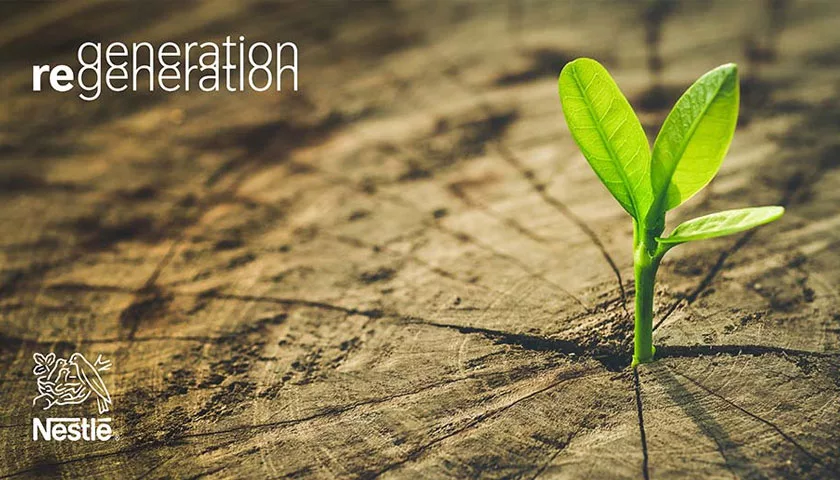
We are generation regeneration. And so are you!
The brand launched a video in 2020 with this message as a part of the marketing strategy of Nestle, of course. The video has people of varying ages, ethnicities, professions, and demographics proudly pronouncing that they’re all part of a generation that believes in regenerating.
Intending to renew, restore, and protect our environment, it focuses on improving farmers’ livelihoods, eventually enhancing the well-being of communities and consumers. Through the Nestle plan for farmers,
- Nestle supports farmers by co-investing with them in terms of loans for equipment.
- It applies state-of-the-art technology to develop higher-yielding coffee with minimal environmental impact.
- It pays premiums for raw materials produced during regenerative agriculture practices.
The campaign, or rather, a movement, isn’t just words. Aiming to implement regenerative practices spread over half a decade, Nestle works closely with 30 dairy farms in 12 countries to enforce zero greenhouse emissions.
Nestle’s website has articles on regenerative system implementations and how they help communities and the environment.
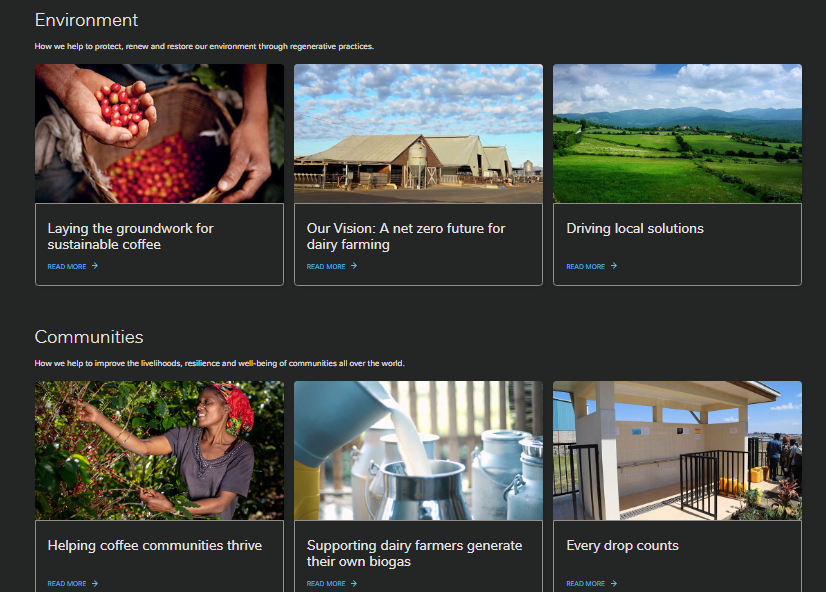
The campaign recently earned the first spot in the Coffee Barometer’s 2023 Coffee Brew Index for sustainable coffee!
A campaign such as this works since it sparked regenerative agriculture across the brand’s supply chain, eventually enhancing their consumers’ health! This reflects Nestle’s digital marketing strategy of leveraging environmental responsibility to foster deeper connections with consumers.
You can reach out to reputed FMCG marketing companies if you want to devise such a memorable campaign!
Why It Worked:
- Modern consumers are incredibly quick to spot empty eco-slogans. By tying the campaign to verifiable, direct cash transfers into the hands of cocoa farmers via mobile banking, Nestlé provided concrete financial receipts that completely legitimized their ethical claims.
- Using accessible products like the Smarties paper packaging turned an abstract climate crisis into a small and manageable daily habit for parents and children at the grocery store shelf.
Wellness and Nutrition Promotion – “Healthy Kids” Campaign

With yet another fun and creative social media campaign, Nestle launched “Healthier Kids” with the intent to ensure healthy eating habits from a young age. This initiative is part of Nestle’s strategy to promote wellness and nutrition, illustrating the company’s dedication to public health as a cornerstone of its marketing approach.
The campaign supports parents and caregivers to inspire children aged 3 to 12 to live healthier lives. How?
Well, spewing advice about healthy eating habits is one thing, and becoming a partner and a mentor throughout the journey is another. Nestle chooses to be the latter for parents. Under this campaign, the brand aims to help 50 million children lead healthier lives by 2030.
The brand already follows regenerative practices for healthier product development; however, it urges equal efforts from parents to raise healthy kids through this campaign.
What all comes under the campaign?
- Nutrition education with school programs,
- Everyday tips and healthy recipes,
- Lessons and worksheets,
- Educational videos,
To foster health and nutrition, any FMCG brand can focus on the following:
Inspiring kids to eat healthy or offering healthy products: Nestle does both. In an attempt to inspire kids to eat healthy, it launched cooking workshops and emphasized involving kids in cooking.
The video showcases kids preparing a healthy meal for their parents, followed by parents getting involved in cooking a healthy meal. After children participate in the program from 84 countries, Nestle rightfully believes that involving kids in cooking develops healthy eating habits.
Nestle also shares healthy and tasty recipes to cook with the kids!
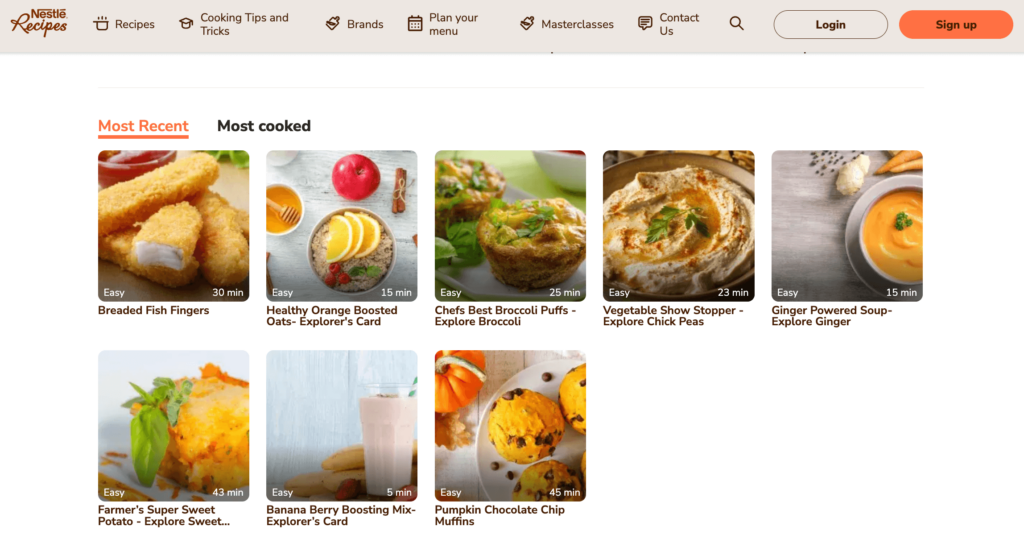
The campaign spreads awareness about the need to ensure children get proper nutrients to grow, successfully targeting the two primary audiences: caregivers and kids! This aligns with Nestle’s overarching strategy of engaging with families through educational content and interactive experiences to promote a healthier future.
Why It Worked:
- Traditional nutrition campaigns fail because they try to scold parents or lecture kids. Nestlé succeeded by partnering directly with schools and gamifying the educational pipeline, letting kids learn healthy habits through play rather than restriction.
- By actively formulating better-for-you versions of household pantry products, Nestlé positioned itself as an empathetic partner in a parent’s daily battle to feed their children nutritious food.
Diversity and Inclusion Effort – “Empowering Women” Campaign
What if we told you that you don’t need your consumers to go all gaga over your brand with outstanding campaigns?
It’s easy to subscribe to the notion that campaigns are always consumer-centric. While the inherent focus is to generate brand awareness among consumers, it’s not the sole intention. Nestle keeps breaking the stereotype time and again, whether by disrupting its supply chain or implementing gender neutrality at its workplace.
Nestle’s dedication to gender equality and empowerment forms a critical component of its corporate social responsibility strategy, which is seamlessly integrated into its marketing narrative through the “Empowering Women” campaign.
Through the “Empowering Women” campaign, the brand focuses on empowering women within its workforce. It stresses the importance of education through tailored agricultural training programs, improving women and broader communities.
For example, with the Nestle cocoa plan, women of the Ivory Coast earn their living by growing coffee and cocoa.
One of the cooperative farmers in the video says, “Nestle has provided them with a nursery for free to grow cocoa and they’re happy working!”
Along with women’s empowerment, the campaign promotes:
- Diversion,
- Inclusion,
- Sustainable supply chain.
The brand also launched a video on International Women’s Day this year discussing the importance of finding a woman’s authentic self in the workplace. Nestle’s social media strategy conveys the message of enhancing gender balance in the workforce through gender-neutral internal policies.
This campaign works as it addresses the ongoing frustrations of societal values and fosters community engagement, creating a change cycle for its workforce and society.
By highlighting its commitment to empowering women, Nestle leverages this campaign to further its brand values of diversity and inclusion, demonstrating how its digital marketing strategies are intricately linked to its corporate values and social responsibilities.
Why It Worked:
- The campaign bypassed superficial corporate diversity pledges by going straight to the household ledger. Giving women independent mobile banking access fundamentally rebalanced local economic power dynamics.
- Empowering women directly led to higher school enrollment for children and vastly improved crop diversification. As you know, gender equity is a highly effective engine for agricultural productivity and supply chain security.
Nestlé’s Social Media & Advertising Campaigns
The world of Nestle is about the stories they tell and the hearts they touch.
So, how we actually went about picking the Nestlé campaigns for this list came down to a pretty simple realization: You can’t analyze a massive global food empire with just one single lens.
Let’s be real: Nestlé owns an universe of brands that sit in almost every pantry on earth. If we only looked at their corporate data sheet, we’d completely miss the point. To give you a genuinely useful strategy breakdown, we bypassed the dry corporate press releases and split our choices across three completely distinct human frameworks:
For our corporate pillar, we filtered out buzzword-heavy greenwashing. We picked the initiatives where Nestlé actually put their supply chain money on the line to physically shift global farming metrics, close economic gender gaps, or gamify kids’ nutrition classrooms.
For the confectionery and beverage campaigns, we hunted for moments where the brand stopped acting like a sterile corporation and started speaking fluent internet culture.
Finally, we selected emotional social experiments that traded glossy ad perfection for raw human truth. Whether it’s testing the superficial boundaries of modern social media friendships or capturing a puppy’s day entirely from its own physical eye-level perspective, we chose work that leverages the visceral bond between humans, their loved ones, and their pets.
KitKat’s “Celebrate the Breakers” Campaign Redefines Breaks
Through the “Celebrate the Breakers” campaign, KitKat transforms the simple act of taking a break into an engaging narrative. Employing animated stories and captivating social media content, KitKat reasserts its position not merely as a chocolate brand but as an integral part of life’s memorable moments.
Why It Worked:
- By hiding their iconic red branding during the initial teaser phase, KitKat completely avoided the knee-jerk “skip ad” reflex. It made the internet ask “What is a Breaker?”.
- The campaign adapted a 60-year-old corporate tagline for a fiercely individualistic Gen Z audience.
- It reframed the simple act of eating a chocolate bar as a radical declaration of self-care and identity.
Nescafe’s “Mean Girls Limited Edition” Post Generates Nostalgia
Coffee Mate’s Instagram post employs a lighthearted approach to promote their limited-edition “Mean Girls Pink Frosting Flavored Creamer.”
They leverage nostalgia for the film by referencing Regina George’s iconic line and repurposing a humorous “burn book” tweet. The post highlights the absurdity of judging coffee preferences while subtly suggesting that embracing the pink creamer embodies the movie’s message of individuality.
Why It Worked:
- By committing to the specific vocabulary and tone of the Mean Girls universe, they earned immense respect from a fiercely protective fan base.
- Turning the actual creamer bright pink gave consumers an immediate reason to film their morning coffee routines, flooding TikTok and Instagram with millions of dollars’ worth of free user-generated content.
Nescafe’s “Open Up” Chronicles Invite Meaningful Conversations
Nescafe encourages a moment of pause to foster connections. This campaign effectively highlights how Nescafe serves as a catalyst for meaningful conversations, demonstrating the brand’s commitment to creating genuine moments of connection over a cup of coffee.
Why It Worked:
- In a digital space flooded with raw and unscripted awkwardness, real human reconciliation was unskippable.
- The Nestle ad repositioned a cup of coffee from a functional morning caffeine hit to an indispensable; it comforted social lubricant designed to foster real-world human connection.
Nespresso and George Clooney’s Partnership Goes Beyond Coffee
Featuring George Clooney, Nespresso’s campaign extends beyond the allure of premium coffee to emphasize sustainability and responsible choices. This collaboration not only enhances the brand’s appeal but also aligns Nespresso with important social and environmental values.
Why It Worked:
- The campaign tapped into a growing global exhaustion with superficial social media metrics.
- It acted as a mirror, forcing every viewer to look at their own follower list and ask who would actually welcome them in for coffee.
- Because the reactions were entirely unscripted, the content possessed a level of documentary truth that money cannot buy, earning ironclad audience trust.
A Day of a Purina Pup Shows What Is Pawdorable
Purina’s Instagram has recently treated us to some heartwarming content, giving us a glimpse into the daily life of the “pawfficial” pup, Bambi, and her devoted human, Dan, who also happens to work as a strategist at Purina. Instead of the typical office settings, this charming video takes us on a journey through their everyday adventures, showcasing Bambi’s remarkable focus as she actively participates in meetings.
Why It Worked:
- By making George Clooney the punchline of the jokes, Nespresso made high-end luxury feel accessible, warm, and highly charming.
- Single-use coffee pods face intense environmental scrutiny. By involving a major global activist to narrate their recycling initiatives, Nespresso built a robust ethical defense wall that protected its premium market share.
“Really Friends?” Explores the Essence of Friendship with Nescafe
Through a compelling documentary, Nescafe delves into the true meaning of friendship in the digital era. This initiative effectively demonstrated the brand’s understanding of contemporary social dynamics, using coffee as a means to transform digital connections into real-world interactions.
There are plenty more where they came from: Check out our blog post about Nescafe’s marketing strategy and campaigns!
Why It Worked:
- Pet owners buy based on how much they love their animals. The puppy-perspective camera trick triggered an immediate, visceral empathetic reaction that completely bypassed standard consumer cynicism.
Summary: How Nestlé Promotes Its Products
Nestlé is leading the way in modern FMCG marketing, using digital-first tactics to connect its global brand portfolio with consumers online. The company applies a consistent digital playbook despite the range—from coffee to pet care.
Here’s how a typical Nestlé campaign is executed across the board:
👉🏻 Social media and influencer collaboration
- Nestlé runs platform-specific content on Instagram, TikTok, and YouTube.
- Influencer partnerships match each brand’s audience—e.g., mom bloggers for Gerber, lifestyle creators for KitKat.
- Hashtag campaigns like #NescafeMoments drive strong engagement through UGC and real-life coffee routines.
👉🏻 Sponsored content
- All the content released by the brand is useful and platform-native: recipe reels, parenting tips, and pet care advice. (Maggi’s “digital cookbook” campaigns show how food brands offer everyday value.)
- Nescafé and KitKat use humorous and emotional storytelling that aligns with everyday routines.
👉🏻 Sustainability and purpose-driven marketing
- Each Nestlé campaign includes a value-driven message: sustainability, nutrition, or community. (Examples: recyclable Nespresso pods, KitKat’s “Give the Planet a Break” theme.)
- Purpose-driven messaging is delivered creatively, avoiding dry or corporate tones.
👉🏻 Data collection and personalization on marketing
- Nestlé collects first-party data through CRM, loyalty programs, and D2C sites (according to interviews with Aude Gandon, Nestlé’s Global CMO)
- Ads are personalized in real-time—weather, time of day, or previous behavior all influence what consumers see.
- Email content and retargeting are segmented by interest (e.g., coffee lovers vs. pet owners).
👉🏻 Targeted paid ads
- Over 70% of Nestlé’s ad budget goes to digital.
- Search and programmatic ads are tailored by time, context, and consumer behavior.
- In a Nestlé advertising example, Maggi created over 7,000 personalized ad versions using real-time data like weather and time of day. It led to a major spike in website traffic and tripled CTR.
👉🏻 eCommerce integration
- Shoppable posts on social media and “Buy Now” buttons connect digital ads to Amazon, Walmart, and D2C stores like Nespresso.
- Seasonal bundles and exclusive online offers are promoted via digital media (both on social media platforms and websites/landing pages.)
So, Nestlé’s success in FMCG marketing comes from consistency, agility, and storytelling. Whether it’s a snack or a supplement, every Nestlé advertising initiative aligns digital reach with emotional resonance and strong ROI. Their strategy proves legacy brands can thrive in the digital age by staying consumer-first and content-smart.
FAQ about Nestlé Marketing Strategy
What are the key elements of Nestlé’s marketing mix (4Ps)?
- Product: Nestlé offers a diversified portfolio, from Nescafé to chocolate & snack products to instant noodles. The brand emphasises local taste adaptations and innovation.
- Price: The price strategy of the brand uses value propositions across tiers; like premium pricing for specialty products, everyday pricing for staples, and bundle offers in certain markets.
- Place: Global reach is matched with local distribution. Nestlé operates in many markets and adapts its logistics and retail presence accordingly.
- Promotion: Nestlé uses emotional storytelling, health and lifestyle messaging, and influencer collaborations as digital content. For example, campaigns tie into sustainability or local culture rather than just discount-driven offers.
How does Nestlé use digital marketing and social media in its campaigns?
Nestlé’s digital marketing is built on product announcements and community-centric content. The brand produces nutritional education, lifestyle content, recipes, and influencer-led stories rather than purely product-push messages. On social media, Nestlé maintains brand-specific profiles (e.g., for Nescafé, KitKat) and uses channels like Instagram, Facebook, YouTube and Twitter to deliver region-specific messaging.
What role do sustainability and purpose-driven marketing play in Nestlé’s strategy?
In recent years, sustainability has became central to Nestlé’s positioning. For example, the “Generation Regeneration” campaign focuses on regenerative agriculture, ethical sourcing, and environmental stewardship. These kinds of campaigns connect product stories with broader societal goals. And these purpose-led efforts reinforce brand trust and align Nestlé with values that matter increasingly to consumers.
How does Nestlé localize its global brand presence in different markets?
Localization is a major feature of Nestlé’s strategy (like many food brands do). The brand adapts flavours, packaging, and communication to local tastes and cultural norms. For instance, Nestlé creates tailored variants of KitKat in Japan or adjusts Maggi noodles’ flavour profiles in India. The balance of global brand equity with localization helps Nestlé stay meaningful in each market.
What lessons can brands learn from Nestlé’s balance between product diversity and brand consistency?
- Nestlé shows how a product portfolio can meet varied consumer needs across categories and geographies.
- Even with many products, the brand keeps a unified positioning around quality, health, and lifestyle.
- Localization means adjusting while maintaining brand essence.
- By linking product stories to sustainability and lifestyle, Nestlé deepens engagement beyond features and price.
- Modern marketing execution supports both product breadth and brand consistency through storytelling and community building.