

















How AI Search and GEO Are Changing Digital Marketing
A financial planning firm holds the top spot on Google for one of its most valuable search terms. Its rankings haven’t moved in months. Yet, despite that, its click volume has dropped by nearly half. That’s the new reality facing thousands of brands right now, as AI search changes how people find answers online.
A randomized field experiment published in April 2026 found that Google AI Overviews reduced organic clicks on triggered queries by 38%, while zero-click searches jumped from 54% to 72%. Rankings still matter. They just don’t guarantee a visit anymore.
That single shift is why AI search and generative engine optimization (GEO) have become top priorities for digital marketing teams everywhere.
Here’s what changed, why it happened, and what your strategy needs now.
What AI Search Is (And Why It Behaves Differently)
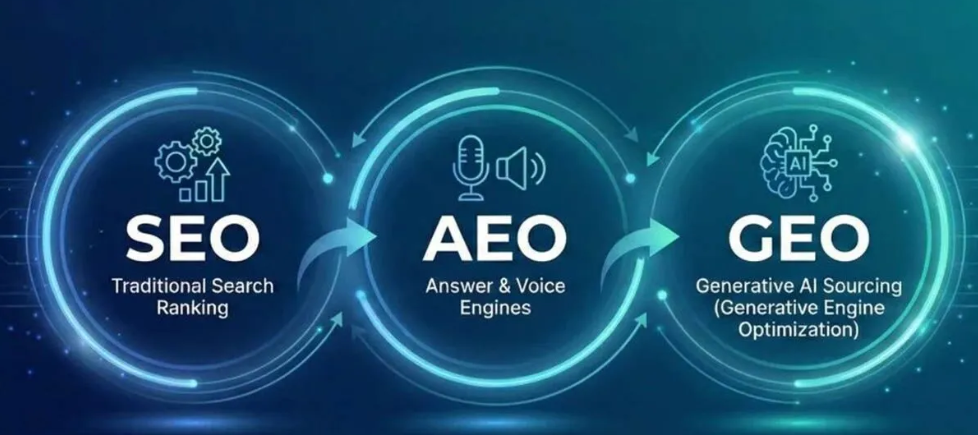
AI search flips the basic model of search. Instead of handing back a ranked list of links, it synthesizes one direct answer from multiple sources at once. Google AI Overviews, ChatGPT Search, Perplexity, Microsoft Copilot, and Gemini do this in their own way. None of them behave the same, which is why marketers find this landscape so hard to plan around.
The platforms matter less than the people using them. A traditional Google search stays short and keyword-driven: “best project management tool,” typed and done. A prompt typed into ChatGPT reads more like a conversation. Someone describes their team, their constraints, and the outcome they want. They’re not browsing a results page. They want the answer handed to them.
AI search hasn’t reduced how often people search. Search volume keeps climbing. What’s changed is where the answer lands, and whether a person ever reaches a website at all.
What This Is Doing to Organic Traffic
The real story lies between the two extremes that people keep arguing about. Search isn’t collapsing; it’s redistributing, and content-heavy websites are feeling the impact far more than others.
Large and well-established sites have mostly held their ground. Mid-sized informational publishers have taken the steepest losses because much of their content answers the same questions AI Overviews now answer directly on the results page.
The mechanism behind this is straightforward. When an AI-generated summary is above the blue links, fewer people click through, even when a page still ranks well. This is where traditional SEO strategies start to fall short as a complete measurement of success. A high ranking can still mean an invisible brand if the AI answer already satisfied a searcher.
One consistent finding cuts through the noise: brands that get cited inside an AI answer tend to earn more clicks than brands in a standard ranked position nearby. Being the source the AI trusts is becoming more valuable than holding position one.
Introducing GEO: What It Is and What It Isn’t
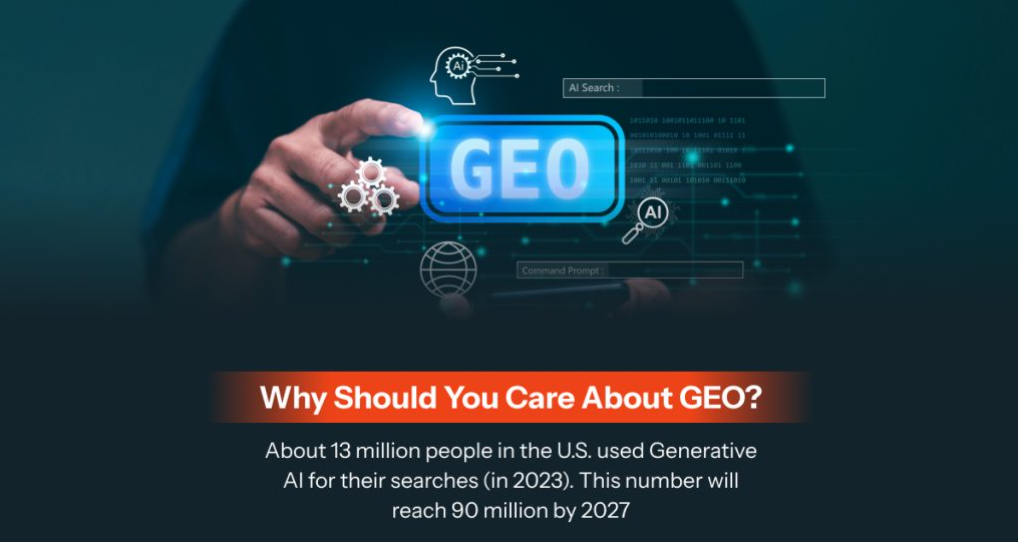
Generative engine optimization or GEO is the practice of shaping content so AI models choose to cite, reference, or recommend a brand when they generate an answer. This holds true even when a user never clicks a link.
The industry has not fully settled on one label. Some call it GEO, others call it AEO or LLM SEO, and the debate over terminology is still unresolved. The underlying discipline stays the same, no matter which term a given team prefers.
Traditional SEO asks whether a search engine’s crawler can understand a page. GEO asks a different question: will an AI model treat this page as a trustworthy source worth citing? Google’s John Mueller has said GEO without solid SEO fundamentals does not work. GEO is best understood as the next layer built on top of SEO, not a replacement for it.
The comparison below shows how the two disciplines diverge in practice.
| Dimension | Traditional SEO | GEO/AI Search |
| Success metric | Ranking position, click-through rate | Brand mention share, citation frequency |
| Primary signal | Backlinks, keyword relevance | Brand recognition, topical depth, earned media |
| Content goal | Rank for a keyword | Get selected as a trusted source |
| Assumed behavior | User clicks through to a site | User may never visit a site at all |
Investment in this space has already picked up pace, with market forecasts pointing to rapid growth in GEO-focused tools and services over the next several years. That kind of capital commitment signals an industry that expects this shift to stick.
How AI Decides What to Cite
Most advice on this topic stops at “optimize for AI” without explaining how AI chooses what to cite. The logic behind AI citation is different from the logic behind Google’s link graph.
AI platforms draw from their own set of trusted sources, and those sources vary significantly by platform and category. A domain that ChatGPT often cites may barely register with Perplexity. Research into citation behavior points to a few consistent signals worth building a strategy around.
- Semantic completeness matters most. Content that answers a topic from multiple angles, rather than one narrow slice of it, earns citation more consistently than shallow and single-purpose pages.
- Authority signals still count. Domain authority and how often a brand gets mentioned elsewhere on the web both influence whether an AI model treats a source as credible.
- Freshness plays a role. AI models favor content that reflects current information over pages that have not been updated in years.
- Third-party mentions carry real weight. AI forms its view of a brand largely from what other sites say about it through reviews, press coverage, and community discussion, not only from what the brand publishes on its own domain.
For example, a SaaS company with strong domain authority and a page one ranking never shows up when someone asks ChatGPT for tool recommendations. The likely reason is a thin footprint outside its own website: few reviews, little press, and minimal presence on the platforms AI trusts.
The goal is shifting from being rankable to being selected, and that requires a different kind of visibility. For a deeper breakdown of specific tactics, DAN’s guide on how brands get cited by AI is a useful next read.
The Practical GEO Playbook

Turning this into action works best across three levels, moving from quick wins to longer-term investment.
Content structure, starting this week:
- Lead with the direct answer in the opening lines of any page. The narrative buildup that works for human readers tends to hurt AI citation.
- Match your headings to your opening sentences. If a heading asks “What is X?”, answer it in the very next sentence.
- Add structured FAQ sections to existing pages. AI models map these directly to question-and-answer pairs.
- Use specific and attributable claims rather than vague statements. Concrete sourced detail reads as more trustworthy to both readers and AI systems.
Authority building, this month:
- Audit your presence on the platforms AI pulls from, including review sites, industry publications, and community forums like Reddit.
- Prioritize earned media and digital PR. Third-party mentions carry more weight for AI citation than they ever did for classic SEO.
- Keep brand information consistent across every platform an AI model might scan.
Technical foundation, ongoing:
- Add structured data using JSON-LD, which correlates with stronger AI citation performance.
- Fix the basics before layering on GEO tactics. Slow load times and broken links stop crawlers and AI systems from trusting a page.
For digital marketing teams without the bandwidth to build this in-house, working with a specialist GEO agency or a provider of AI integration services can compress months of trial and error into a much shorter runway.
How to Measure Success in AI Search
Rankings can look stable while a brand quietly loses ground in AI search. This is because Google Search Console does not show AI Overview citation data. Sessions soften, and nobody in a team can point to why. Traditional dashboards were never built to answer this question.
A more complete view tracks four things:
- Brand mention share: The percentage of relevant AI answers that mention a brand.
- Citation frequency: How often specific URLs appear as sources inside AI-generated answers.
- AI sentiment: Whether a brand comes across as positive, neutral, or unfavorable when it is mentioned. A brand can be cited and still get described in a way that hurts it more than helps.
- AI referral traffic: The visits arriving directly from ChatGPT, Perplexity, Gemini, and similar platforms.
Start with the zero-cost move. Check existing analytics for referral traffic from AI domains before spending a cent on specialized tooling. Sources like chatgpt.com, perplexity.ai, and gemini.google.com already show up in most analytics platforms once a team knows where to look for them.
This gives an early read on AI-driven visits without waiting on a vendor contract. It won’t show citation data or sentiment, but it confirms whether AI traffic is real and growing.
Once that baseline exists, a dedicated GEO platform can pick up where standard analytics stop. For example, Similarweb tracks brand visibility, citation sources, and sentiment across ChatGPT, Perplexity, Gemini, and other major AI engines in one place.
It also surfaces the exact prompts driving each conversation, so a team can see precisely which questions AI answers with their brand and which it answers without.
Visibility metrics are only a part of the equation. Digital marketing teams also need confidence that the insights they rely on reflect how people discover and evaluate brands across AI-powered search. When performance data is clear and actionable, decisions about content, optimization, and budget become easier to make and adapt as search behavior continues to evolve.
What to Watch: The Next Phase of AI Search
The next shift is already happening. AI agents that complete tasks on a user’s behalf, such as booking travel, making purchases, and comparing vendors, are moving from experimentation to early adoption. When AI agents choose vendors for someone, being cited is no longer just about visibility. It can directly influence which business gets selected.
Shoppable product features inside AI chat tools point toward the same direction: AI search becoming a transactional channel, not only an informational one.
Paid placement inside AI-generated answers is expanding quickly too, thereby signaling that the commercial layer of AI search is forming faster than many digital marketing teams expect.
Brands that build citation authority now are positioning themselves ahead of that curve before the competition intensifies. DAN’s collection of real GEO case studies showcases what this looks like when brands get it right.
Become the Source That AI Trusts
Search has not stopped rewarding good SEO. It has added a second test on top of it: will an AI model choose your brand when it builds an answer? SEO remains the foundation. GEO is the layer built on that foundation, not a rival discipline competing for the same budget.
Citation authority compounds the longer a brand invests in it, and the brands building that authority today hold a real headstart over everyone still waiting to see how this plays out.
Post your project on DAN Marketplace and find an agency partner who already builds for both search realities at once.