











How Personalized Learning Platforms Are Shaping the Future of Education
Back in our school days, people read the same page at the same time. If you fell behind, you stayed behind. If you raced ahead, you sat and waited.
That old order is fast disappearing. These days, personalized learning platforms offer each student a route of his or her own. That one change is changing the future of education as we know it, and that too in a big way.
This post explores how personalized learning platforms work and the impact they’re having on the future of education.
Let’s jump right in.
What Is Personalized Learning?
Self – Generated
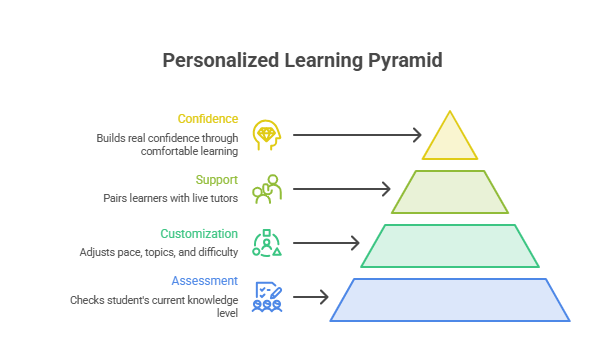
Personalized learning fits the lesson to a student, not the other way around. The software watches how you learn. Then it adjusts the pace, the topics, and the difficulty level for you. So, a student who struggles gets more practice. Meanwhile, a student who excels moves on at a faster pace.
For example, a student dreads math homework every night. Here, a tool like the Brighterly tutoring platform can help. First, it checks the student’s current knowledge level with a quick assessment. Then it sets lesson plans that match that level, and it pairs the learner with a live tutor. As a result, the learner moves at a comfortable pace and slowly builds real confidence.
How These Platforms Work
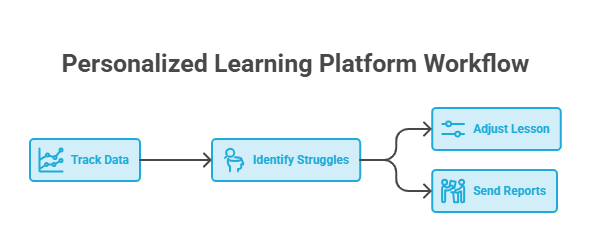
Most personalized learning platforms follow one simple process:
- They track your answers and study habits.
- They spot exactly where you struggle.
- They adjust the next lesson to match your level.
- They send teachers clear progress reports.
Self – Generated
How Personalized Learning Platforms Are Redefining the Future of Education
These platforms are more than just classroom tools. They are changing what education means for the next generation. In fact, they may change schools more than any tool before them. And the growth proves the point.
According to Research and Markets, the personalized learning market is expected to grow to $16.69 billion in 2030 at a compound annual growth rate (CAGR) of 22%.
AI Guides Each Student In Real Time
AI tutors work right beside you every single day:
- They answer your questions instantly, day or night.
- They spot the moment you get stuck.
- They give a helpful hint, not just the answer.
You learn faster and keep your confidence. Better yet, teachers no longer chase every mistake alone. This kind of instant support once felt impossible. Now, it is quickly becoming the new normal.
Learning Moves Beyond the Classroom
Schools will no longer be locked inside four walls. Learning will become accessible from almost anywhere.l
- Access lessons from home on a phone, tablet, or computer.
- Study at the times that best fit your schedule.
Learning adapts to your daily life rather than a fixed classroom schedule. This flexibility is especially valuable for working students and busy families.
Teachers Become Mentors, Not Just Lecturers
Teachers will not disappear. On the contrary, their job will become more human. Personalized learning platforms handle the routine work for them:
- They grade quizzes and run practice drills.
- They track progress for the whole class.
- They free up hours for real one-on-one moments.
Teachers will be there to coach, listen, and inspire you instead.
Every Student Gets A Personal Roadmap
Personalized learning platforms know your goals, gaps, and pace. Each day, it points you to a clear path:
- What to study next and why it matters.
- Which weak spots to fix first?
- How close you are to your learning objectives.
This means you stay motivated and avoid wasting time. That sense of control makes learning feel far less stressful.
Data Helps Close Learning Gaps
Small gaps often grow into big problems fast. In the past, teachers found them too late. Now, data reveals trouble the day it starts:
- It shows exactly who is falling behind.
- It pinpoints the skills that need extra attention.
- It warns teachers before a student gives up.
Help arrives early while it still counts. Over time, early intervention empowers more learners to stay engaged through to completion. This, in turn, makes a whole classroom grow stronger together.
Lifelong Learning Becomes Normal
Learning will not stop at graduation anymore. Instead, it will follow you through your whole career:
- Adults use these tools to gain new job skills.
- Short lessons fit around work and family.
- You learn a skill today and use it tomorrow.
As a result, your career stays strong as the job landscape changes fast. In the future, learning will become a habit, not a single chapter. And that habit keeps you ready for whatever comes up next.
Expanding Access to Education
Quality education has always cost money and leaned on location. Personalized platforms are starting to change that reality:
- Competitive pricing puts many tools within reach.
- Students in underserved areas access the same learning resources as those in major cities.
- Talent no longer stays stuck behind a zip code.
The future of learning looks far more fair. A talented student anywhere can now dream bigger. To reach these families, many schools now employ smart digital marketing strategies for educational institutes.
Gamified Learning Boosts Engagement
Boring worksheets are on their way out. In the future, lessons will feel more like interesting games:
- You earn points, badges, leaderboards, and daily streaks.
- You reach the next level as you improve.
- Small wins build steady confidence.
Studying stops feeling like a chore. Because of that, you try harder and quit far less often. In the end, fun turns effort into a habit you thoroughly enjoy.
Collaborative Learning Online
Personalization does not mean loneliness at all. Tomorrow’s platforms will connect you with peers anywhere:
- Join group projects and live study rooms.
- Chat with friends during a lesson.
- Teach a friend and learn it twice.
This translates into building social skills as well as academic ones. As a result, class feels personal and social at the same time. That balance keeps students engaged in the long run.
You Learn the Way It Suits You
People absorb ideas in different ways. Future tools will respect these differences in learning style:
- Watch a short video if that helps you best.
- Read, listen, or try a quick task instead.
- Switch formats the moment one stops working.
You stop forcing your brain into one method. Even hard topics start to feel easy. And when a subject feels easy, you rarely give up on it.
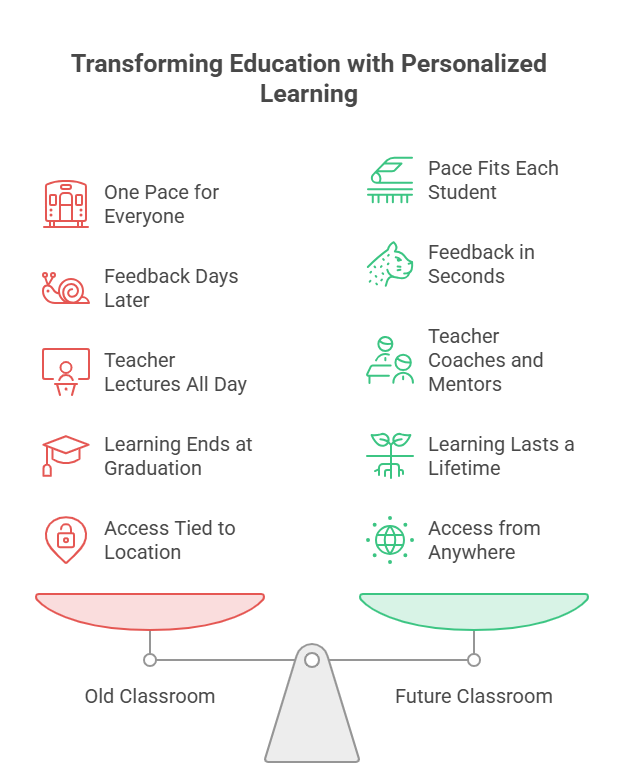
Here is a quick look at how your classroom is changing.
Self – Generated
Real tools already show this future in action. Adaptive apps now blend smart lessons with live, one-on-one tutors for learners. Each learner gets a custom plan plus a real teacher who cares. That mix of clever software and human support points straight at what comes next.
Get Ready for the Future of Learning
The future of education is here, and it feels personal. Personalized learning platforms adapt to you, guide you, and stick with you for life.
Teachers gain time to mentor and inspire. Similarly, students gain support that meets them right where they are.
On top of that, access keeps spreading to more people every year. Simply put, school is becoming smarter, kinder, and more open.
So, the path forward is clear. If you build or market education tools, now is the time to act.